
Create a new Zap with the 'Webhooks by Zapier' trigger
In Zapier, click Create Zap → pick 'Webhooks by Zapier' as the trigger app → choose the 'Catch Hook' event. Zapier generates a unique catch-hook URL — copy it.
Feature · Zapier
Paste a 'Webhooks by Zapier' catch-hook URL into your form's webhooks and pipe leads into HubSpot, Mailchimp, Airtable, Google Drive, or anything else Zapier supports.

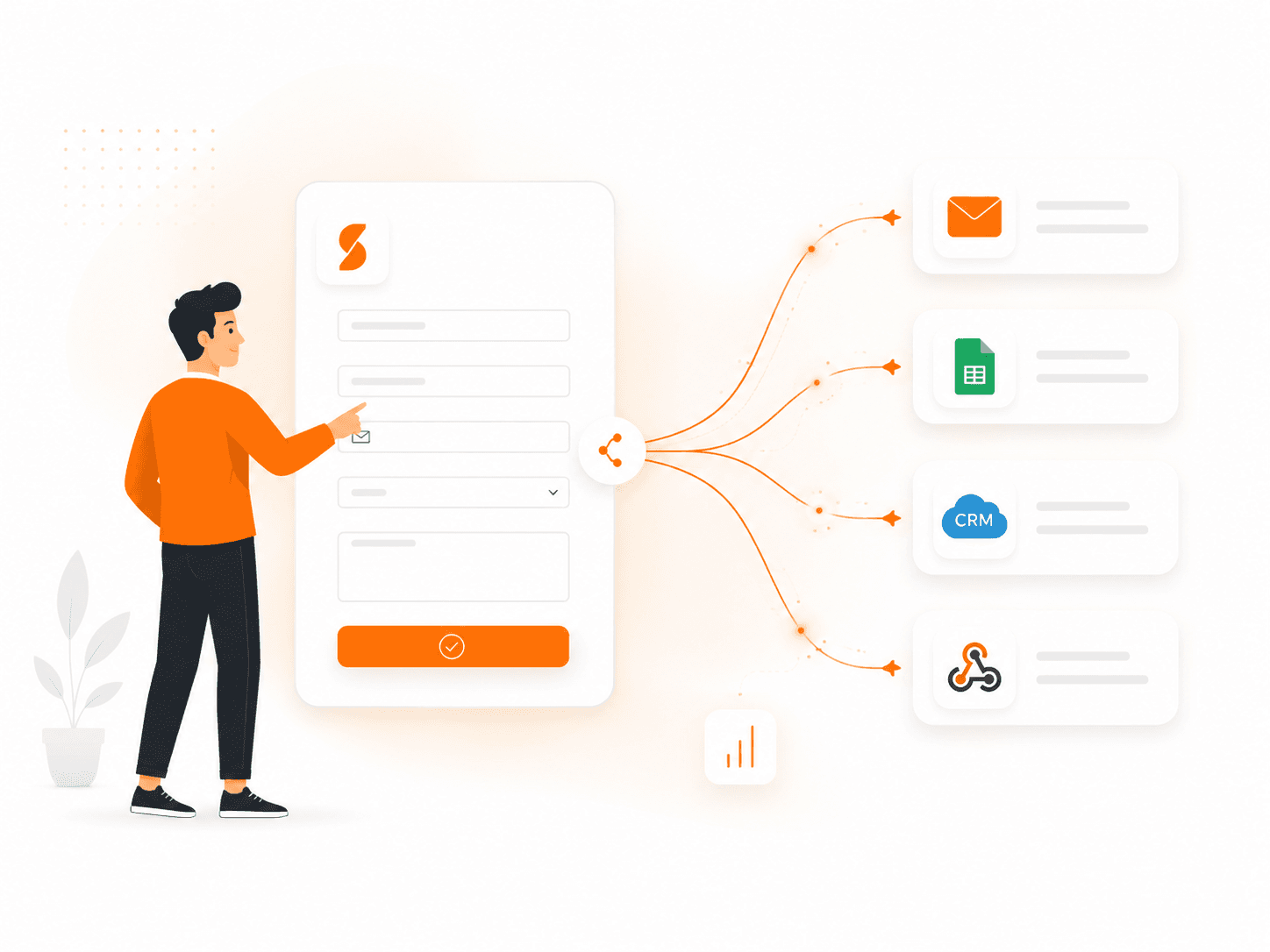
Your form posts to one splitforms endpoint — no server, API route, or SDK. splitforms is the backend.
Every submission is saved to a searchable dashboard and emailed to you — spam filtered before it lands.
No glue code, no third-party middleman — it ships as part of splitforms and works from your first submission.
Copy-paste ready
Replace YOUR_ACCESS_KEY with the key from your splitforms dashboard. No SDK to install, no build step — the same html you already write.
// Setup in Zapier (about 2 minutes):
//  1. zapier.com → Create Zap.
//  2. Trigger app: "Webhooks by Zapier" → Event: Catch Hook.
//  3. Copy the unique catch-hook URL Zapier generates.
//  4. In splitforms: Form → Integrations → Webhooks → paste the URL → Save.
//  5. Submit your form once so Zapier catches a sample payload, then add any
//     Action: Gmail, HubSpot, Airtable, Mailchimp, Notion, Discord — anything.
// Your form HTML stays identical; splitforms POSTs the submission to Zapier
// the moment it lands.

<form action="https://splitforms.com/api/submit" method="POST">
  <input type="hidden" name="access_key" value="YOUR_ACCESS_KEY" />

  <input type="text"  name="name"    placeholder="Name"    required />
  <input type="email" name="email"   placeholder="Email"   required />
  <input type="text"  name="company" placeholder="Company" />
  <input type="tel"   name="phone"   placeholder="Phone" />
  <textarea           name="message" placeholder="Message" required></textarea>

  <input type="checkbox" name="botcheck" style="display:none" tabindex="-1" />

  <button type="submit">Send</button>
</form>

{/*
  Common Zaps people build on top of splitforms:
    • New submission → Create or Update HubSpot contact
    • New submission → Append row to Airtable + send Mailchimp welcome
    • New submission with company == "" → Slack DM owner to qualify
    • New submission → SMS via Twilio if "phone" present
*/}
How to set it up
How zapier flows through splitforms — what you do, what we do, and what lands in your inbox.
In Zapier, click Create Zap → pick 'Webhooks by Zapier' as the trigger app → choose the 'Catch Hook' event. Zapier generates a unique catch-hook URL — copy it.
In splitforms: Form → Integrations → Webhooks → New webhook → paste the Zapier URL → save. Then submit your form once — Zapier catches the payload (the submission's fields plus id, form name, referer, and timestamp) and uses it as sample data so you can map fields visually.
Pick a Zapier action (or chain multiple), map the form fields to its inputs, optionally add Filter, Paths, or Formatter steps, and turn the Zap on. From now on splitforms POSTs every submission to Zapier the moment it lands, and Zapier's own Zap History logs every run for debugging and replay.
How zapier works
splitforms connects to Zapier through Zapier's built-in 'Webhooks by Zapier' trigger, which means you can pipe form submissions into any of Zapier's 6,000+ supported destination apps without writing any code. In Zapier, create a new Zap, pick 'Webhooks by Zapier' as the trigger with the 'Catch Hook' event, and copy the unique URL Zapier generates. Route the same submission to an email inbox or a webhook at the same time — nothing here is one-or-the-other.
What you get
Every reason below is the boring, reliable kind — the fundamentals of zapier, built once and tested in production so you never have to.

How SplitForms works
splitforms receives the submission, filters spam, saves it to your dashboard and emails you — then, on paid plans, sends it on to your webhooks and integrations. No backend infrastructure to build.

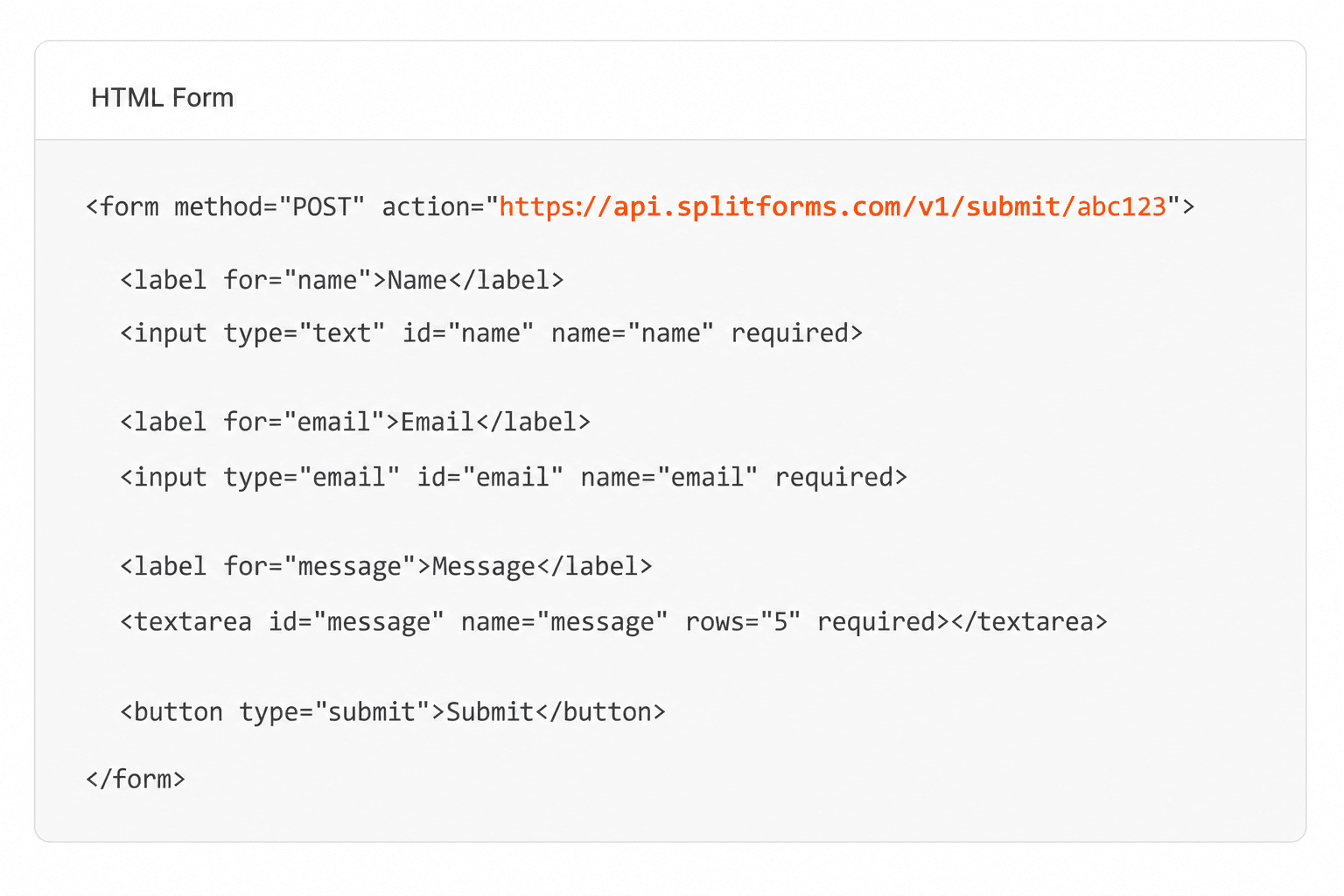
Point your form to your unique SplitForms endpoint. That's it.
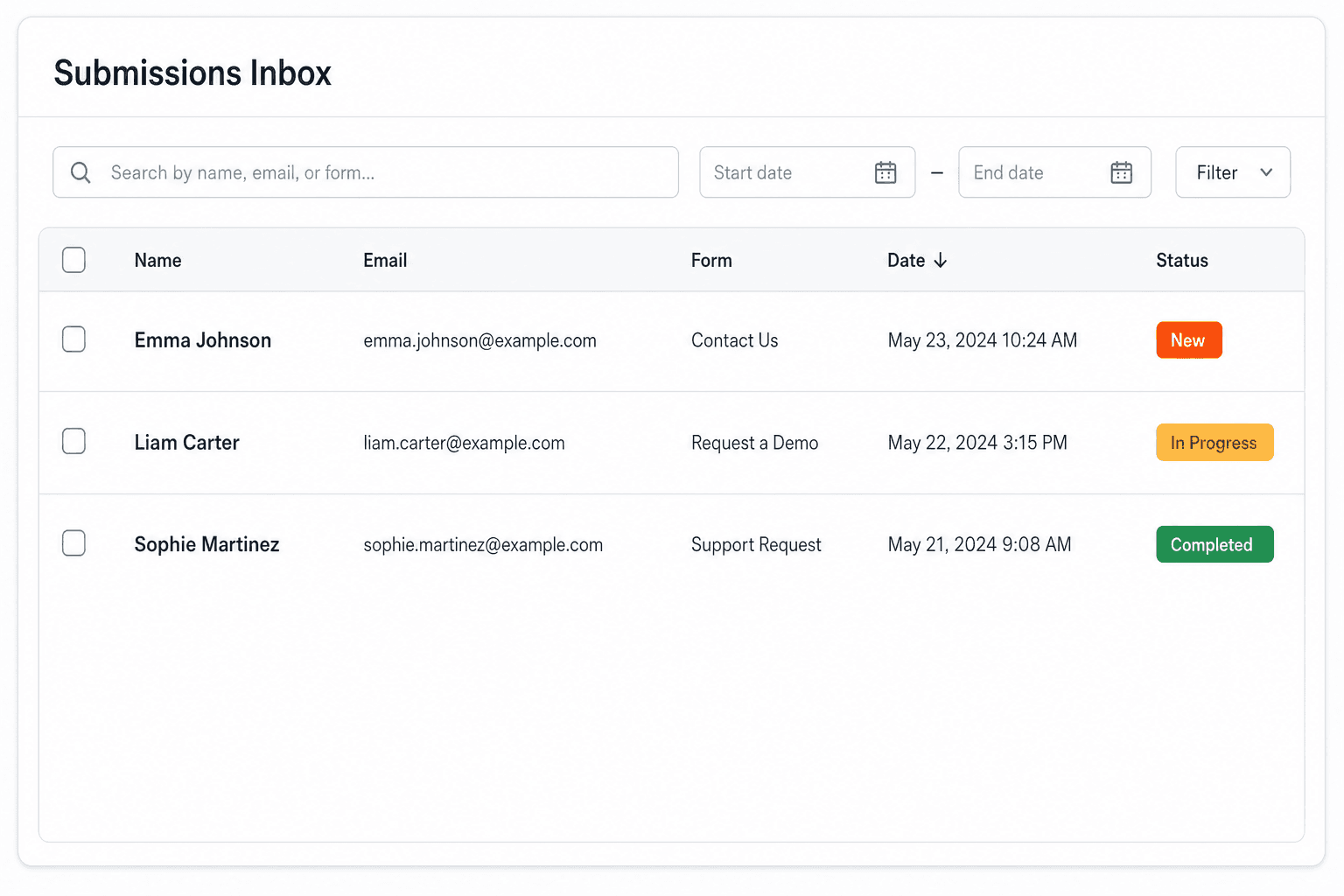
We instantly capture and organize every submission in your inbox.
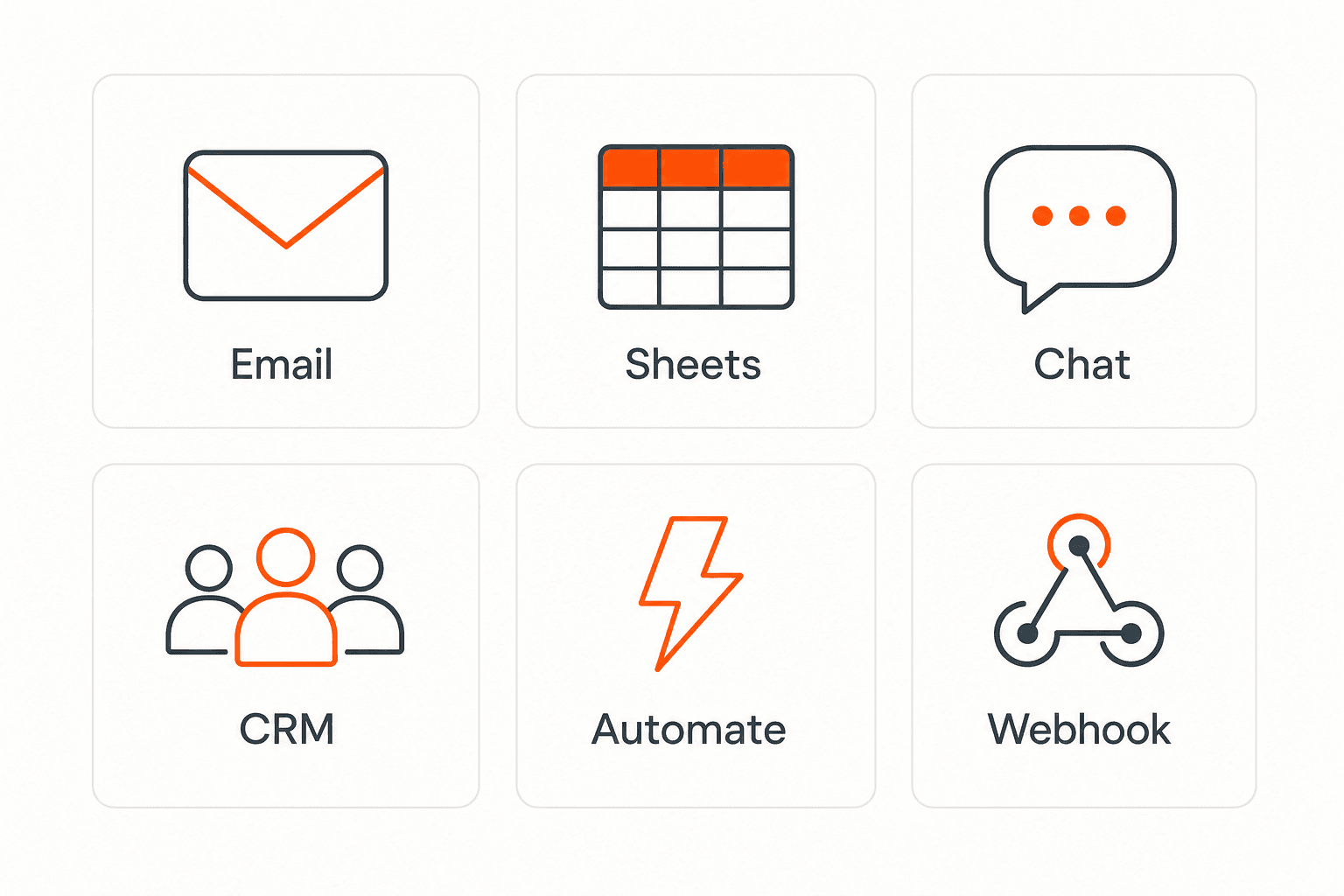
Send data to email, spreadsheets, CRMs, webhooks, and 7,000+ apps.
No credit card required. Set up in under 60 seconds.
Connect & automate
On paid plans, submissions can also go to Slack, Discord, Google Sheets, Notion, Airtable, Zapier or any signed webhook — and splitforms works on the platforms you build on, from WordPress and Shopify to Next.js. With Stripe connected, your forms can take payments too.
 NewTake payments on your formsDeposits, bookings, order forms — submitters check out through Stripe and the money goes straight to your Stripe account. Included on every paid plan.See plans →
Common questions
Not yet — today splitforms connects through Zapier's built-in 'Webhooks by Zapier' trigger. You create a Zap with the 'Catch Hook' event, copy the URL Zapier generates, and paste it into your form's Webhooks tab in splitforms. Because catch-hooks receive HTTP POSTs directly, splitforms pushes each submission to Zapier the moment it lands — there's no splitforms-side polling. A dedicated splitforms app in the Zapier directory, with a named 'New Submission' trigger and one-click OAuth, is on the roadmap; the webhook route is fully functional in the meantime.
The splitforms side unlocks with webhooks on Starter ($1/month) and above, with no per-Zap fee. On the Zapier side, the 'Webhooks by Zapier' catch-hook trigger works on every Zapier plan including the free tier. Each form submission that fires a Zap counts as one Zapier task on your Zapier quota, independently of your splitforms submission cap. High-volume forms or multi-step Zaps may need a paid Zapier plan for the task quota, but splitforms itself never charges per Zap.
In Zapier: zapier.com → Create Zap → pick 'Webhooks by Zapier' as the trigger → choose the 'Catch Hook' event → copy the generated URL. In splitforms: open the form → Integrations → Webhooks → New webhook → paste the URL → save. Submit the form once, then click 'Test trigger' in Zapier to load that submission as sample data. From there, add any action step (Gmail, HubSpot, Airtable, etc.), map fields visually, and publish. To connect a second form, create a second Zap with its own catch-hook URL and paste it into that form's webhooks.
Yes — anything Zapier supports works as the action step after the catch-hook trigger. Common patterns: HubSpot 'Create or Update Contact' (deduped by email), Airtable 'Create Record', Mailchimp 'Add/Update Subscriber' with double opt in, Discord 'Send Channel Message', Twilio 'Send SMS' when a phone field is present, Linear or Jira 'Create Issue' from bug-report forms, Intercom 'Send Message', SendGrid 'Send Email', Notion 'Create Database Item' (though the native splitforms-to-Notion integration is faster and avoids Zapier task fees). Use Zapier's Filter and Paths steps to branch — e.g. 'if budget > $10k, create deal AND ping VIP Slack; otherwise just nurture'.
Use the native integration when one exists (Slack, Notion, Google Sheets, webhooks) — it's faster and avoids Zapier task fees. Use Zapier when the destination is unique (HubSpot, Mailchimp, Twilio, Linear, etc.) or when you need Zapier's filters, paths, or multi-step orchestration. Troubleshooting: if a Zap isn't firing, open Zapier → Zap History — every triggered run is logged with the input data and the action result. Common causes: (1) Zap is turned off — check the toggle in Zapier. (2) Zapier task quota exhausted — visible in Zapier billing. (3) The catch-hook URL was regenerated in Zapier but not updated in splitforms — re-paste the current URL into the form's webhooks. (4) Action step failing on a missing field — add a Formatter step to default null to ''. From the splitforms side, Dashboard → Form → Integrations → Webhooks shows the Zapier webhook's last HTTP status and last error; a failed push is not currently retried automatically, so check Zapier's own Zap History for the definitive record of what fired.
Simple pricing
Free is $0 for 500 submissions in total (a one-time allowance). Paid plans are metered monthly: Starter is $1/month for 1,000, Pro is $5/month for 5,000, and the 3-Year plan is $59 for the first three years, then $59/year, for 15,000 a month.
For side projects and indie devs.
For builders who want every paid feature for $1/month.
For agencies and growing products.
Pay $59. 3 years sorted.
No credit card required on Free • Cancel anytime


