Get a free access key
Create a free splitforms account and add a form in the dashboard. Copy its access_key — Free includes 500 submissions total, unlimited forms, email notifications, and spam filtering.
ChatGPT form backend
Updated · plan facts checked against /pricing
A ChatGPT form backend is the hosted endpoint that receives submissions from a form ChatGPT or another AI tool wrote for you. splitforms does it for any AI-built form on any host: one endpoint stores the lead, emails your team, filters spam, and on paid plans forwards it to Slack, Notion, or a webhook.

The endpoint is the backend — the AI writes the form, splitforms handles delivery.
An empty botcheck honeypot and IP rate limits screen bots before your inbox.
Accepted submissions are saved to the dashboard before owner notification email is attempted; delivery time and inbox placement depend on provider and recipient settings.
Quick start
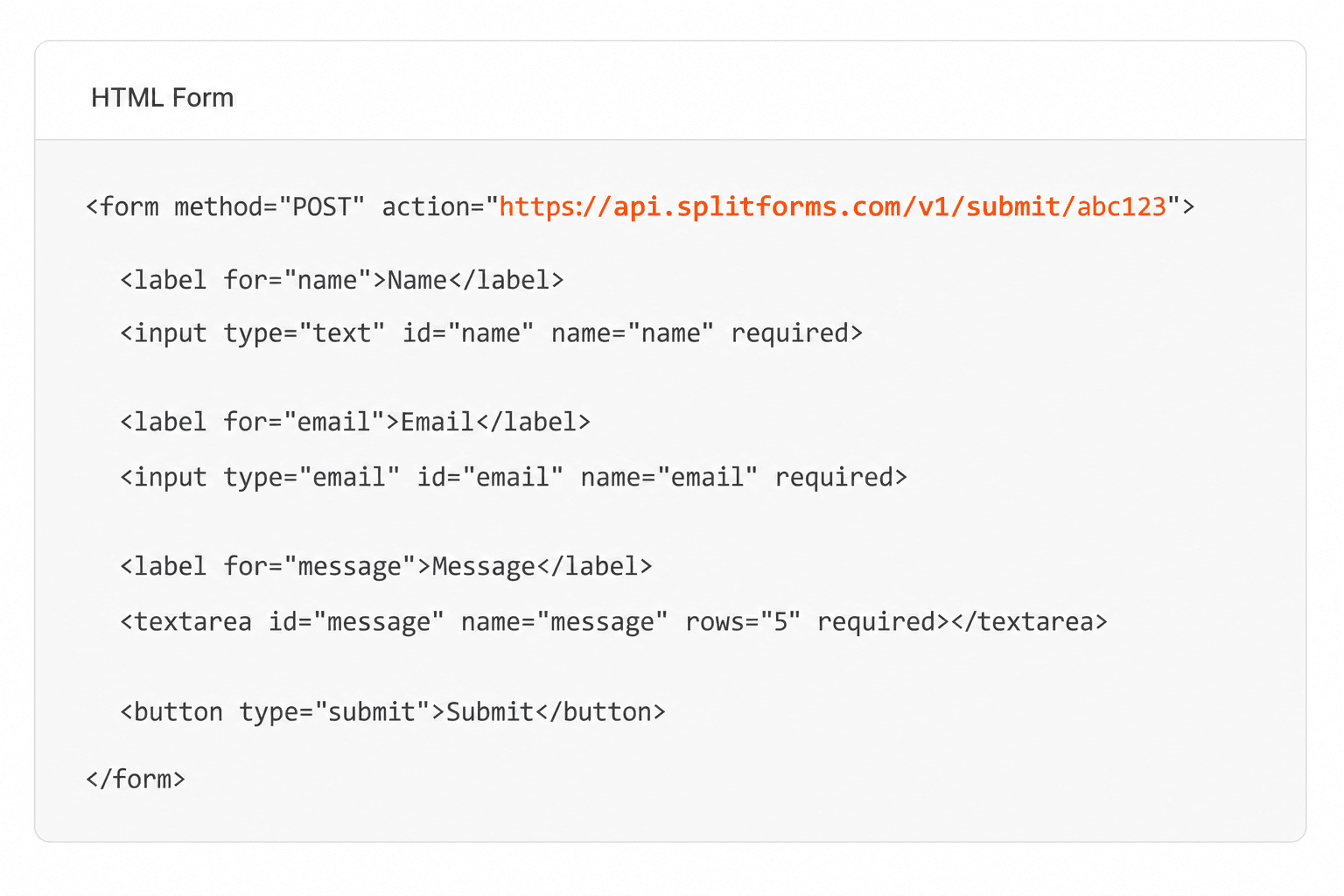
Any AI agent can generate this pattern. The access key identifies your form, the honeypot catches common bots, and splitforms handles the server-side work after submission.
<form action="https://splitforms.com/api/submit" method="POST">
  <input type="hidden" name="access_key" value="YOUR_ACCESS_KEY">
  <input type="checkbox" name="botcheck" style="display:none" tabindex="-1" autocomplete="off">

  <label>
    Name
    <input name="name" autocomplete="name" required>
  </label>

  <label>
    Email
    <input type="email" name="email" autocomplete="email" required>
  </label>

  <label>
    Message
    <textarea name="message" required></textarea>
  </label>

  <button type="submit">Send</button>
</form>
How-to
Four steps, no server code of your own. The same path works whether ChatGPT generated a static HTML form or your chatbot is posting JSON straight from a backend function.
Create a free splitforms account and add a form in the dashboard. Copy its access_key — Free includes 500 submissions total, unlimited forms, email notifications, and spam filtering.
Prompt ChatGPT, Claude, Cursor, or another AI agent for a standard HTML, React, Next.js, or Webflow form — or for the JSON fields your chatbot should collect: name, email, message, and any qualifying details.
Set the form action — or your fetch() call — to https://splitforms.com/api/submit, method POST, with your hidden access_key and an empty botcheck field.
Submit a test message, confirm it reaches your inbox and dashboard, then connect webhooks or 1-click integrations — Slack, Notion, Airtable, Google Sheets, Discord — so leads land where your team already works.
The backend
splitforms is the backend that ChatGPT-built forms and AI chatbots POST to. Send a normal HTTP request to https://splitforms.com/api/submit with your access_key, and splitforms stores the lead, emails your team, filters spam, and forwards it to Slack, Notion, or a webhook. ChatGPT, Claude, Cursor, or any AI agent can generate the form or the JSON payload — you don't write server code.
Prompt & agents
Ask ChatGPT for plain web standards — native fields, a POST action, and no SDK — or skip the HTML entirely and POST the same fields as JSON when a chatbot already has the lead. Use real control fields like subject and replyto so the email is pre-addressed. Agents on the splitforms MCP server can call create_form or generate_form to provision the form, then list_submissions to read leads back — with the same token that powers the REST API.
Use cases
ChatGPT is one client among many — the same endpoint and MCP tools work for any agent, chatbot, or no-code builder, so leads land in the same inbox and dashboard.

How SplitForms works
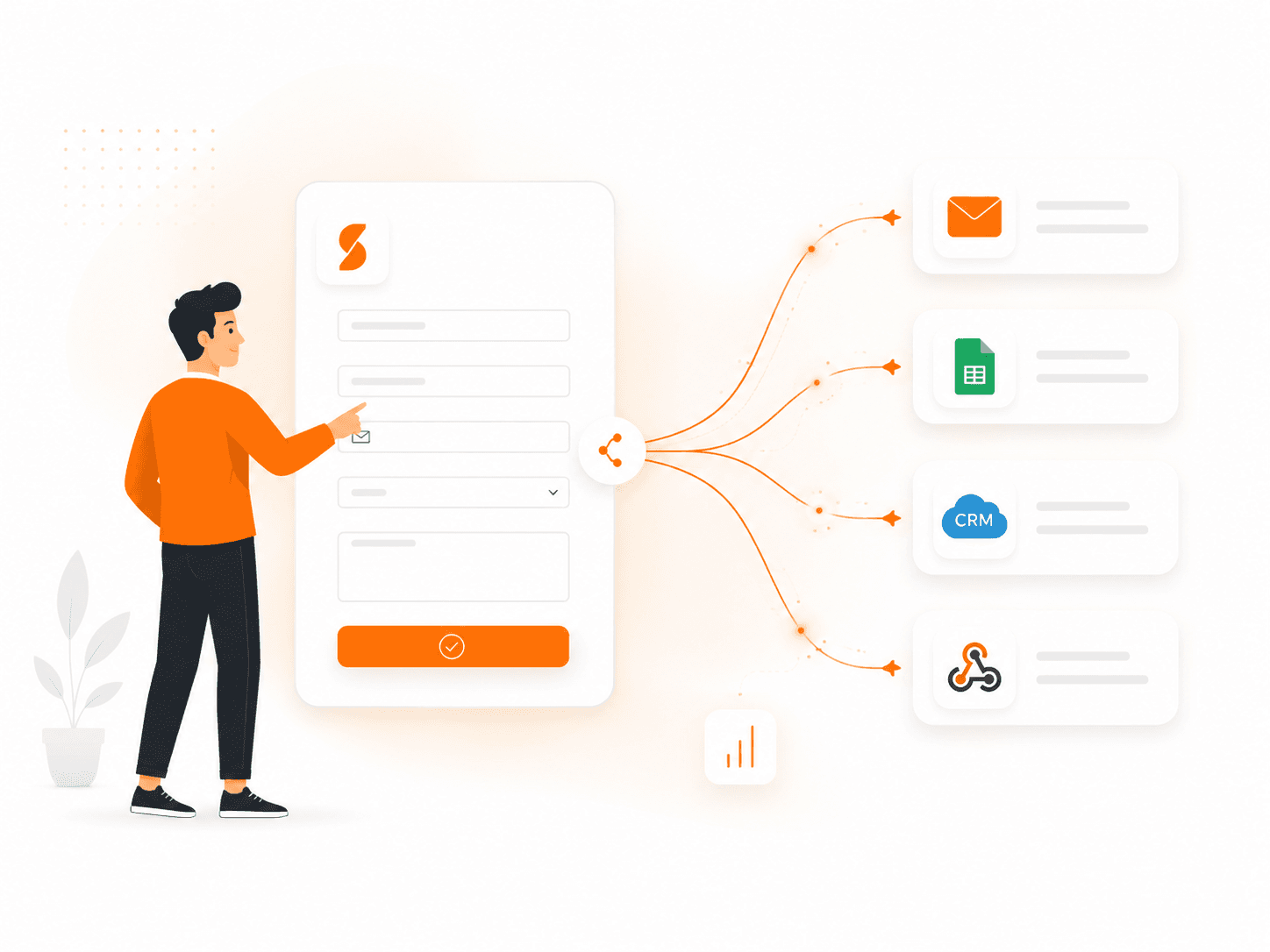
splitforms receives the submission, filters spam, saves it to your dashboard and emails you — then, on paid plans, sends it on to your webhooks and integrations. No backend infrastructure to build.

Point your form to your unique SplitForms endpoint. That's it.
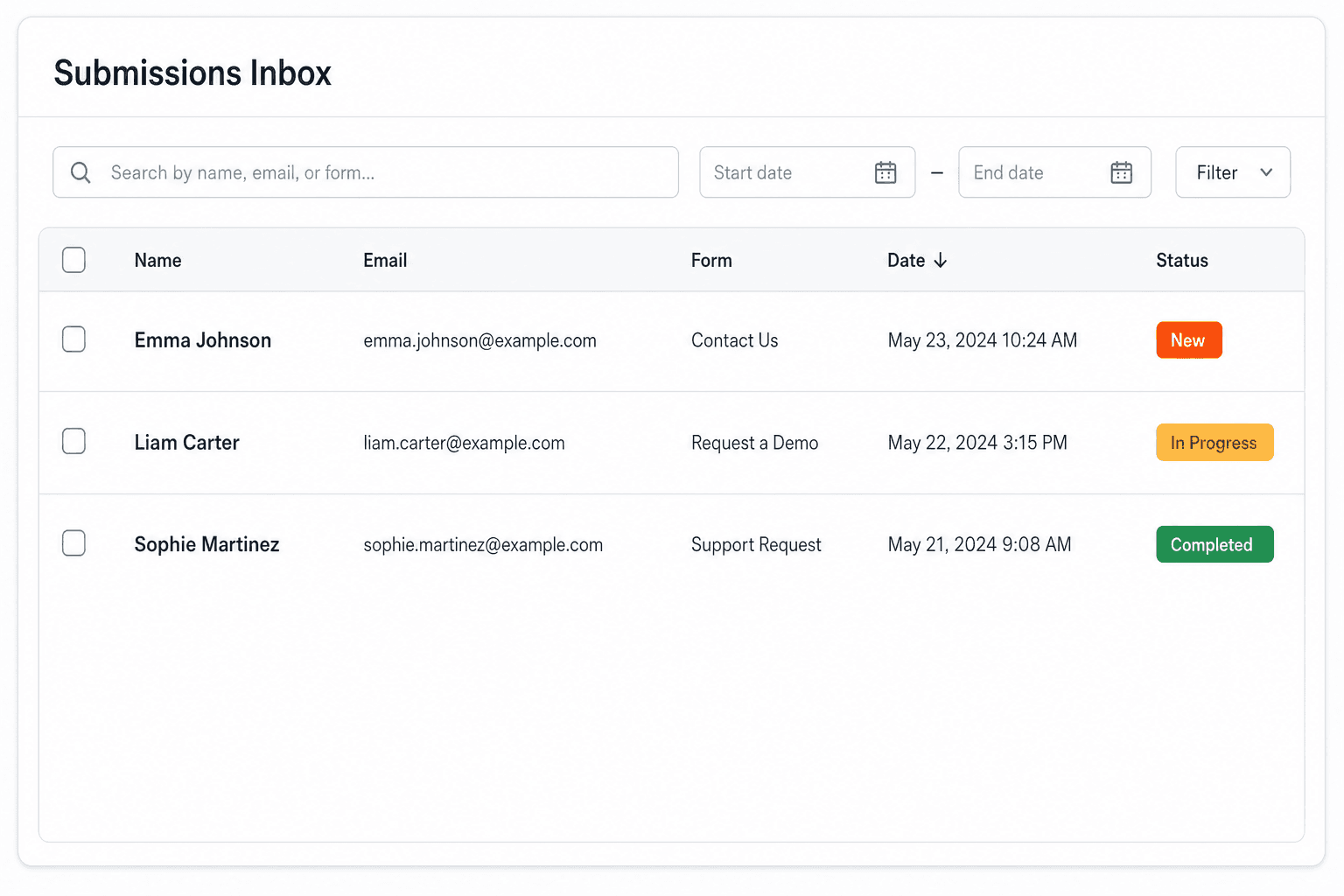
We instantly capture and organize every submission in your inbox.
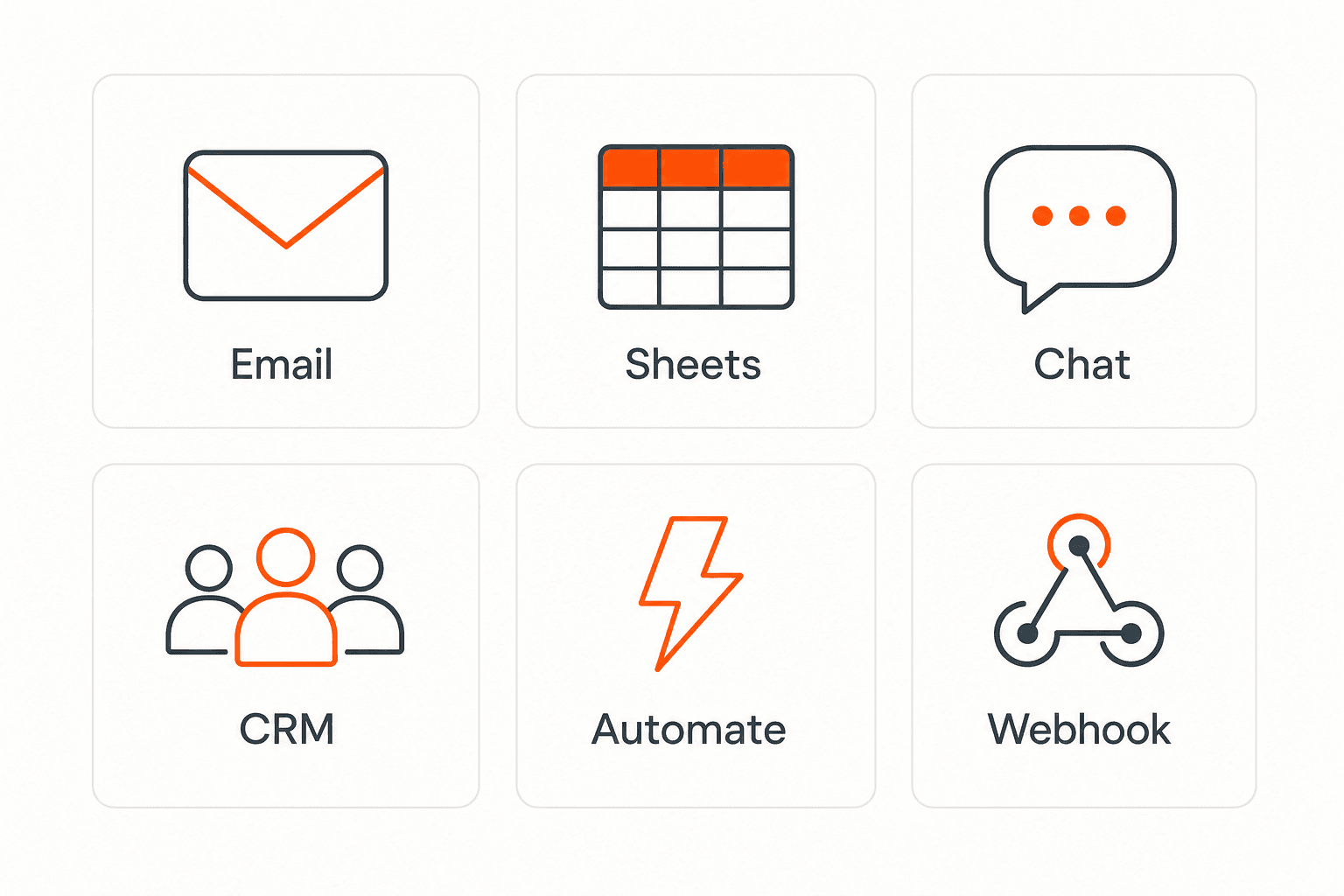
Send data to email, spreadsheets, CRMs, webhooks, and 7,000+ apps.
No credit card required. Set up in under 60 seconds.
Connect & automate
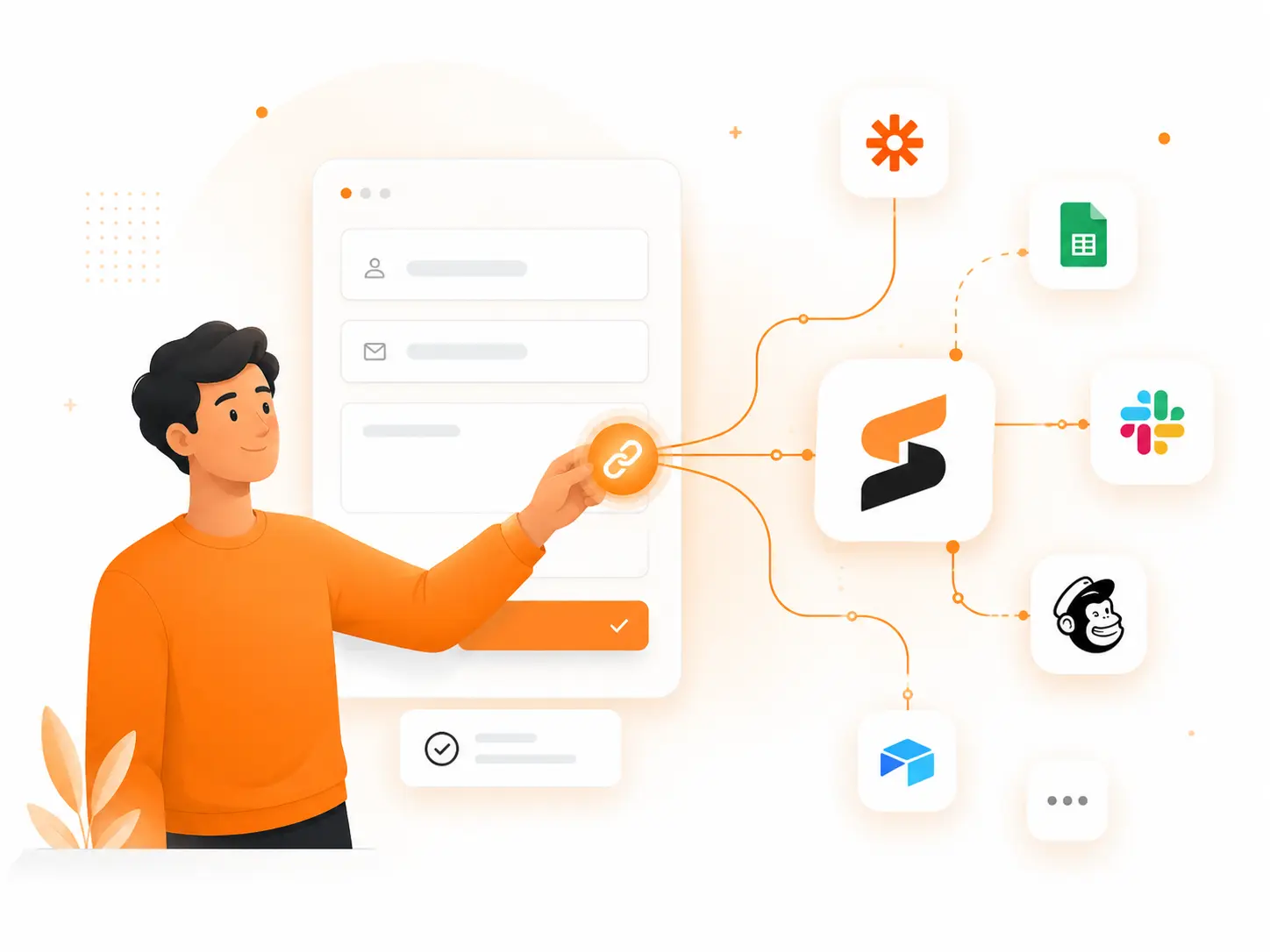
On paid plans, submissions can also go to Slack, Discord, Google Sheets, Notion, Airtable, Zapier or any signed webhook — and splitforms works on the platforms you build on, from WordPress and Shopify to Next.js. With Stripe connected, your forms can take payments too.
 NewTake payments on your formsDeposits, bookings, order forms — submitters check out through Stripe and the money goes straight to your Stripe account. Included on every paid plan.See plans →
FAQ
Yes. Ask ChatGPT, Cursor, Claude, or another AI coding agent to generate a normal HTML, React, Next.js, Astro, Vue, or Webflow form. Set the form action to https://splitforms.com/api/submit and include your splitforms access_key as a hidden field.
No. splitforms is the backend that receives and routes form or chatbot lead data. ChatGPT or your chatbot handles the conversation and UI; splitforms stores the final lead, emails your team, filters spam, and forwards webhooks.
Yes. splitforms has a free MCP server for AI agents with tools like create_form, generate_form, and list_submissions, plus a plain HTTPS endpoint. An agent can provision a form, generate the markup, and read submissions back using the same API token — no custom integration layer.
Ask for a standards-based form with name, email, message, an empty botcheck honeypot field, and a hidden access_key. If you want no JavaScript, use a normal form action. If you want inline success states, ask for fetch plus FormData.
Yes. A chatbot can POST the final lead payload to splitforms, then splitforms can email it, store it in the dashboard, and forward it to Slack, Discord, HubSpot, Notion, Airtable, Google Sheets, Zapier, Make, n8n, or any custom webhook.
Yes. GET https://splitforms.com/api/submissions with an Authorization: Bearer <token> header returns your submissions as JSON, paginated with limit, before, and since. The token lives at Dashboard → MCP and powers both the REST API and the MCP server, at 60 requests per minute.
Yes — 6 submissions per minute per IP, and 20 per 15 minutes sustained. A chatbot backend that receives HTTP 429 should back off before resubmitting instead of treating it as a lost lead.
Free covers 500 submissions total on unlimited forms, with email notifications and spam filtering included. Webhooks, integrations, and exports need Pro ($5/mo); auto-responder and higher volume are on paid plans.
Simple pricing
Free gives you 500 submissions for $0 — no card, no time limit. Pro is $5/month for 5,000 submissions a month, and Annual is $49/year for 15,000 a month with every Pro feature.
For side projects and indie devs.
Every paid feature, for agencies and growing products.
Every Pro feature with triple the volume — $0.27 per 1,000 at full use.
No credit card required on Free • Cancel anytime • Full pricing and FAQ


