
Step 1
In the splitforms dashboard, open Integrations → Notion and choose the scope: one form, or all forms on your account.
Integration · Notion
Send form submissions to Notion as pages.

splitforms connects your forms to Notion and moves every submission across the moment it's received — no manual export, no copy-paste.
Every submission is emailed to you and saved to a searchable dashboard, so the lead is captured even if Notion is unreachable.
Connecting Notion to your forms is included in your plan — no add-on charge and no per-message billing from splitforms.
Example: form markup
The form posts to https://splitforms.com/api/submit. The Notionrouting is configured in the splitforms dashboard against the form's access key — there's no client-side Notion-specific code in your HTML.
<form action="https://splitforms.com/api/submit" method="POST">
  <input type="hidden" name="access_key" value="YOUR_SPLITFORMS_KEY" />
  <input type="hidden" name="_route" value="notion" />
  <input type="email" name="email" placeholder="you@example.com" required />
  <textarea name="message" placeholder="Your message" required></textarea>
  <button type="submit">Send to Notion</button>
</form>
How it works
Here's how to send form submissions to Notion in 5 steps — no code required, and most teams finish in a couple of minutes.
In the splitforms dashboard, open Integrations → Notion and choose the scope: one form, or all forms on your account.
Click Connect and authorize splitforms through Notion's OAuth consent screen, sharing the page or database you want submissions to land in.
If you shared a database, splitforms writes into it directly. If you shared a page, splitforms creates a new 'SplitForms submissions' database under it automatically, with starter properties for the submission title, submitted date, form name, submission ID, referer, and IP.
Submit a test row from the dashboard, then submit the real form. New submissions create a page within about a second, and any new form field automatically gets its own property the first time it appears.
Open the database any time from the integration page, or disconnect in one click — existing pages are never touched.
How teams use it
splitforms has a native Notion integration: authorize with OAuth, and splitforms creates (or reuses) a database that gets a new page for every form submission in real time. No internal integration secret to copy, no relay to deploy. Prefer a plainer destination? The same form can also send form submissions to email or forward them to any webhook.
Why splitforms
Zapier's Notion connector costs $20+/mo for multi-step Zaps; splitforms' native integration is included from Pro with no extra fee. splitforms is free for 500 submissions per month, $5/mo on Pro, or $59 for a 3-year plan (15,000 submissions/month, 36 months of access), with no per-integration add-on fees.

How SplitForms works
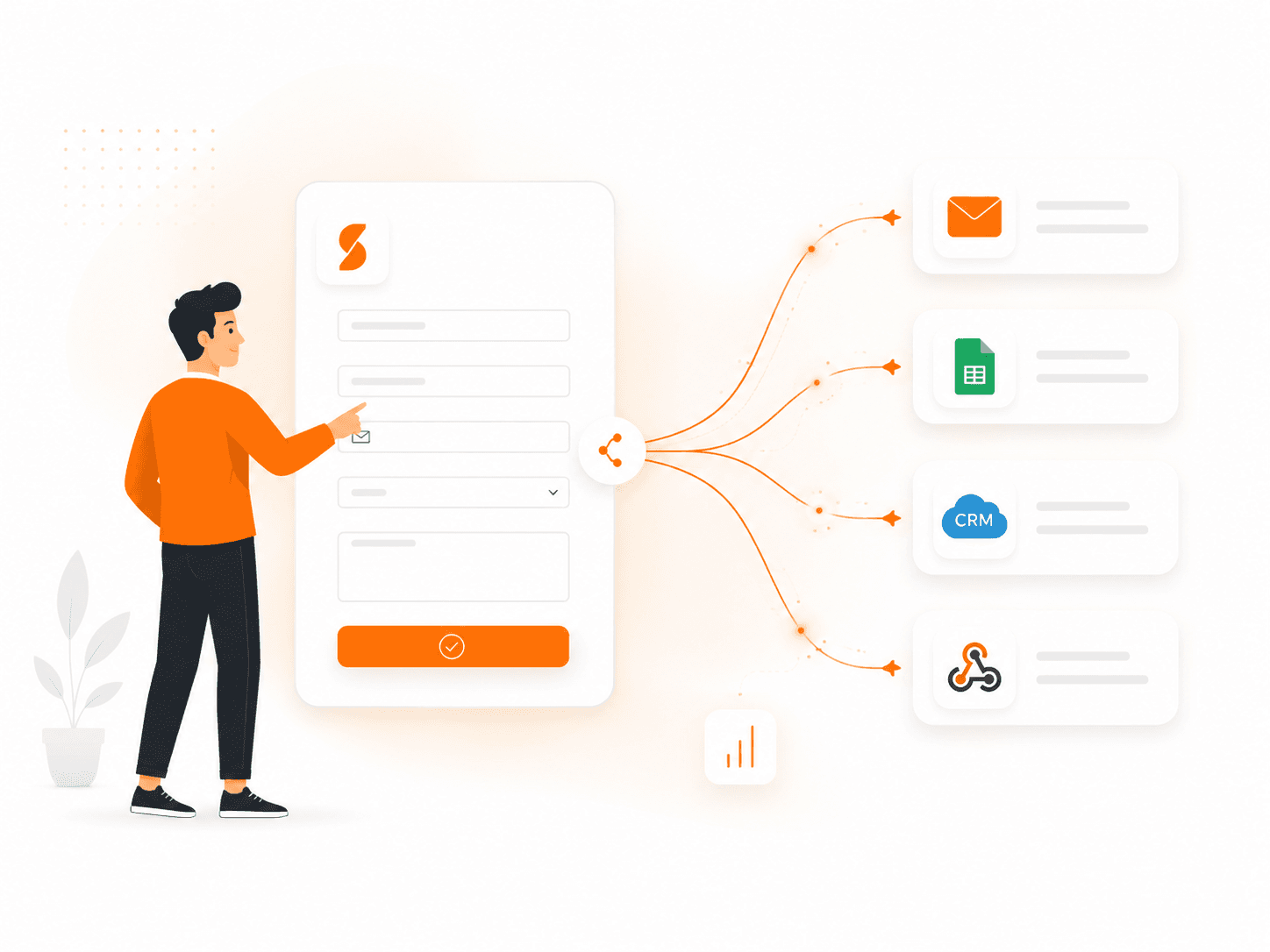
Connect your form, collect every submission, and send data where it needs to go — without building backend infrastructure.

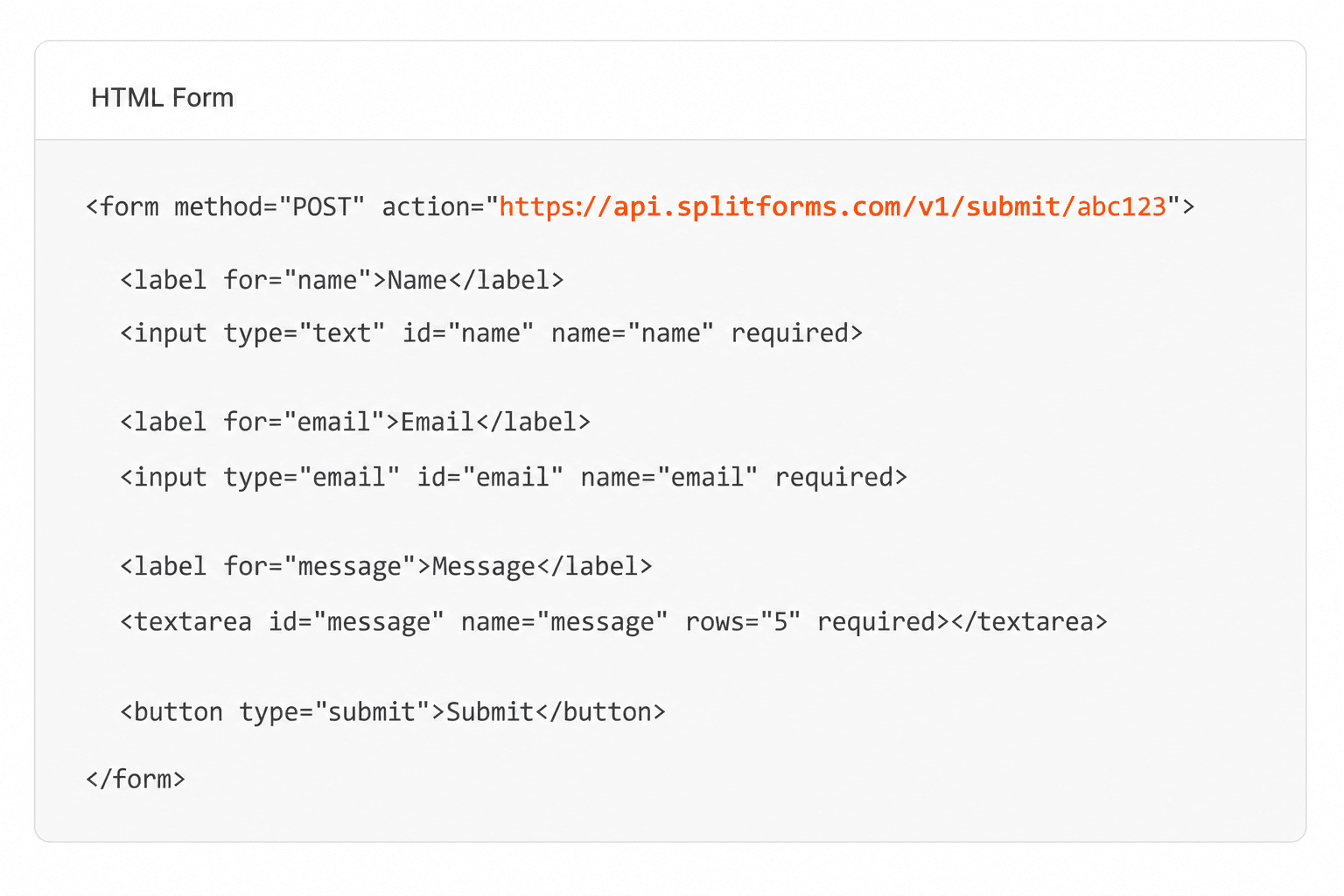
Point your form to your unique SplitForms endpoint. That's it.
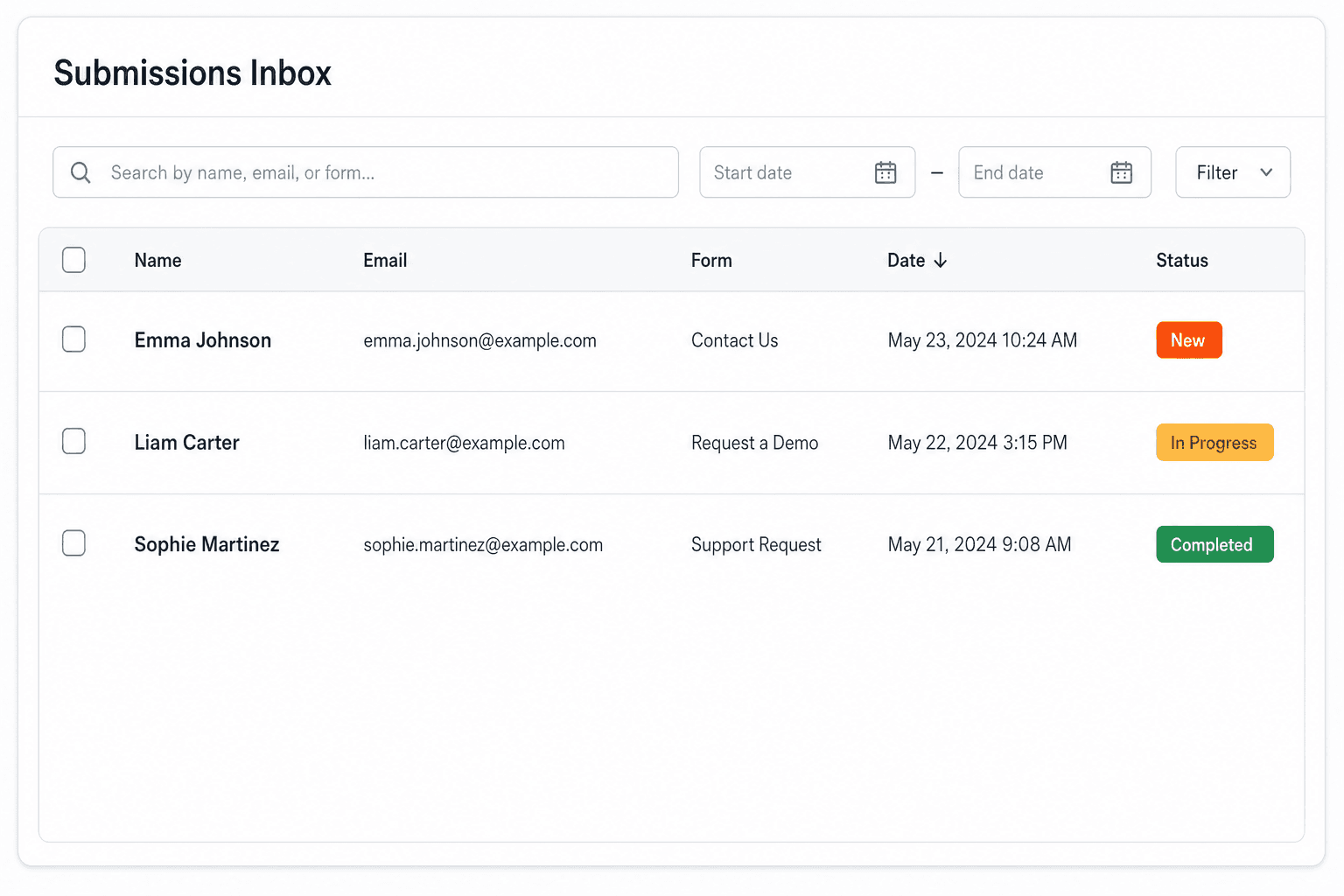
We instantly capture and organize every submission in your inbox.
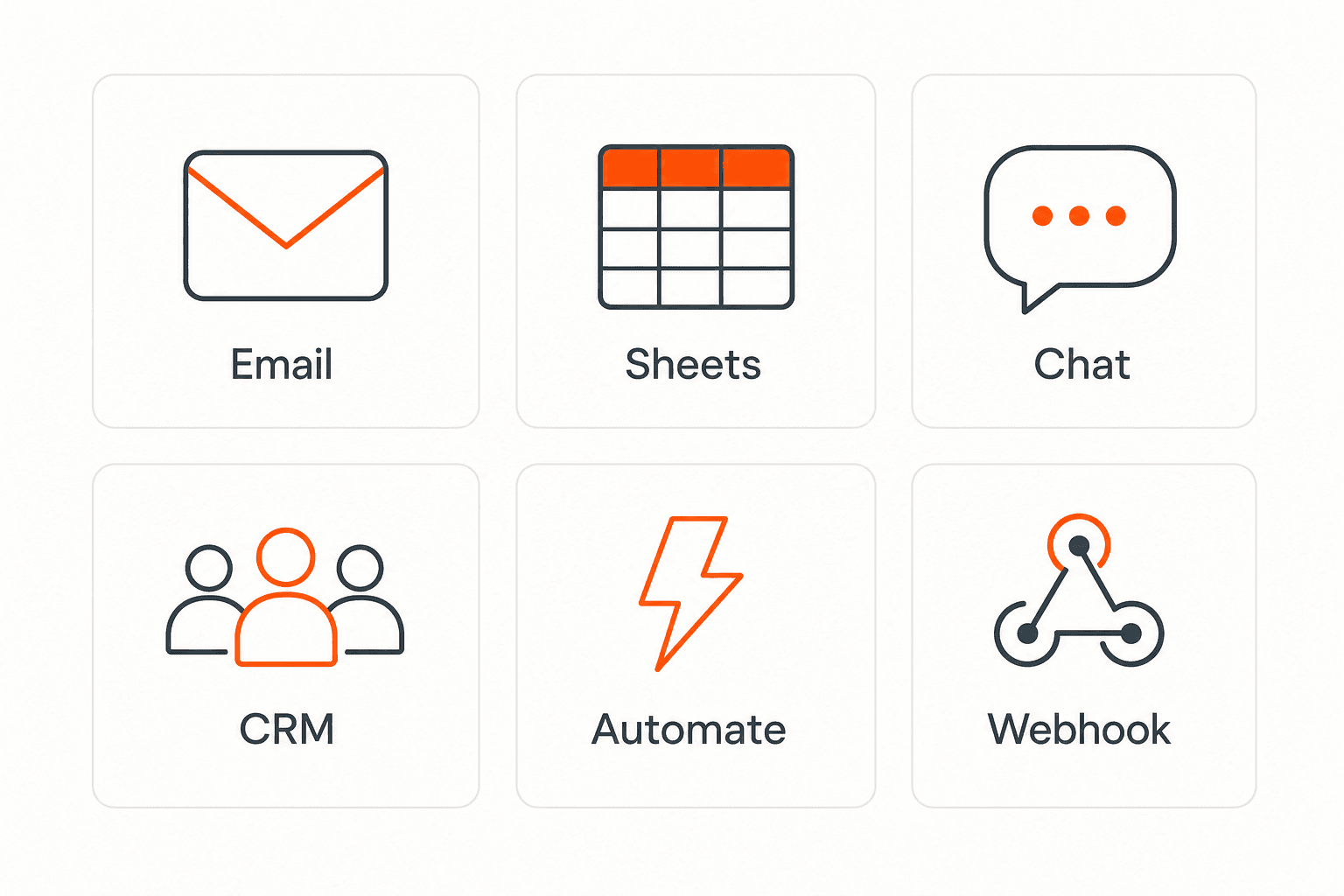
Send data to email, spreadsheets, CRMs, webhooks, and 7,000+ apps.
No credit card required. Set up in under 60 seconds.
Connect & automate
SplitForms works with the destinations you route to and the platforms you build on — from Slack and Sheets to WordPress, Shopify, and Next.js.
Trusted by indie teams and agencies shipping forms worldwide
Testimonials
40 quotes on record — from indie hacks to agency migrations.
“I replaced a Lambda + DynamoDB + SES contact form with six lines of HTML. It took eleven minutes, and the dashboard is better than what I was going to build.”
“We migrated 14 client sites off Formspree in a single weekend. The price is a third of what we paid, the API is more honest, and the spam filter actually works.”
“The webhook payload is signed, idempotent, and well-shaped. It reads like code from a competent team, not a CRUD app held together with duct tape.”
“I stopped reaching for Typeform on small marketing sites. splitforms covers 90% of the use case at none of the bloat.”
“I onboarded our whole agency in an afternoon. The MCP integration meant Cursor literally dropped the form straight into our client repos for us.”
“The free plan gave me 500 submissions before I paid a cent, and Pro is five dollars a month. I've spent more on coffee deciding which backend to use.”
“Spam went from forty junk entries a day to zero, with no reCAPTCHA puzzle ruining the form. The honeypot and time-trap just quietly do their job.”
“Point the form action at one endpoint and you're done. No SDK, no client library, no build step. This is how a form backend should feel.”
“Leads land in Slack the second someone submits, and a copy goes to Google Sheets for the sales team. I wired both up in under ten minutes.”
“I run a static Hugo site on a five-dollar VPS. splitforms gave it a real contact form without me standing up a single server.”
Common questions
It's native. Connect via Notion's official OAuth flow once in the splitforms dashboard, and splitforms writes pages directly through Notion's API — no internal integration secret to copy, no relay function to deploy or maintain. If you need a custom translation layer the native integration doesn't cover, the manual token-plus-relay path documented in the deep-dive guide still works.
Notion unlocks on Pro ($5/month) and above, with no per-page fee and no cap beyond your monthly submission limit. Pro includes 5,000 submissions/month and unlimited forms.
Notion's OAuth consent screen lets you pick exactly which page or database to share — splitforms can only see and write to what you explicitly grant, never your whole workspace. Revoke access any time from Notion → Settings → Connections → splitforms → Remove.
splitforms matches each form field to a Notion property by name; if no matching property exists yet, it creates one automatically as a plain text property, so a new form field never breaks the sync. Type-aware auto-mapping — turning an 'email' field into a real Email property, for example — isn't implemented yet, so every splitforms-created property is text. The built-in Submitted property is a real Date property.
Either. Connect Notion with no form selected and every form on your account writes into the same database; connect it again scoped to a specific form and that form gets its own dedicated database instead.
splitforms looks for a database you've already shared with it first; if it doesn't find one, it creates a new database under the first page you shared, titled 'SplitForms submissions', with the starter properties already in place.
Yes — splitforms also sends signed outbound webhooks, so if you need custom page content, rich Markdown bodies, or routing one submission into several databases at once, you can point a webhook at your own relay that calls the Notion API directly. Most teams find the native one-click connection is enough; the manual route is there for advanced cases.
Simple pricing
Choose a plan that fits your workflow — from a free form endpoint to full automations, exports, and higher submission limits.
Free forever
For side projects and indie devs.
For agencies and growing products.
Pay $59. 3 years sorted.
No credit card required on Free • Cancel anytime


