Step 1
In Make.com, create a new scenario. Add a Webhook → Custom webhook module as the first step. Make generates a unique URL.
Integration · Make
Send form submissions to Make to trigger scenarios.
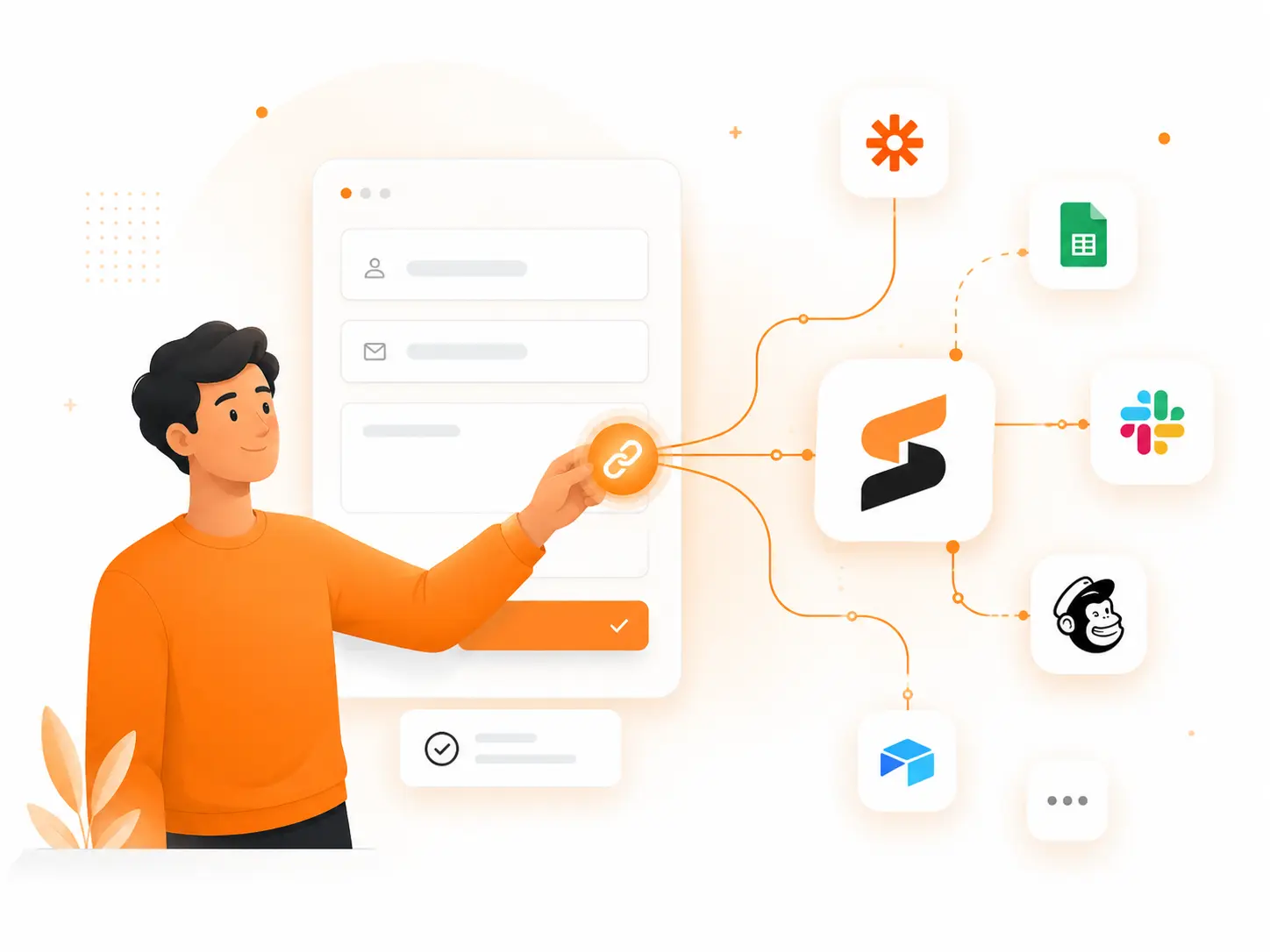
splitforms connects your forms to Make and moves every submission across the moment it's received — no manual export, no copy-paste.
Every submission is emailed to you and saved to a searchable dashboard, so the lead is captured even if Make is unreachable.
Connecting Make to your forms is included in your plan — no add-on charge and no per-message billing from splitforms.
Example: form markup
The form posts to https://splitforms.com/api/submit. The Makerouting is configured in the splitforms dashboard against the form's access key — there's no client-side Make-specific code in your HTML.
<form action="https://splitforms.com/api/submit" method="POST">
  <input type="hidden" name="access_key" value="YOUR_SPLITFORMS_KEY" />
  <input type="hidden" name="_route" value="make" />
  <input type="email" name="email" placeholder="you@example.com" required />
  <textarea name="message" placeholder="Your message" required></textarea>
  <button type="submit">Send to Make</button>
</form>
How it works
Here's how to send form submissions to Make in 6 steps — no code required, and most teams finish in a couple of minutes.
In Make.com, create a new scenario. Add a Webhook → Custom webhook module as the first step. Make generates a unique URL.
Copy that URL and paste it into the form's Webhooks tab in splitforms.
Submit a test entry. The Make webhook module will receive a sample payload — Make uses it to derive the data structure for downstream modules.
Add scenario modules — Google Sheets, Notion, HubSpot, Slack, anything in Make's library — and map splitforms fields into each.
Turn the scenario on. Each splitforms submission triggers a scenario run immediately.
Optional: use Make's filter modules to branch on submission content (e.g. priority, country, source) before fanning out to different downstream apps.
How teams use it
Use Make's Webhook module as a scenario trigger and splitforms can fan out to any of Make's 1,500+ app modules. Cheaper per-task than Zapier and runs scenarios immediately rather than polling. Prefer a plainer destination? The same form can also send form submissions to email or forward them to any webhook.
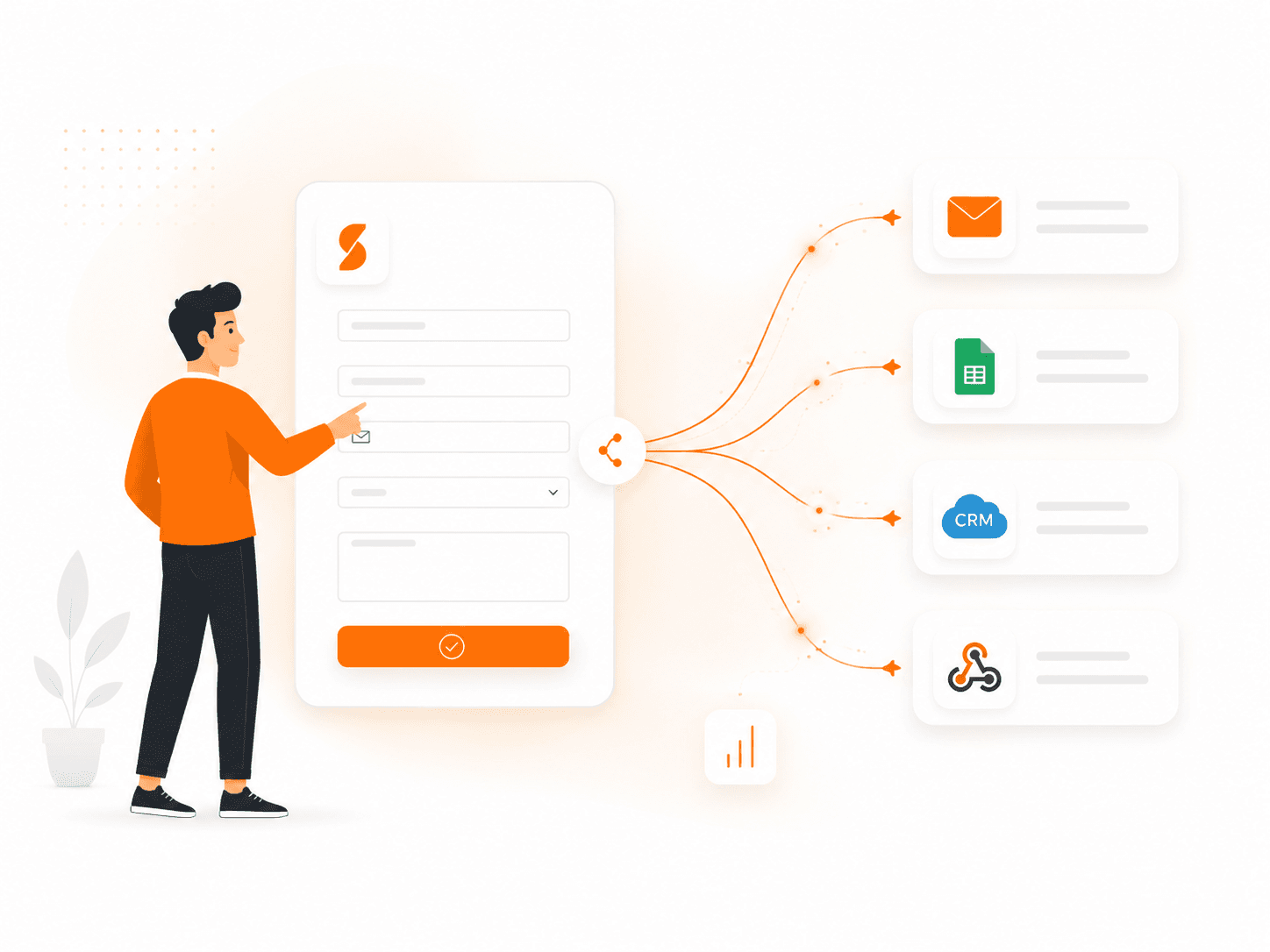
Why splitforms
Make undercuts Zapier on per-task pricing — both work natively with splitforms webhooks. splitforms is free for 500 submissions per month, $5/mo on Pro, or $59 for a 3-year plan (15,000 submissions/month, 36 months of access), with no per-integration add-on fees.

How SplitForms works
Connect your form, collect every submission, and send data where it needs to go — without building backend infrastructure.

Point your form to your unique SplitForms endpoint. That's it.
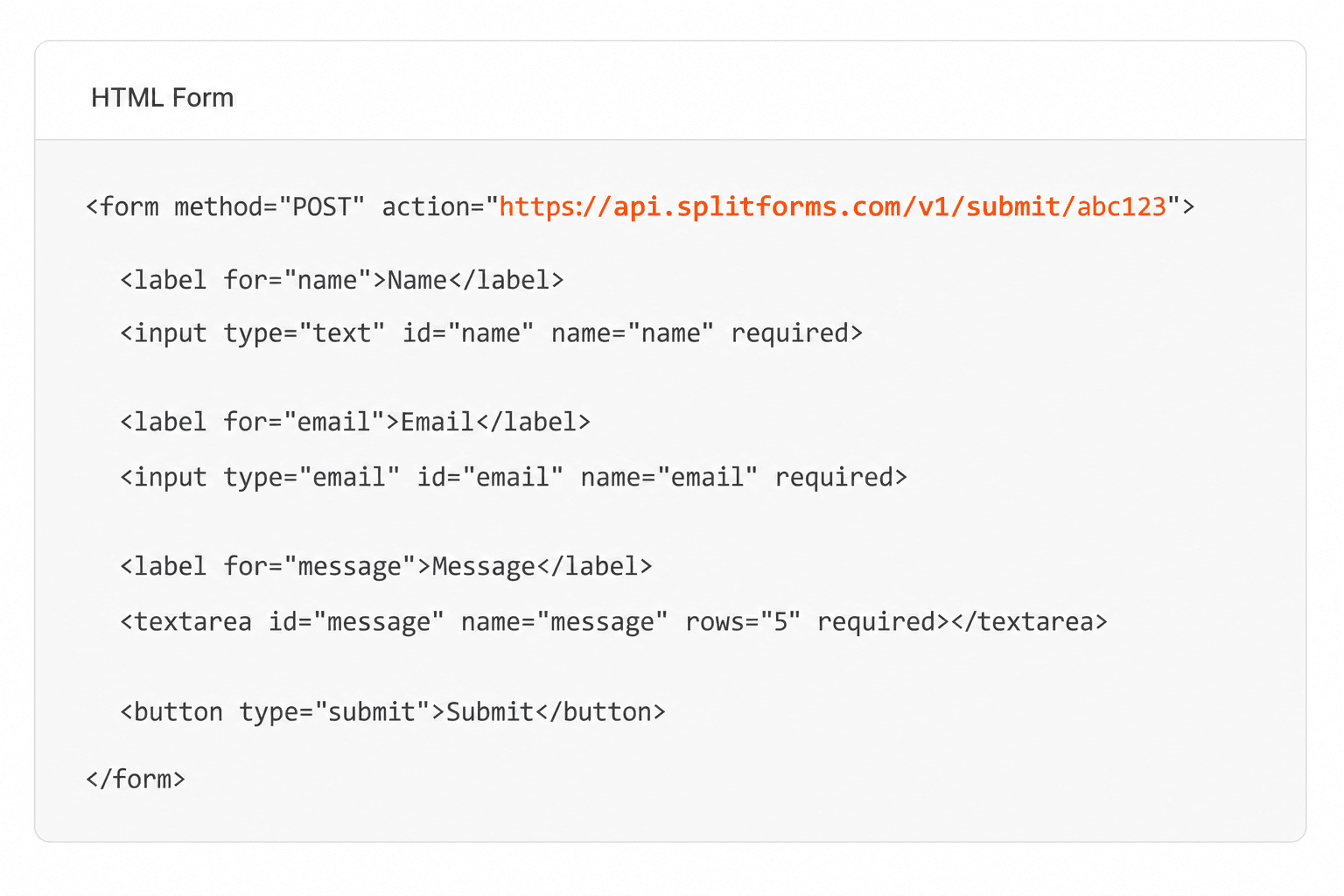
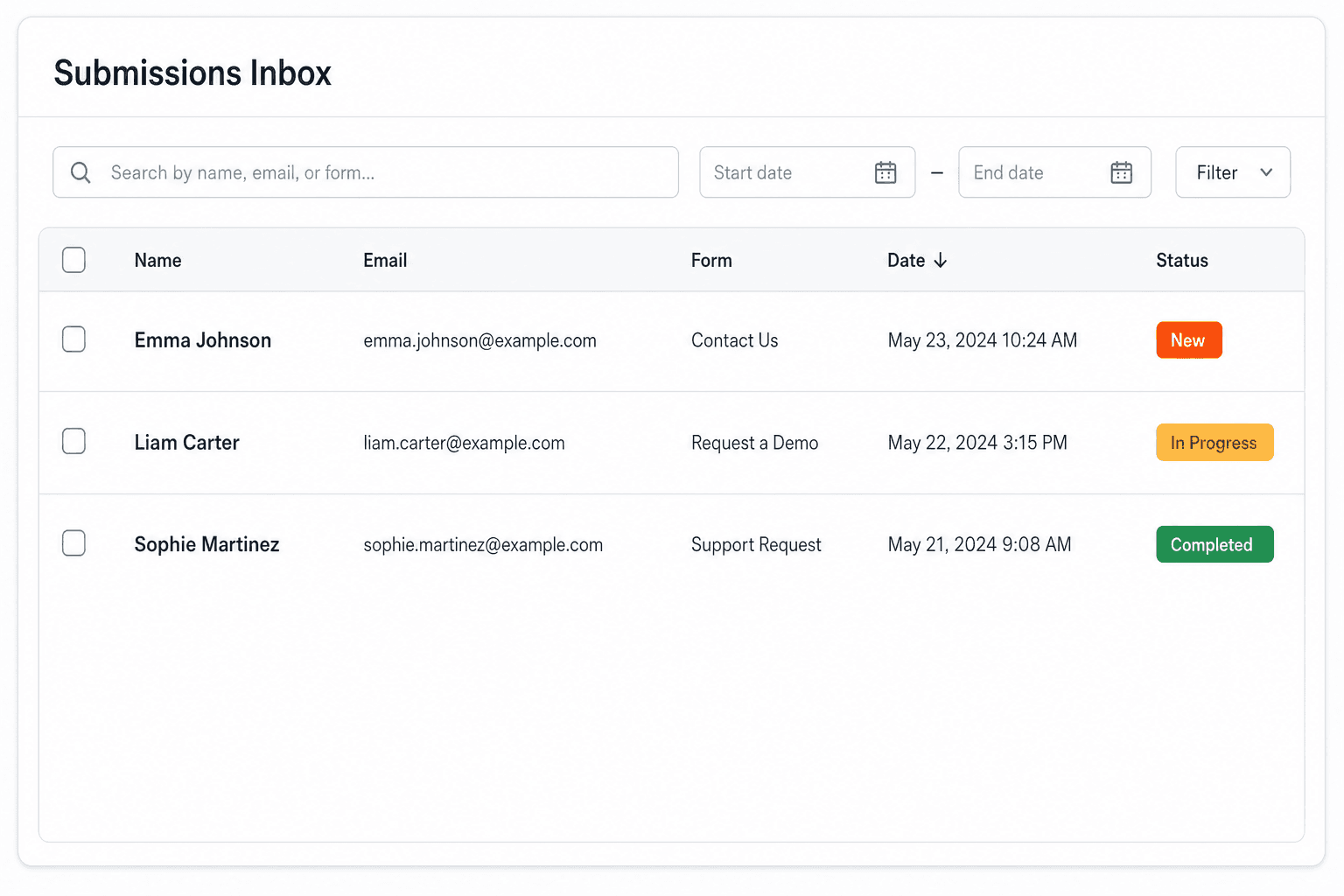
We instantly capture and organize every submission in your inbox.
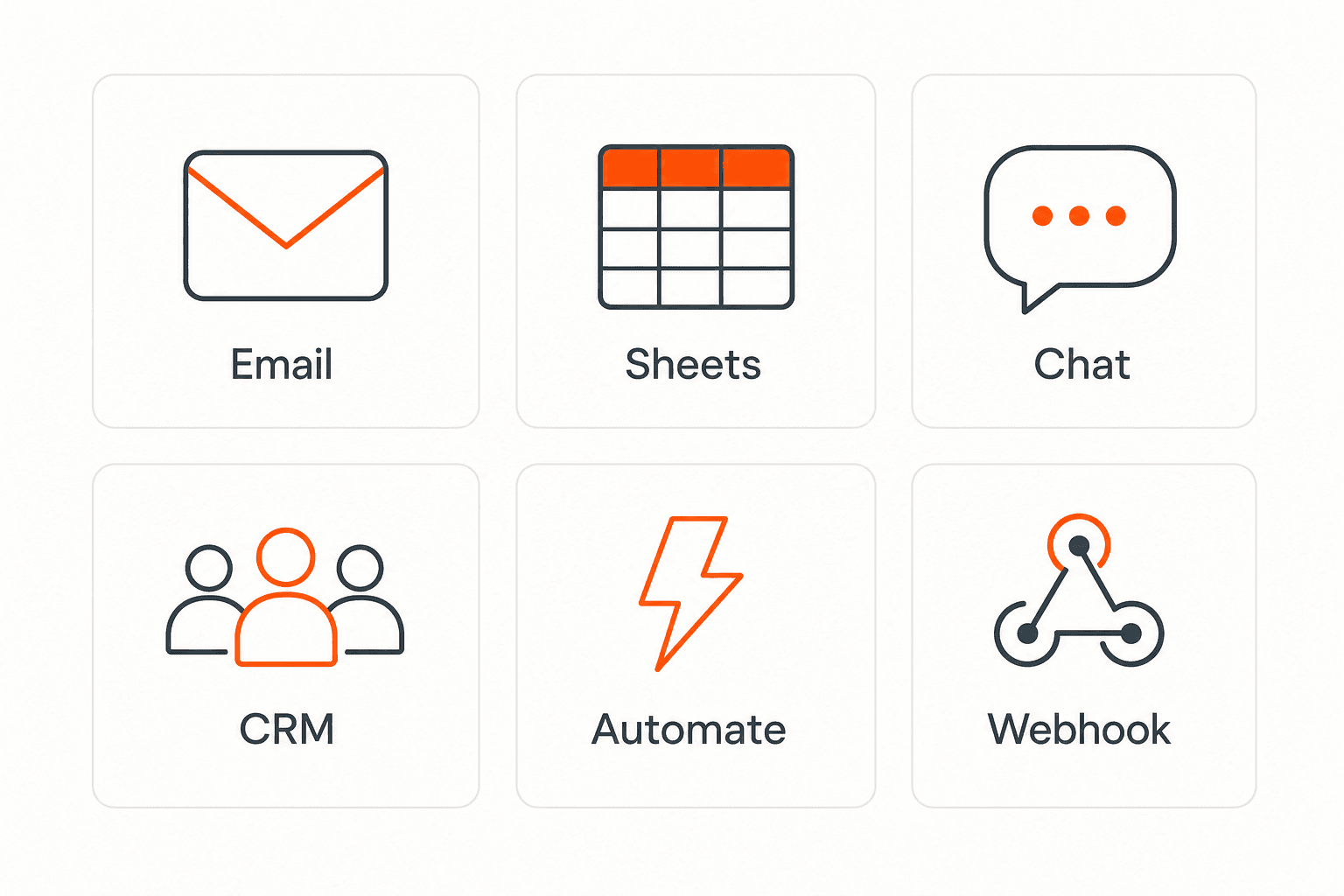
Send data to email, spreadsheets, CRMs, webhooks, and 7,000+ apps.
No credit card required. Set up in under 60 seconds.
Connect & automate
SplitForms works with the destinations you route to and the platforms you build on — from Slack and Sheets to WordPress, Shopify, and Next.js.
Trusted by indie teams and agencies shipping forms worldwide
Testimonials
40 quotes on record — from indie hacks to agency migrations.
“I replaced a Lambda + DynamoDB + SES contact form with six lines of HTML. It took eleven minutes, and the dashboard is better than what I was going to build.”
“We migrated 14 client sites off Formspree in a single weekend. The price is a third of what we paid, the API is more honest, and the spam filter actually works.”
“The webhook payload is signed, idempotent, and well-shaped. It reads like code from a competent team, not a CRUD app held together with duct tape.”
“I stopped reaching for Typeform on small marketing sites. splitforms covers 90% of the use case at none of the bloat.”
“I onboarded our whole agency in an afternoon. The MCP integration meant Cursor literally dropped the form straight into our client repos for us.”
“The free plan gave me 500 submissions before I paid a cent, and Pro is five dollars a month. I've spent more on coffee deciding which backend to use.”
“Spam went from forty junk entries a day to zero, with no reCAPTCHA puzzle ruining the form. The honeypot and time-trap just quietly do their job.”
“Point the form action at one endpoint and you're done. No SDK, no client library, no build step. This is how a form backend should feel.”
“Leads land in Slack the second someone submits, and a copy goes to Google Sheets for the sales team. I wired both up in under ten minutes.”
“I run a static Hugo site on a five-dollar VPS. splitforms gave it a real contact form without me standing up a single server.”
Common questions
For webhook triggers, yes. Make's webhook module fires immediately when the URL receives a request; Zapier's webhook trigger polls a queue every 1-15 minutes depending on plan. End-to-end you'll typically see Make finish a scenario in seconds where Zapier takes minutes.
Make's free plan includes 1,000 ops/month with up to 2 active scenarios. Their paid plans start at around $9/mo for 10,000 ops, which is materially cheaper per task than Zapier. Pricing changes — check make.com/en/pricing for current numbers.
Zapier has the wider app library and a friendlier UI for non-technical users. Make has stronger control flow (loops, error handlers, routers) and is cheaper at volume. If you're shipping a complex multi-step workflow, Make's interface scales better. For simple two-step Zaps, either works.
Yes — splitforms supports multiple webhook URLs per form. You can fire both a Make scenario and a Zapier zap from the same submission, though for most teams that's overkill.
The submission lands in the splitforms email + dashboard regardless of webhook outcome, so the lead is never lost. The failed delivery is recorded as the webhook's last status in the dashboard (deliveries aren't auto-retried today), so you can spot and fix a broken scenario quickly.
There's no reason to. Both platforms accept generic webhook triggers — splitforms posts directly to Make. Adding Zapier in between just costs extra tasks.
Simple pricing
Choose a plan that fits your workflow — from a free form endpoint to full automations, exports, and higher submission limits.
Free forever
For side projects and indie devs.
For agencies and growing products.
Pay $59. 3 years sorted.
No credit card required on Free • Cancel anytime


