
Capture what and who
Required: complainant name, contact email or phone, order / account / reference number, complaint category (product / service / billing / staff / delivery / other). Category drives the routing.
Form template · Feedback
A complaint that lands in the general inbox gets a generic reply. A complaint that lands on a manager's desk with the right context gets resolved. This form routes by severity from the first field.
Every template is free and fully editable in the drag-drop builder — swap fields, colors, and the button label before you publish.
No server, API route, or SDK — your Complaint Form posts straight to one endpoint.
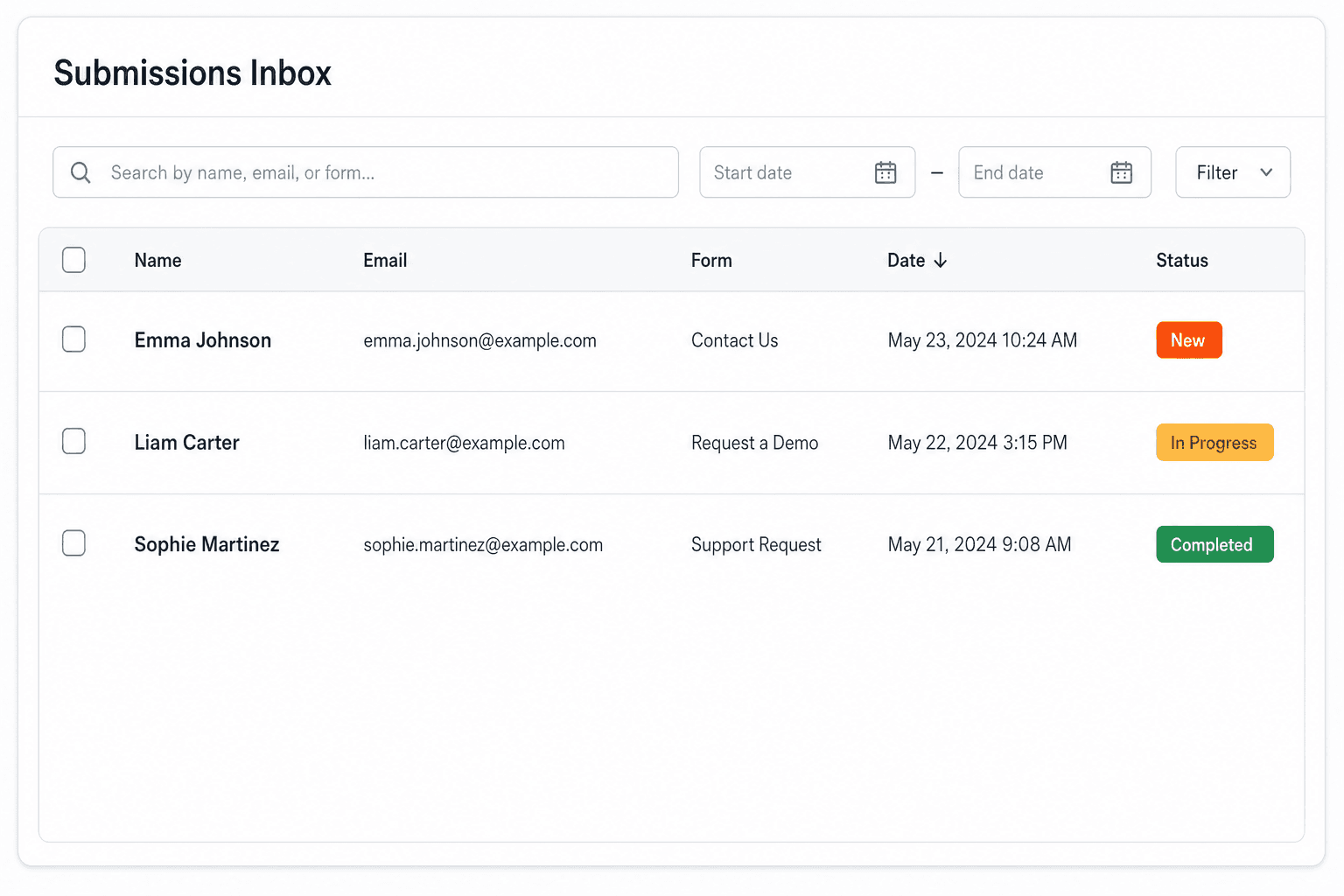
Every submission is emailed to you and saved to a searchable dashboard — spam filtered before it reaches you.
It's plain HTML you own — paste the Complaint Form snippet, swap in your access key, and ship.
Copy and ship
HTML by default — the same field set also renders as React, Next.js, PHP, and cURL in your dashboard. Every variant posts to the same /api/submit endpoint. Replace YOUR_ACCESS_KEY with the key from your dashboard; that's the only edit.
<form action="https://splitforms.com/api/submit" method="POST">
  <input type="hidden" name="access_key" value="YOUR_ACCESS_KEY">
  <input type="hidden" name="subject" value="New feedback submission">

  <label for="rating">How would you rate your experience? *</label>
  <select id="rating" name="rating" required>
    <option value="">Choose…</option>
    <option>★★★★★</option>
    <option>★★★★☆</option>
    <option>★★★☆☆</option>
    <option>★★☆☆☆</option>
    <option>★☆☆☆☆</option>
  </select>
  <label for="feedback">What can we do better? *</label>
  <textarea id="feedback" name="feedback" placeholder="Be honest — we won't take it personally." required></textarea>
  <label for="email">Email (optional, for follow-up)</label>
  <input id="email" type="email" name="email" placeholder="you@example.com">

  <!-- honeypot — bots fill every field -->
  <input type="checkbox" name="botcheck" style="display:none" tabindex="-1" autocomplete="off">

  <button type="submit">Send</button>
</form><p class="splitforms-attribution" style="margin-top:12px;font-size:11px;color:#888;text-align:right">
  Powered by <a href="https://splitforms.com" style="color:#888;text-decoration:none" target="_blank" rel="sponsored noopener">splitforms</a>
</p>
How to add it
To add a Complaint Form to your site you need three things: a free splitforms access key, the HTML snippet above, and your key pasted into it. No backend, database, or CAPTCHA library — the form posts to one URL and every submission lands in your inbox and dashboard.
Required: complainant name, contact email or phone, order / account / reference number, complaint category (product / service / billing / staff / delivery / other). Category drives the routing.
Severity dropdown (minor inconvenience / significant issue / serious — needs manager / safety or legal concern) and a description textarea. Severity escalates: serious complaints ping a manager inbox, safety complaints route to legal within hours.
Auto-respond within minutes with a reference number and a realistic reply window. Webhook the submission to the right team based on category and severity — and to a manager dashboard so serious complaints are visible, not buried.
What's included
Unresolved complaints are how you lose customers, get chargebacks, and collect one-star reviews. The form's job isn't to make complaining harder — it's to route the complaint to the right responder with enough context to act. Severity and category drive the routing: a billing-error complaint goes to finance, a staff-conduct complaint to a manager, a product-safety complaint to legal. Same form, three completely different responders, all replied to inside the SLA your customer actually cares about. Severity + category routes the complaint — manager sees serious, finance sees billing, legal sees safety.

Where submissions go
Reply-to is wired to the visitor's email, so one tap on Reply answers them directly — while the built-in honeypot and spam classifier filter out bots before they reach you. Every submission is emailed to your inbox and can forward to a webhook or Slack the moment a visitor hits send.

How SplitForms works
Connect your form, collect every submission, and send data where it needs to go — without building backend infrastructure.

Point your form to your unique SplitForms endpoint. That's it.
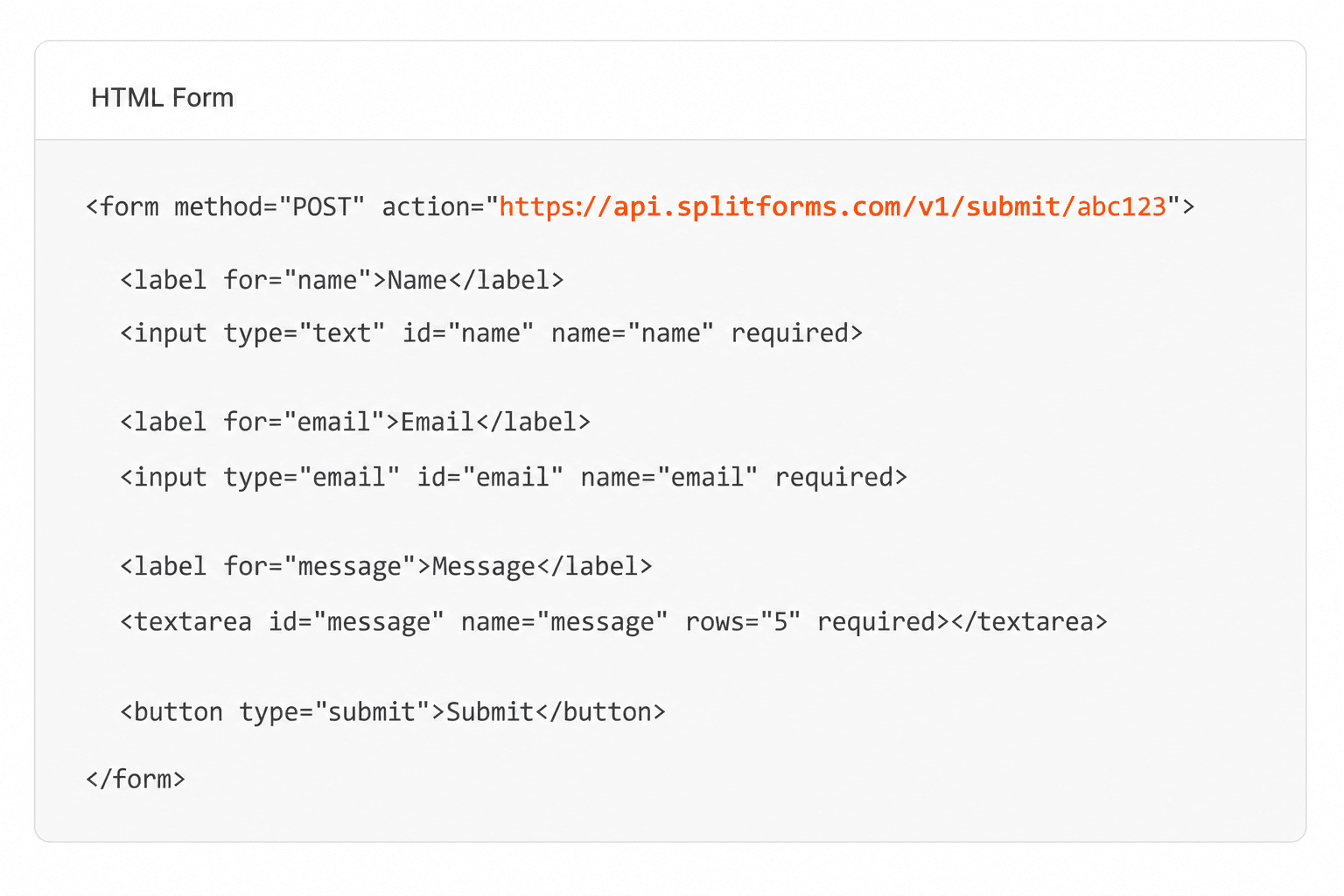
We instantly capture and organize every submission in your inbox.
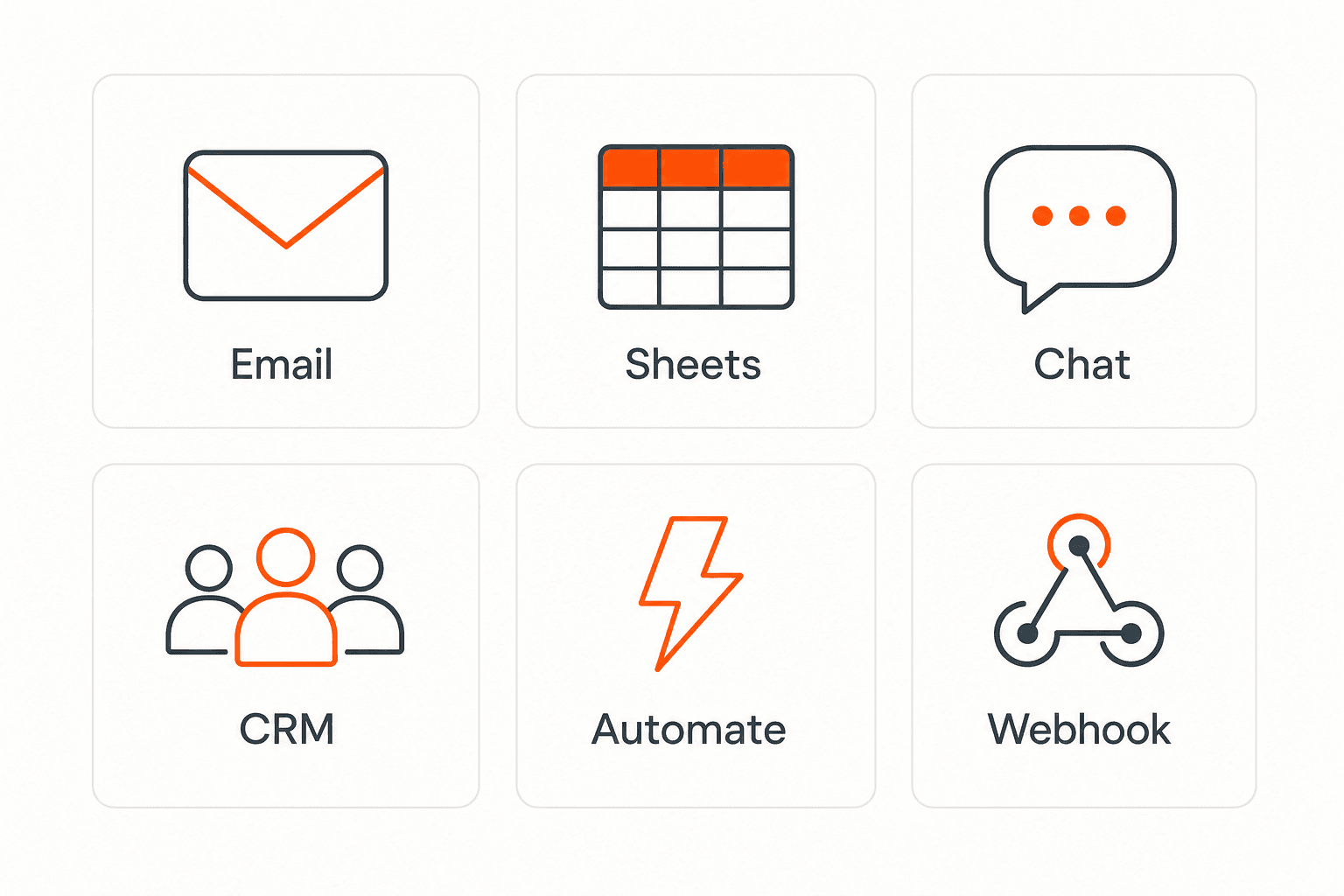
Send data to email, spreadsheets, CRMs, webhooks, and 7,000+ apps.
No credit card required. Set up in under 60 seconds.
Connect & automate
SplitForms works with the destinations you route to and the platforms you build on — from Slack and Sheets to WordPress, Shopify, and Next.js.

Trusted by indie teams and agencies shipping forms worldwide
Testimonials
40 quotes on record — from indie hacks to agency migrations.
“I replaced a Lambda + DynamoDB + SES contact form with six lines of HTML. It took eleven minutes, and the dashboard is better than what I was going to build.”
“We migrated 14 client sites off Formspree in a single weekend. The price is a third of what we paid, the API is more honest, and the spam filter actually works.”
“The webhook payload is signed, idempotent, and well-shaped. It reads like code from a competent team, not a CRUD app held together with duct tape.”
“I stopped reaching for Typeform on small marketing sites. splitforms covers 90% of the use case at none of the bloat.”
“I onboarded our whole agency in an afternoon. The MCP integration meant Cursor literally dropped the form straight into our client repos for us.”
“The free plan gave me 500 submissions before I paid a cent, and Pro is five dollars a month. I've spent more on coffee deciding which backend to use.”
“Spam went from forty junk entries a day to zero, with no reCAPTCHA puzzle ruining the form. The honeypot and time-trap just quietly do their job.”
“Point the form action at one endpoint and you're done. No SDK, no client library, no build step. This is how a form backend should feel.”
“Leads land in Slack the second someone submits, and a copy goes to Google Sheets for the sales team. I wired both up in under ten minutes.”
“I run a static Hugo site on a five-dollar VPS. splitforms gave it a real contact form without me standing up a single server.”
Questions
Yes — at minimum, a separate tag or folder. Complaints need a different SLA (faster), a different responder (empowered to issue refunds or escalations), and a different tone in the reply. Mixing them with general tickets guarantees some get a generic canned response.
Standard pattern: 'Thank you for raising this. We've logged your complaint as reference #12345 and a manager will respond within [X business days]. We take this seriously and will investigate.' Acknowledges the complaint, sets a timeline, doesn't admit liability. Run the wording past legal if you're in a regulated industry.
Flag them — add a keyword detector in your webhook that surfaces any submission mentioning 'sue', 'lawyer', 'attorney general', 'BBB', 'ombudsman', or 'regulator'. Those route straight to legal or senior leadership, not the front-line queue. Speed of response matters disproportionately for these.
Yes — webhook category-tagged complaints into your QA tool or a Notion / Airtable dashboard. Monthly review of complaint patterns surfaces training gaps, product defects, and process failures before they become a trend on review sites.
Optional file upload for receipts, photos, or screenshots — Pro feature. Don't require it; many complaints are valid without documentation and requiring uploads drops submission. Offer it; let customers attach if they have evidence ready.
Simple pricing
Choose a plan that fits your workflow — from a free form endpoint to full automations, exports, and higher submission limits.
Free forever
For side projects and indie devs.
For agencies and growing products.
Pay $59. 3 years sorted.
No credit card required on Free • Cancel anytime


