
Get a free access key
Sign up at splitforms.com — no credit card. Copy your key from the dashboard.
SplitForms vs Kwes Forms
500 free submissions each month, a modern developer API, and pricing that stays simple as you grow.
Get started in minutes
Drop one endpoint into the HTML you already have and submissions start flowing — no backend to host, no SDK to install, no lengthy onboarding. Point your form, hit submit, and watch the entries land.

Feature-by-feature comparison
A side-by-side look at the details developers actually care about when comparing splitforms and Kwes Forms.
| Feature | splitforms | Kwes Forms |
|---|---|---|
| Free tier | 500 submissions/mo, unlimited forms | Limited free tier with branded validation messages |
| Cheapest paid plan | $5/mo Pro (5,000 submissions) | $9/month (Personal) |
| Long-term plan | $59 every 3 years (15,000/mo, 36 months) | Not offered |
| Submission dashboard | Yes, with search & export | Yes |
| Webhook delivery | paid plans, signed; one 8-second attempt | Yes |
| File uploads | Storage-backed, 5 files at 5 MB each | Yes (often paid) |
| Spam protection | AI classifier + honeypot | Honeypot / CAPTCHA |
| Host requirement | None — works anywhere | None |

See everything
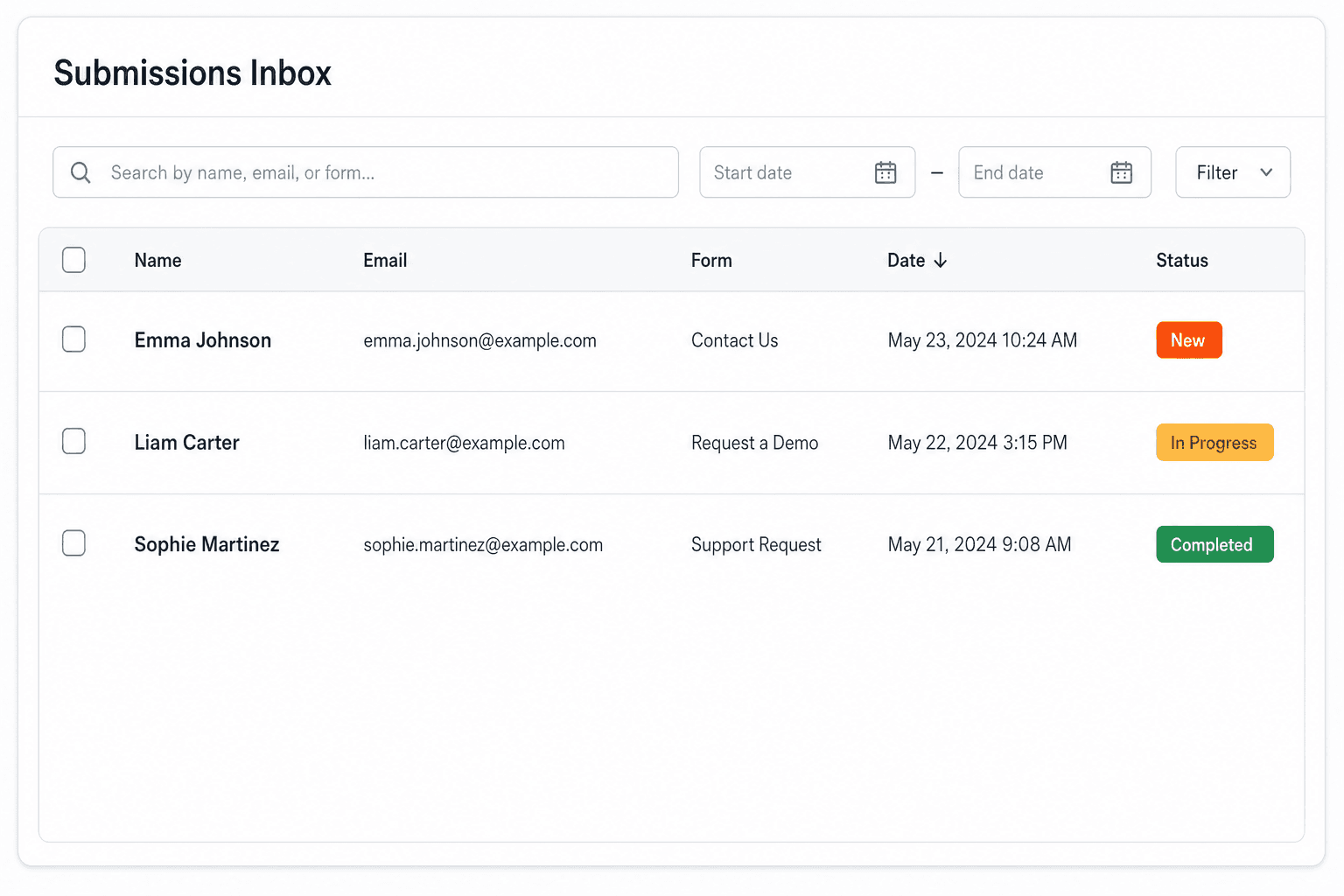
Search, filter, and export every entry, watch your analytics update live, and let the built-in spam shield drop junk before it ever reaches your inbox — all in one clean control room.
Where your leads go
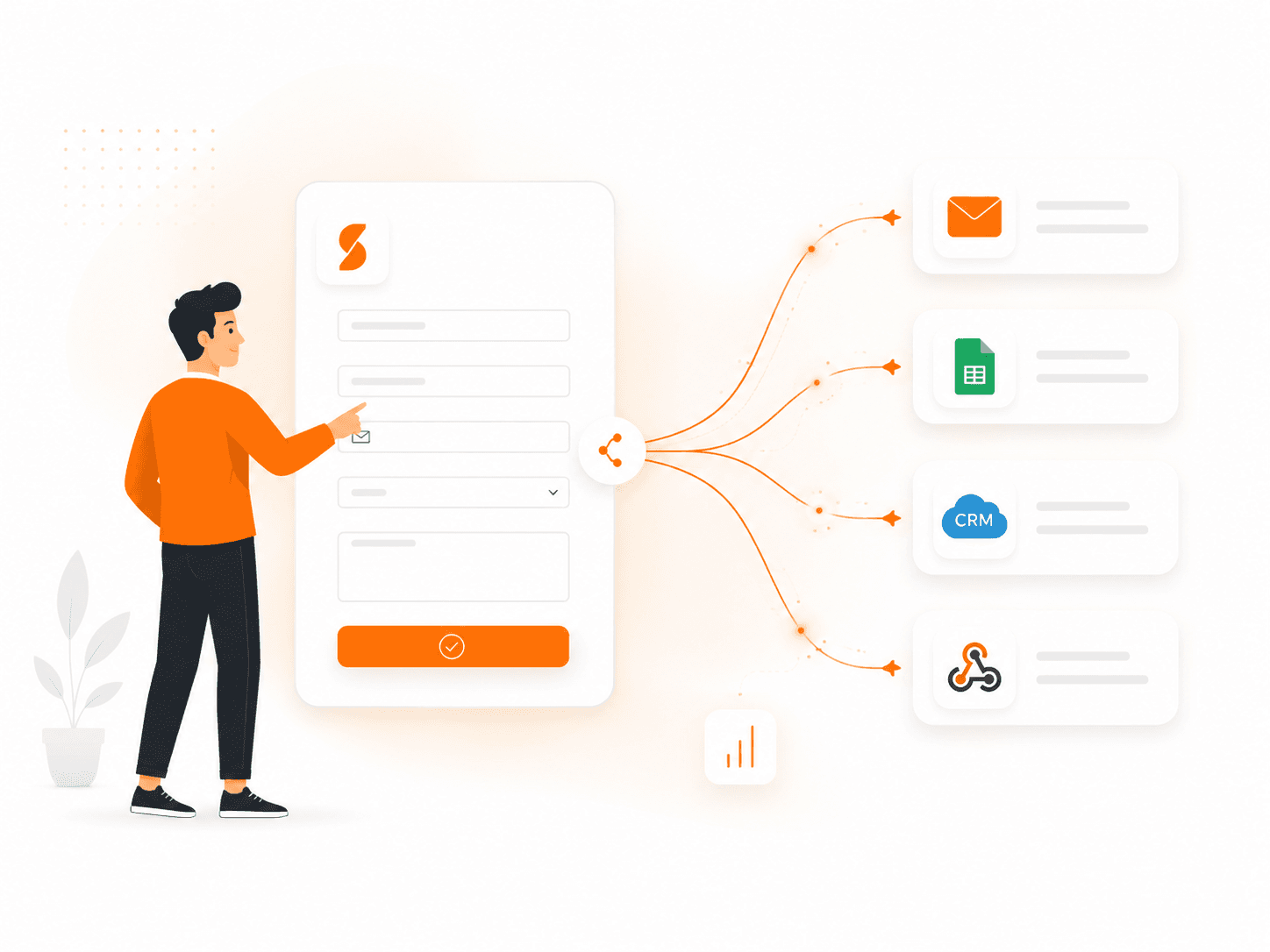
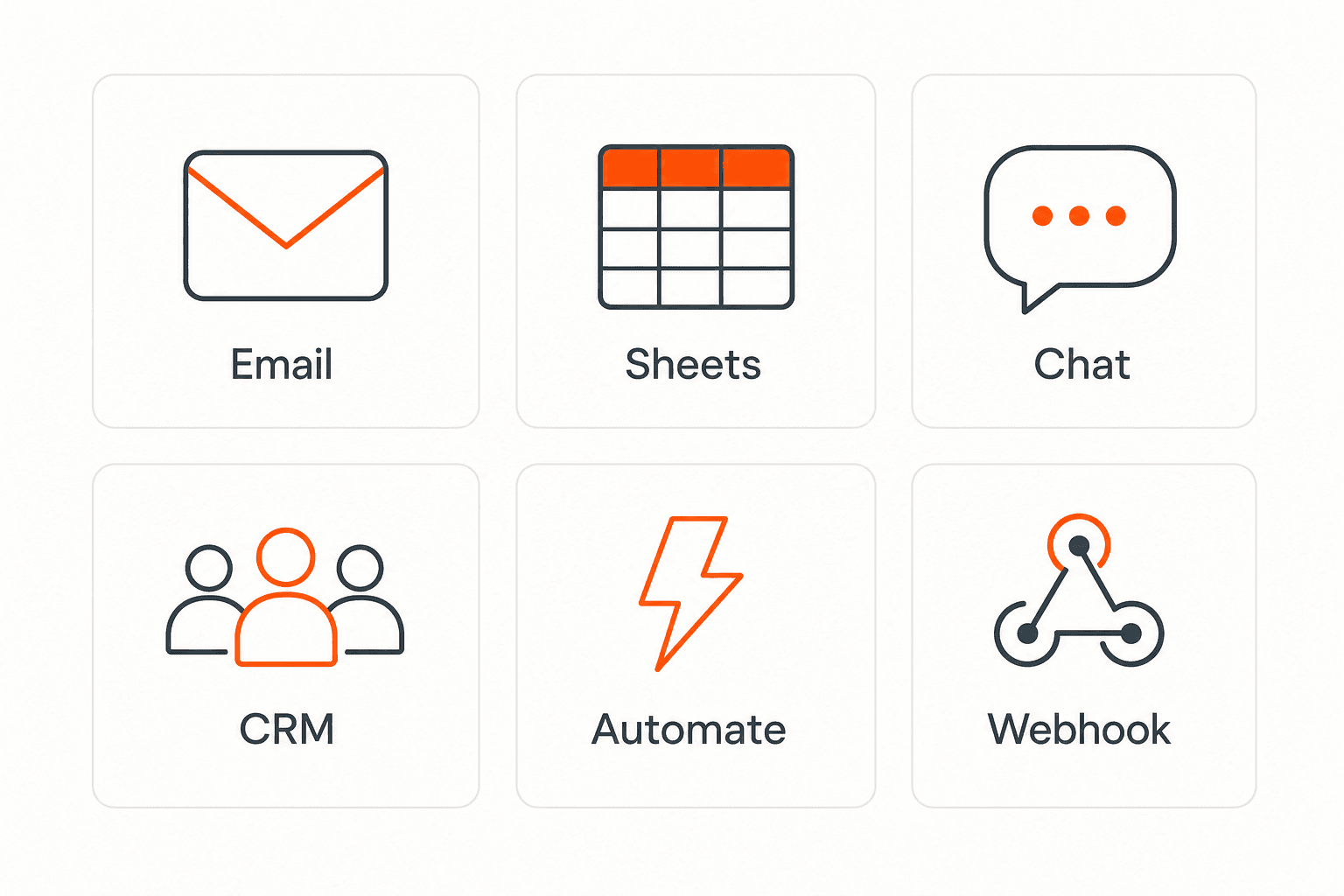
Forward submissions to email, Google Sheets, your CRM, or any webhook the moment they arrive. When you move off Kwes Forms, your leads keep landing exactly where your team expects them — nothing to re-wire.
Leave Kwes Forms in ~10 minutes
Keep your HTML, field names, and styles. Only the POST endpoint changes — most teams finish a site in one short session.
Sign up at splitforms.com — no credit card. Copy your key from the dashboard.
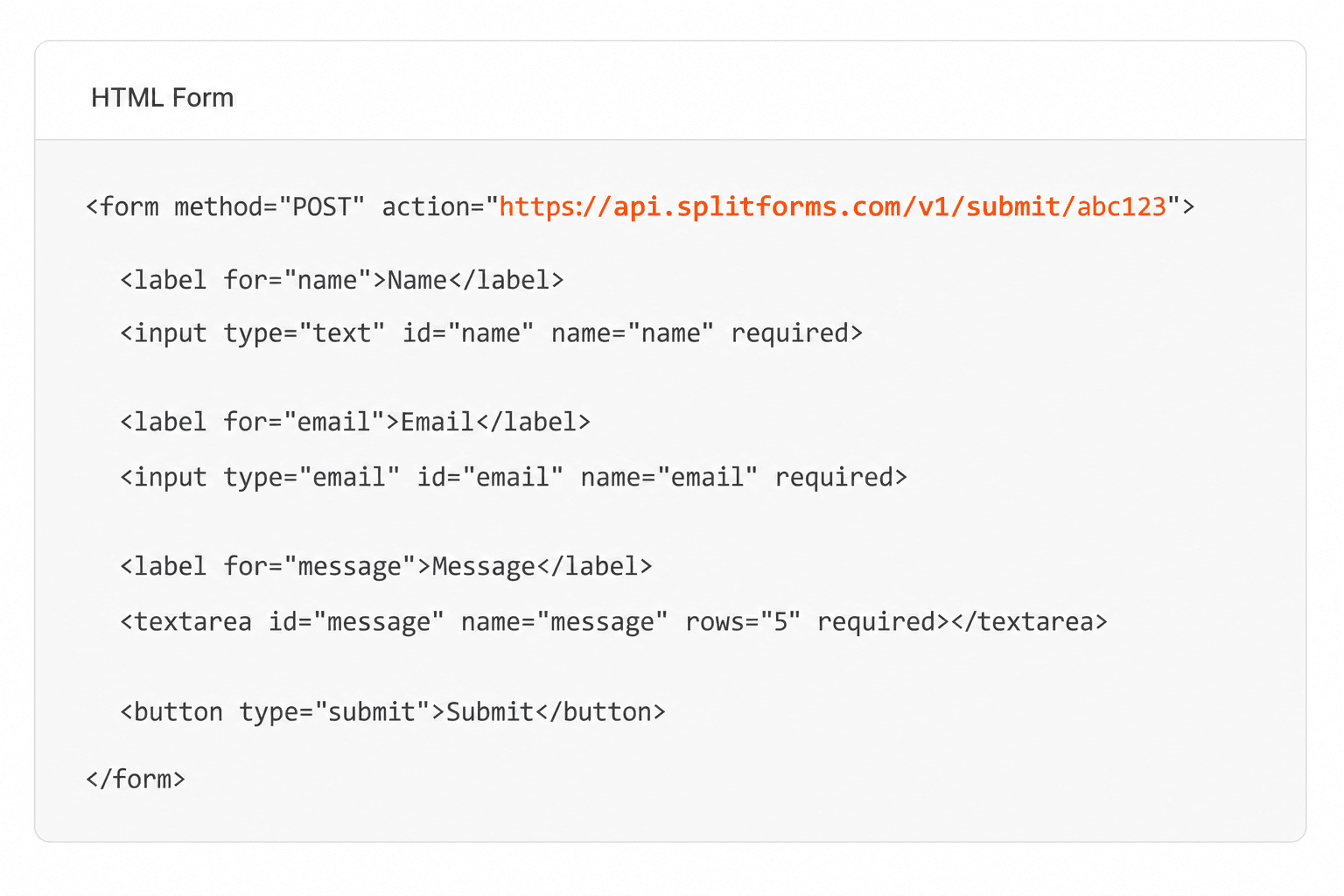
Point your form to https://splitforms.com/api/submit and include your access_key.
Submit a sample entry, confirm inbox + dashboard, then remove the old endpoint.
How SplitForms works
Connect your form, collect every submission, and send data where it needs to go — without building backend infrastructure.
Point your form to your unique SplitForms endpoint. That's it.
We instantly capture and organize every submission in your inbox.
Send data to email, spreadsheets, CRMs, webhooks, and 7,000+ apps.
No credit card required. Set up in under 60 seconds.
Connect & automate
SplitForms works with the destinations you route to and the platforms you build on — from Slack and Sheets to WordPress, Shopify, and Next.js.

Trusted by indie teams and agencies shipping forms worldwide
Testimonials
40 quotes on record — from indie hacks to agency migrations.
“I replaced a Lambda + DynamoDB + SES contact form with six lines of HTML. It took eleven minutes, and the dashboard is better than what I was going to build.”
“We migrated 14 client sites off Formspree in a single weekend. The price is a third of what we paid, the API is more honest, and the spam filter actually works.”
“The webhook payload is signed, idempotent, and well-shaped. It reads like code from a competent team, not a CRUD app held together with duct tape.”
“I stopped reaching for Typeform on small marketing sites. splitforms covers 90% of the use case at none of the bloat.”
“I onboarded our whole agency in an afternoon. The MCP integration meant Cursor literally dropped the form straight into our client repos for us.”
“The free plan gave me 500 submissions before I paid a cent, and Pro is five dollars a month. I've spent more on coffee deciding which backend to use.”
“Spam went from forty junk entries a day to zero, with no reCAPTCHA puzzle ruining the form. The honeypot and time-trap just quietly do their job.”
“Point the form action at one endpoint and you're done. No SDK, no client library, no build step. This is how a form backend should feel.”
“Leads land in Slack the second someone submits, and a copy goes to Google Sheets for the sales team. I wired both up in under ten minutes.”
“I run a static Hugo site on a five-dollar VPS. splitforms gave it a real contact form without me standing up a single server.”
Common questions
Yes. splitforms handles the same core jobs as Kwes Forms: a POST endpoint, email delivery, a submission dashboard, webhooks, and spam filtering. The Free plan covers 500 submissions/month with unlimited forms, versus Kwes Forms's Limited free tier with branded validation messages — so most developers get more headroom without paying more.
For an endpoint-based form service, migrate by creating a splitforms access key, changing the form action to https://splitforms.com/api/submit, deploying, and sending a test entry. Field names, validation, and styling can stay unchanged.
splitforms includes email delivery, a searchable dashboard, HMAC-signed webhooks on paid plans (one attempt, 8-second timeout), storage-backed file uploads on eligible plans, custom redirects, spam filtering, and a documented REST API. Kwes Forms-specific features like declarative validation via `data-kwes-*` attributes (no js required) may need an integration.
splitforms is free for 500 submissions/month; the current paid entry is $5/mo Pro (5,000 submissions), and the $59 3-Year plan includes 15,000 submissions/month across 36 months. Kwes Forms starts at $9/month (Personal). Verify both pricing pages because allowances can change.
Your HTML can stay in place. Preserve field names, validation, and styling, change the action and access key, then test the production form before completing the switch.
Yes — the 3-Year plan is one $59 payment covering 36 months at 15,000 submissions/month, with no monthly billing in between. Check Kwes Forms's current pricing page before comparing billing terms.
splitforms is built for developers shipping production sites — static sites, SaaS landing pages, JAMstack apps, and agency client work. For sites where client-side validation rules in html attributes are the primary differentiator, the deciding factor is usually whether declarative validation via `data-kwes-*` attributes (no js required) matters to you; if it does, keep Kwes Forms in the mix. Otherwise splitforms is the endpoint-driven option.
Simple pricing
Choose a plan that fits your workflow — from a free form endpoint to full automations, exports, and higher submission limits.
Free forever
For side projects and indie devs.
For agencies and growing products.
Pay $59. 3 years sorted.
No credit card required on Free • Cancel anytime
Deep dive
Short, honest answers on pricing, migration, and when Kwes Forms is still the better fit.
Kwes Forms is the right call if you specifically want declarative client-side validation driven by HTML attributes — `data-kwes-rules="required|email"` and you're done. The polish is real, and it's particularly comfortable in Webflow projects where a designer is wiring the form without writing JS.
splitforms is the right call when you want the backend to do its job (storage, classification, notification, webhooks) and you're picking your own validation stack — native HTML validation, Zod + React Hook Form, Yup, whatever. splitforms doesn't require a runtime dependency in your page, doesn't dictate validation UI, and gives you a larger free tier with a more developer-first API.
The most common trigger is the runtime dependency. Kwes Forms requires loading their client-side JS bundle for validation to work. If you care about page weight, CSP rules, or want to ship a form that works without JavaScript, the dependency becomes friction. splitforms ships a backend — your validation is whatever you choose, including no JS at all.
The second trigger is pricing per form-count. Kwes Forms tiers on form count in addition to submission volume. Running a portfolio with multiple landing-page forms, or an agency with several client sites, hits the cap fast. splitforms has no per-form limit on any tier.
The third trigger is webhook signing. Kwes Forms supports webhooks, but the signing story is less mature than splitforms's. For a production integration, HMAC-SHA256 signed payloads your receiver can verify matter — splitforms also ships a free webhook tester at splitforms.com/webhook-tester.
“I don't want to ship a 20KB validation bundle.”
splitforms has no required client-side runtime. Use native HTML validation, your own JS, or nothing.
“I'm hitting the form-count cap.”
splitforms has no per-form limit on any plan.
“I need signed webhooks for my CRM integration.”
splitforms ships HMAC-SHA256 signed webhooks on paid plans — single delivery attempt, 8-second timeout.
“The CAPTCHA is hurting my conversion rate.”
splitforms uses invisible AI classification instead.
Step 1: sign up at splitforms.com for a free access key. Step 2: change your form's action to `https://splitforms.com/api/submit` and remove the Kwes Forms script tag. Step 3: pick a validation approach — native HTML attributes (`required`, `type="email"`, `pattern`), Zod + React Hook Form, or your library of choice. Step 4: submit a test entry and deploy.
Is splitforms a viable Kwes Forms alternative? Yes — splitforms covers storage, spam filtering, notifications, and webhooks. Validation is your pick (which most developers prefer).
Will I lose Kwes's polished validation UI? You'll need to recreate it (or use a different library). Native HTML validation is free; React Hook Form + Zod is the modern default.
What about Webflow integration? splitforms works with Webflow — set your form's action attribute to the splitforms endpoint in Webflow's form settings.
Is there a long-term plan? Yes — $59 for the 3-Year plan at 15,000 submissions/month for 36 months.
More comparisons


