
Get a free access key
Sign up free and create a form in the dashboard, or ask the MCP create_form tool to provision one for you. splitforms generates the access_key automatically — no card required.
AI agent form backend
Updated · plan facts checked against /pricing
An AI agent form backend is the endpoint an agent-built form or chatbot posts leads to, so the agent never has to run a server. splitforms does it for Claude Code, Cursor, ChatGPT, and any other agent on any host: one endpoint stores each lead, filters spam, and emails your team, and a free MCP server reads leads back.

POST any agent-built form to a single stable submission endpoint — no server to run.
A honeypot and a form_loaded_at time-trap block bots before they reach your inbox.
Agents provision forms and read their own leads back through the free MCP server.
Form submission API
The agent makes one call to the backend: it POSTs the collected lead to the submit endpoint with your access key. Read the leads back with the same token that powers the MCP server, all documented in the API docs.
// From a chatbot/agent backend, after the lead is collected
await fetch("https://splitforms.com/api/submit", {
  method: "POST",
  headers: { "Content-Type": "application/json" },
  body: JSON.stringify({
    access_key: "YOUR_ACCESS_KEY",
    form_loaded_at: sessionStartedAt,
    name: lead.name,
    email: lead.email,
    message: lead.summary,
    source: "ai-agent",
    botcheck: ""
  })
});
Setup
Connecting an AI agent to a form backend takes three moving parts: a free access key, an agent-built form pointed at one endpoint, and the free MCP server or API to read leads back. No server, no build step.
Sign up free and create a form in the dashboard, or ask the MCP create_form tool to provision one for you. splitforms generates the access_key automatically — no card required.
Set the form's method to POST and its action (or fetch URL) to https://splitforms.com/api/submit. Include the hidden access_key, an empty botcheck honeypot, and a form_loaded_at timestamp field.
Fire a real submission and confirm it lands in the dashboard and your inbox. Email notifications to the form owner are free on every plan, including Free.
Call GET /api/submissions with a personal access token (Dashboard → MCP), or call the MCP list_submissions tool, so the agent can act on new leads without a human checking a dashboard.
On paid plans, add a signed webhook or a native integration — Google Sheets, Notion, Airtable, Slack, Discord, Telegram, WhatsApp, or Mailchimp — so leads move without polling.
What is a form backend?
An AI agent form backend is a single HTTPS endpoint that receives whatever form or chatbot an agent builds. splitforms is that endpoint: POST to https://splitforms.com/api/submit with your hidden access_key and it stores the lead, filters spam, emails your team, and can forward it through webhooks. Agents are good at producing markup — the operational backend still needs delivery, storage, routing, and abuse controls.
Quick start
Paste one prompt into Cursor, Claude Code, or ChatGPT: tell it to POST a name, email, and message form to https://splitforms.com/api/submit with a hidden access_key, an empty botcheck honeypot, and a form_loaded_at timestamp. The agent writes the markup; splitforms receives it — no server, no build step. See the Next.js example for a full agent-generated form.

Read leads back
An agent reads its own leads with a personal access token — the same token that powers the MCP server. Call GET /api/submissions, or use the free MCP list_submissions tool, so the agent acts on new leads without a human checking a dashboard. Full auth and webhook signatures are in the API docs.

How SplitForms works
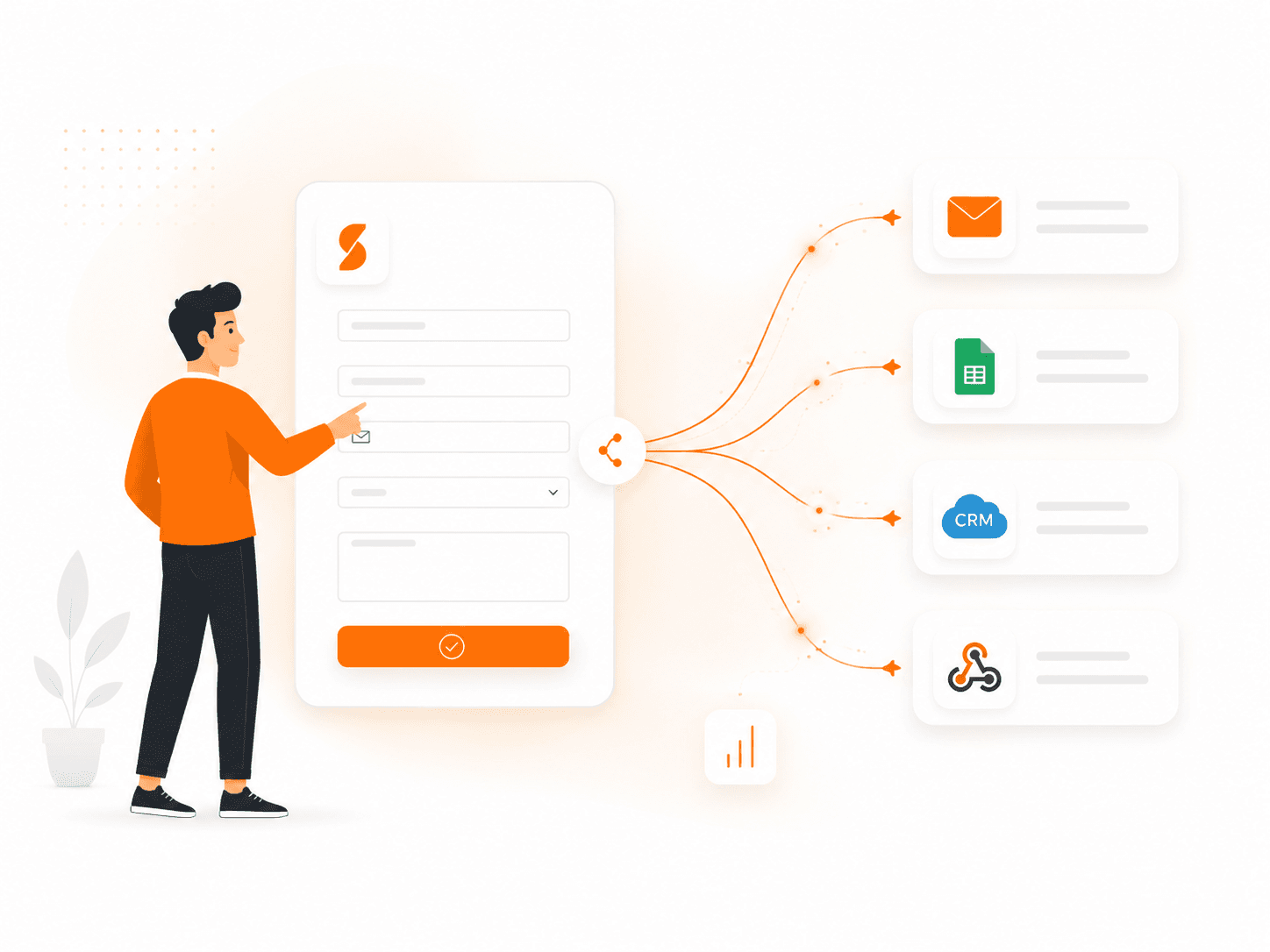
splitforms receives the submission, filters spam, saves it to your dashboard and emails you — then, on paid plans, sends it on to your webhooks and integrations. No backend infrastructure to build.

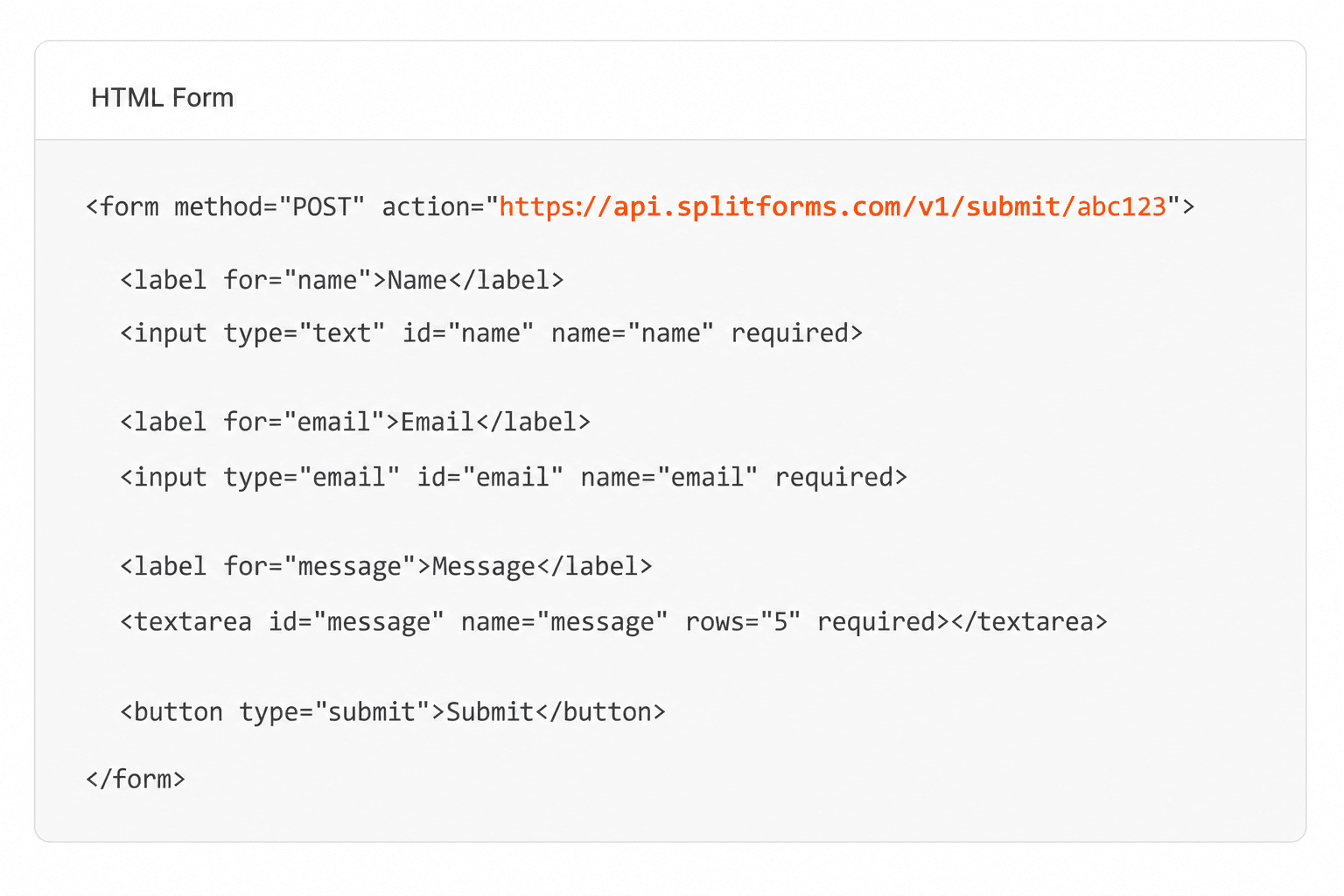
Point your form to your unique SplitForms endpoint. That's it.
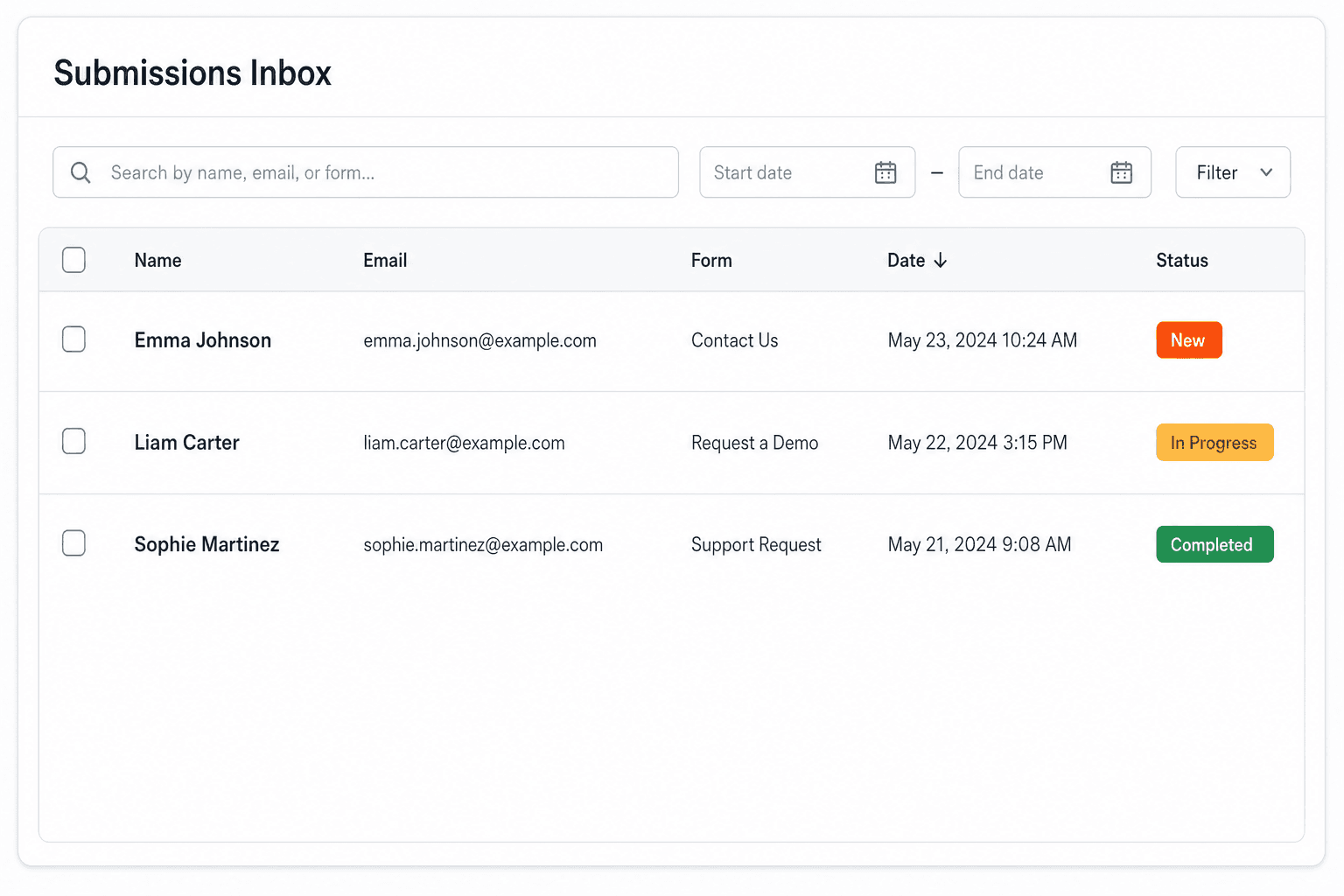
We instantly capture and organize every submission in your inbox.
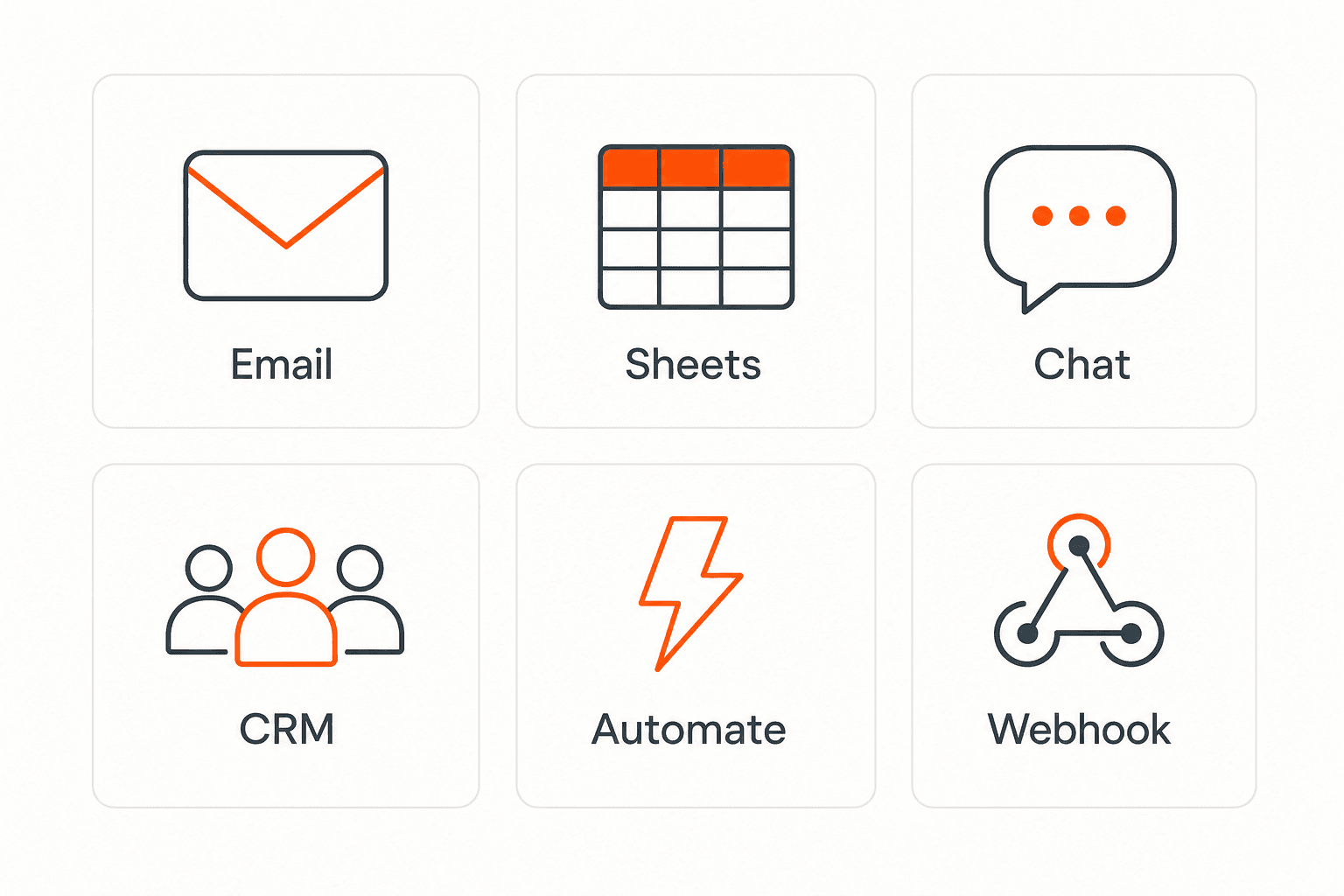
Send data to email, spreadsheets, CRMs, webhooks, and 7,000+ apps.
No credit card required. Set up in under 60 seconds.
Connect & automate
On paid plans, submissions can also go to Slack, Discord, Google Sheets, Notion, Airtable, Zapier or any signed webhook — and splitforms works on the platforms you build on, from WordPress and Shopify to Next.js. With Stripe connected, your forms can take payments too.

 NewTake payments on your formsDeposits, bookings, order forms — submitters check out through Stripe and the money goes straight to your Stripe account. Included on every paid plan.See plans →
Common questions
It is the receiving layer for any form an AI coding agent generates, tests, or manages. The agent owns the UI; the backend owns everything after a visitor hits submit — validating the payload, blocking spam, storing each lead, notifying the form owner, and forwarding to webhooks. splitforms provides that layer so agent-built forms deliver leads instead of losing them to a prompt transcript.
Yes. Ask the agent to generate normal HTML, React, Next.js, Astro, Vue, or Webflow form code and point it at https://splitforms.com/api/submit with your access key.
Yes. The MCP server is free on every plan, including Free, and gives agents structured tools such as create_form, generate_form, and list_submissions — so an agent can provision a form and read its own leads without scraping documentation.
No. It works for AI-generated website forms, AI chatbot lead capture, internal agent workflows, and LLM apps that need to collect structured contact or lead data.
Call GET https://splitforms.com/api/submissions with an Authorization: Bearer header set to your personal access token from Dashboard → MCP — the same token used by the MCP server. Filter with form, limit (up to 100), before, and since; the response returns { submissions, has_more }, and the endpoint allows 60 requests per minute.
Yes. Each form accepts up to 6 submissions per minute per IP address, with a sustained cap of 20 per 15 minutes. Requests past that return HTTP 429, so have the agent back off rather than retry in a tight loop.
Yes, on paid plans. Signed with HMAC-SHA256 (sha256= signature header); 8-second timeout; one automatic retry after about 2 seconds on network errors, timeouts and 5xx responses (4xx is not retried); delivery log in the dashboard. Paid plans (Pro and Annual).
Skip access_key, subject, redirect, from_name, replyto, botcheck, and form_loaded_at as data fields — splitforms treats them as control fields and strips them from stored submissions. Use botcheck (or hp, trap, do_not_fill) only as the empty honeypot.
Simple pricing
Free gives you 500 submissions for $0 — no card, no time limit. Pro is $5/month for 5,000 submissions a month, and Annual is $49/year for 15,000 a month with every Pro feature.
For side projects and indie devs.
Every paid feature, for agencies and growing products.
Every Pro feature with triple the volume — $0.27 per 1,000 at full use.
No credit card required on Free • Cancel anytime • Full pricing and FAQ


