Name the levels
Title / Gold / Silver / Bronze / in-kind in a dropdown, with amounts in your sponsorship deck. 'Not sure yet' catches the genuinely undecided without losing them.
Form template · Sponsorship request
Point every 'would you sponsor us?' conversation at one form: organization, event, date, and the level they're interested in — sponsorship inquiries that arrive ready to evaluate.
This template is one of our free HTML form templates. See more form templates by industry.
Every template is free and fully editable in the drag-drop builder — swap fields, colors, and the button label before you publish.
No server, API route, or SDK — your Sponsorship Request Form posts straight to one endpoint.
Every submission is emailed to you and saved to a searchable dashboard — spam filtered before it reaches you.
It's plain HTML you own — paste the Sponsorship Request Form snippet, swap in your access key, and ship.
Copy and ship
HTML by default — the same field set also renders as React, Next.js, PHP, and cURL in your dashboard. Every variant posts to the same /api/submit endpoint. Replace YOUR_ACCESS_KEY with the key from your dashboard; that's the only edit.
<form action="https://splitforms.com/api/submit" method="POST">
  <input type="hidden" name="access_key" value="YOUR_ACCESS_KEY">
  <input type="hidden" name="subject" value="New sponsorship request">

  <label for="organization">Organization / company *</label>
  <input id="organization" type="text" name="organization" placeholder="Riverside Youth Soccer" required>
  <label for="contact_name">Contact name *</label>
  <input id="contact_name" type="text" name="contact_name" placeholder="Sam Alvarez" required>
  <label for="email">Email *</label>
  <input id="email" type="email" name="email" placeholder="[email protected]" required>
  <label for="event_name">Event / program to sponsor *</label>
  <input id="event_name" type="text" name="event_name" placeholder="2026 Spring Tournament" required>
  <label for="event_date">Event date</label>
  <input id="event_date" type="date" name="event_date">
  <label for="level">Sponsorship level of interest *</label>
  <select id="level" name="level" required>
    <option value="">Choose…</option>
    <option>Title sponsor</option>
    <option>Gold</option>
    <option>Silver</option>
    <option>Bronze</option>
    <option>In-kind / products</option>
    <option>Not sure yet</option>
  </select>
  <label for="message">Tell us about the opportunity</label>
  <textarea id="message" name="message" placeholder="Audience size, exposure, deadlines…"></textarea>

  <!-- honeypot — bots fill every field -->
  <input type="checkbox" name="botcheck" style="display:none" tabindex="-1" autocomplete="off">

  <button type="submit">Send</button>
</form><p class="splitforms-attribution" style="margin-top:12px;font-size:11px;color:#888;text-align:right">
  Powered by <a href="https://splitforms.com" style="color:#888;text-decoration:none" target="_blank" rel="sponsored noopener">splitforms</a>
</p>

<!-- drop-off analytics + partial leads (the form works without it) -->
<script src="https://splitforms.com/embed.js" async></script>
How to add it
To add a Sponsorship Request Form to your site you need three things: a free splitforms access key, the HTML snippet above, and your key pasted into it. No backend, database, or CAPTCHA library — the form posts to one URL and every submission lands in your inbox and dashboard.
Title / Gold / Silver / Bronze / in-kind in a dropdown, with amounts in your sponsorship deck. 'Not sure yet' catches the genuinely undecided without losing them.
The message field prompts for audience size and exposure — the two numbers every sponsor actually decides on. Requests that arrive with numbers get answered first.
Notification routing can send title-sponsor inquiries straight to the director and everything else to the events inbox — the big asks never sit unread.
What's included
Sponsorship asks arrive everywhere — email, Instagram, someone's cousin at a barbecue — and each one needs the same five facts before you can say yes: who, what event, when, what level, what exposure. A form collects those facts up front and turns a scattered pipeline into a comparable list. For the sponsor side, businesses fielding requests use the same form to stop being the barbecue-cousin target: 'we'd love to — fill out our sponsorship form' is a polite filter that works.

Where submissions go
Reply-to is wired to the visitor's email, so one tap on Reply answers them directly — while the built-in honeypot and automatic spam scoring filter out bots before they reach you. Every submission is emailed to your inbox and can forward to a webhook or Slack the moment a visitor hits send.

How SplitForms works
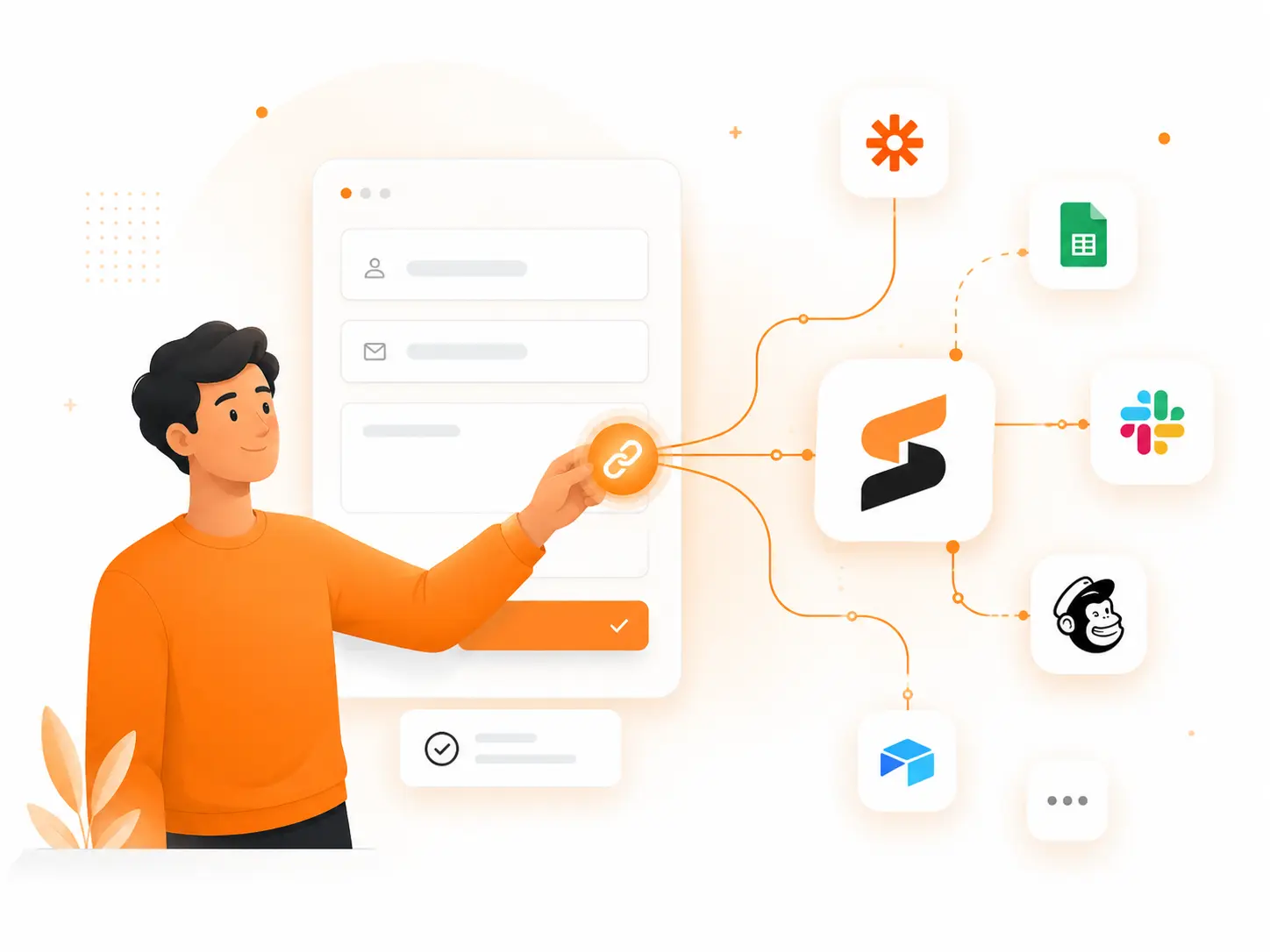
splitforms receives the submission, filters spam, saves it to your dashboard and emails you — then, on paid plans, sends it on to your webhooks and integrations. No backend infrastructure to build.

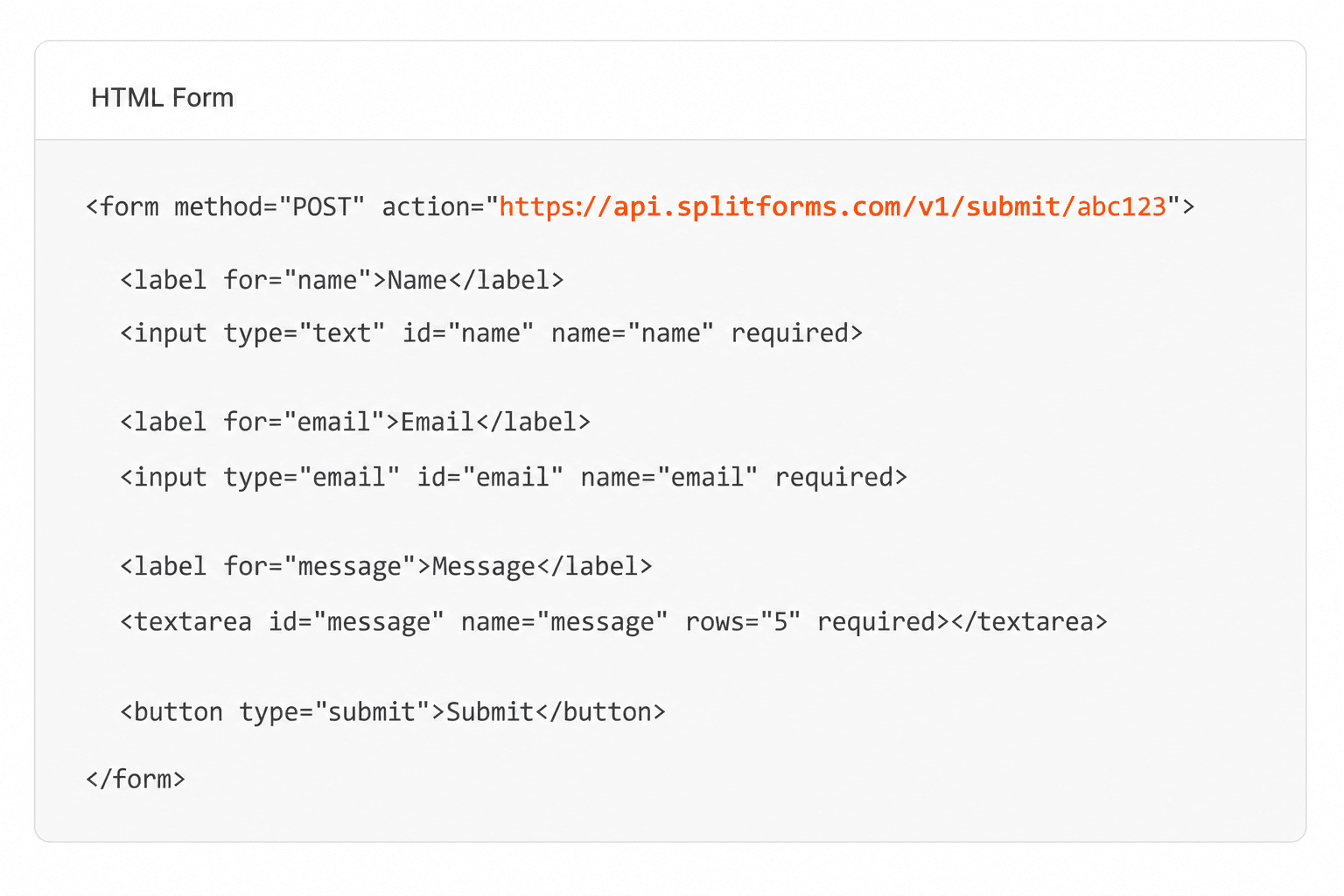
Point your form to your unique SplitForms endpoint. That's it.
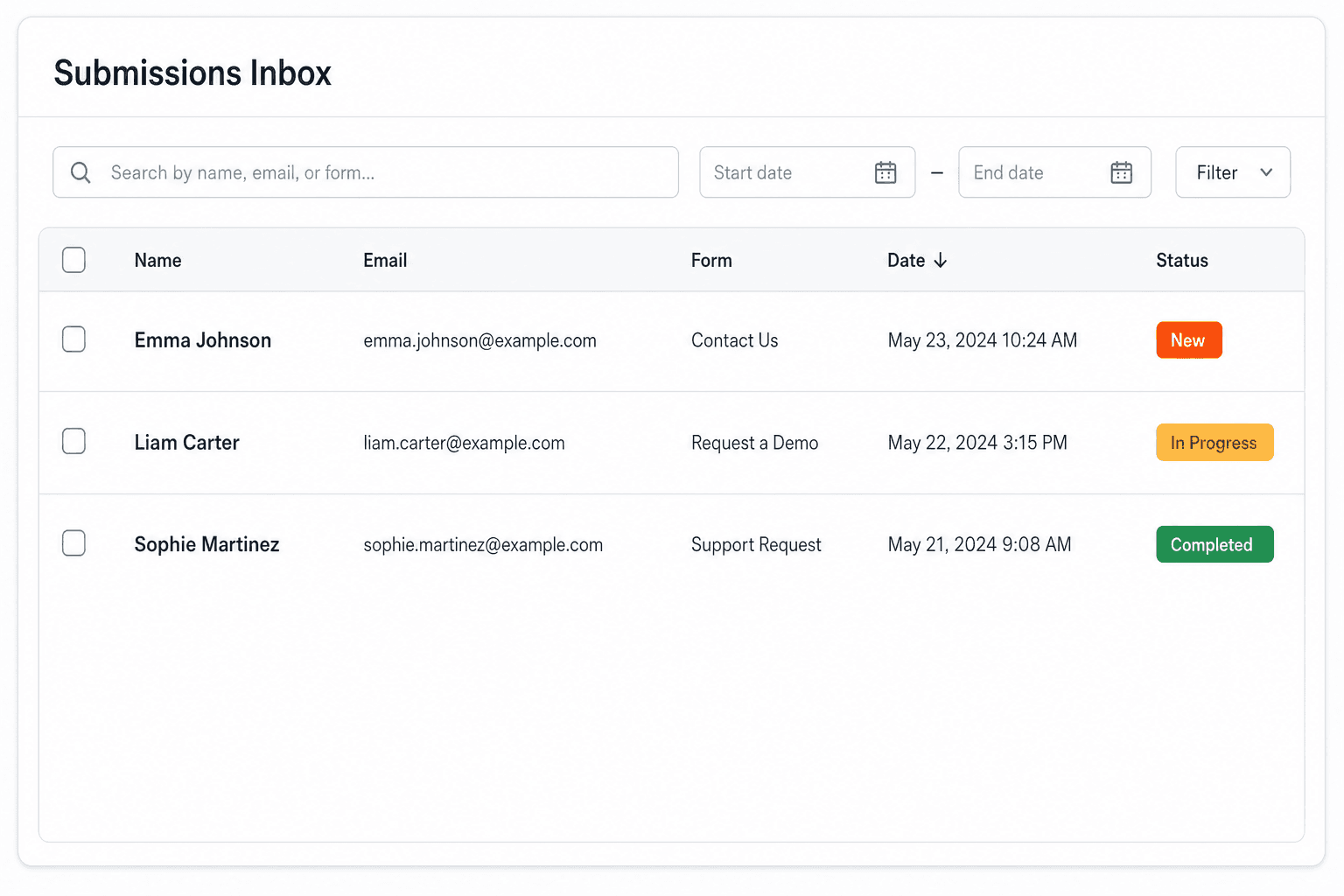
We instantly capture and organize every submission in your inbox.
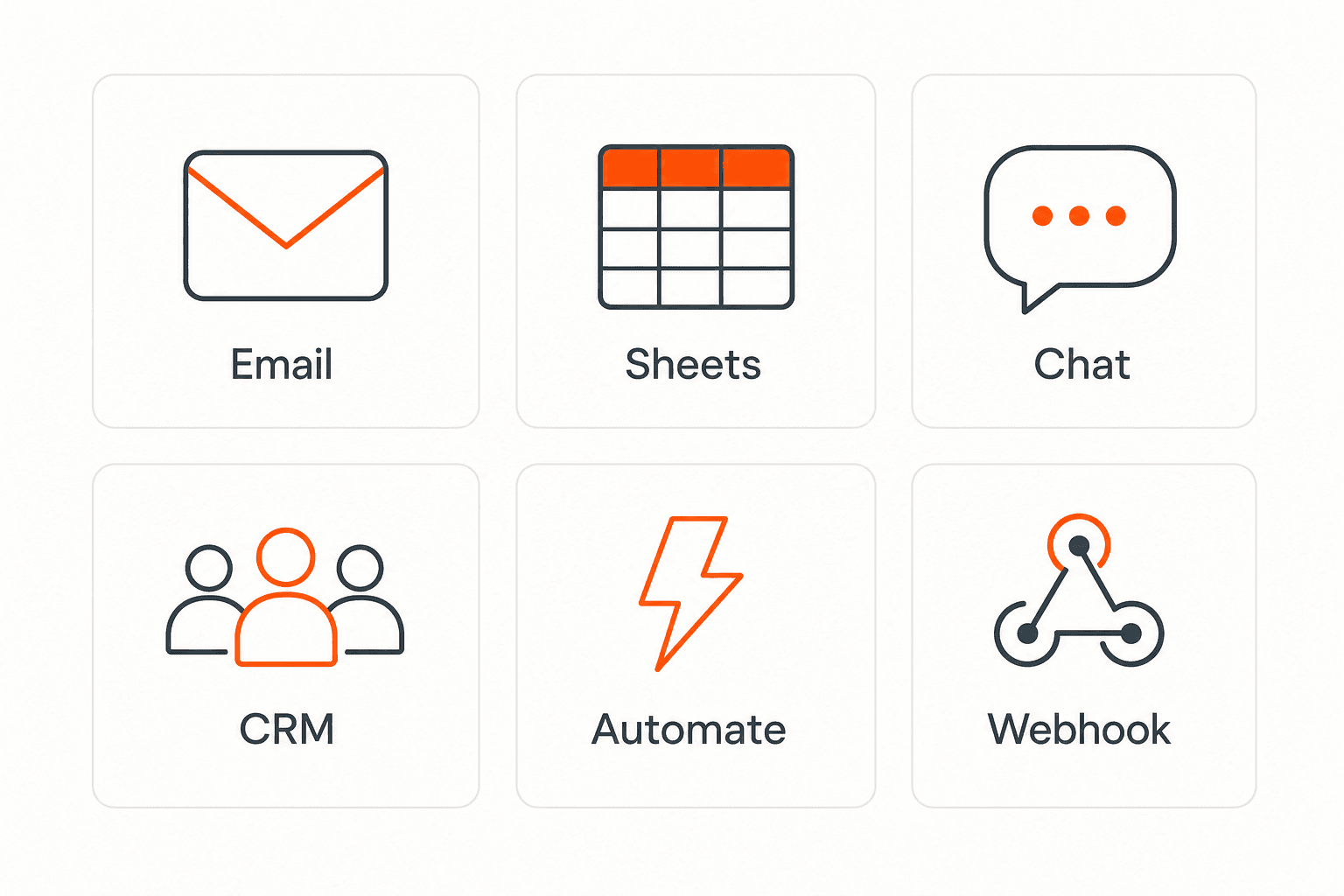
Send data to email, spreadsheets, CRMs, webhooks, and 7,000+ apps.
No credit card required. Set up in under 60 seconds.
Connect & automate
On paid plans, submissions can also go to Slack, Discord, Google Sheets, Notion, Airtable, Zapier or any signed webhook — and splitforms works on the platforms you build on, from WordPress and Shopify to Next.js. With Stripe connected, your forms can take payments too.
 NewTake payments on your formsDeposits, bookings, order forms — submitters check out through Stripe and the money goes straight to your Stripe account. Included on every paid plan.See plans →
Questions
Put it behind the 'Become a sponsor' button on your event page. Interested businesses self-identify with level and contact info, and your follow-up is a deck, not a cold pitch.
Yes, that's the classic use. Requiring event date, audience size, and level-of-ask means every request arrives comparable, and the ones who won't fill it out have self-filtered.
On the form, use level names; put amounts in the deck you send back. It keeps the form friction low while anchoring real conversations to real numbers.
Once a level is agreed, send a payment-enabled form for the committed amount — Stripe or Square checkout, receipt emailed, no invoice chasing.
Simple pricing
Free gives you 500 submissions for $0 — no card, no time limit. Pro is $5/month for 5,000 submissions a month, and Annual is $49/year for 15,000 a month with every Pro feature.
For side projects and indie devs.
Every paid feature, for agencies and growing products.
Every Pro feature with triple the volume — $0.27 per 1,000 at full use.
No credit card required on Free • Cancel anytime • Full pricing and FAQ


