
Capture the clinical basics
Injury / pain area dropdown (back, neck, shoulder, knee, hip, post-surgical, other), how long it's been going on, referral status (have one / need one / not sure), insurance carrier, preferred days.
Form template · Doctor appointment
A new PT patient is usually in pain today and choosing between three clinics' websites. The clinic whose form asks the right four questions — and whose front desk calls back first — gets the plan-of-care.
Every template is free and fully editable in the drag-drop builder — swap fields, colors, and the button label before you publish.
No server, API route, or SDK — your Physical Therapy Contact Form posts straight to one endpoint.
Every submission is emailed to you and saved to a searchable dashboard — spam filtered before it reaches you.
It's plain HTML you own — paste the Physical Therapy Contact Form snippet, swap in your access key, and ship.
Copy and ship
HTML by default — the same field set also renders as React, Next.js, PHP, and cURL in your dashboard. Every variant posts to the same /api/submit endpoint. Replace YOUR_ACCESS_KEY with the key from your dashboard; that's the only edit.
<form action="https://splitforms.com/api/submit" method="POST">
  <input type="hidden" name="access_key" value="YOUR_ACCESS_KEY">
  <input type="hidden" name="subject" value="New appointment request">

  <label for="patient_name">Patient name *</label>
  <input id="patient_name" type="text" name="patient_name" placeholder="Daniel Chen" required>
  <label for="email">Email *</label>
  <input id="email" type="email" name="email" placeholder="patient@example.com" required>
  <label for="phone">Phone *</label>
  <input id="phone" type="tel" name="phone" placeholder="+1 415 555 0142" required>
  <label for="reason">Reason for visit *</label>
  <select id="reason" name="reason" required>
    <option value="">Choose…</option>
    <option>Routine checkup</option>
    <option>Follow-up</option>
    <option>New symptoms</option>
    <option>Prescription refill</option>
    <option>Other</option>
  </select>
  <label for="preferred_date">Preferred date *</label>
  <input id="preferred_date" type="date" name="preferred_date" required>
  <label for="symptoms">Symptoms or notes (optional)</label>
  <textarea id="symptoms" name="symptoms" placeholder="Briefly describe what brings you in."></textarea>
  <label for="insurance">Insurance provider (optional)</label>
  <input id="insurance" type="text" name="insurance" placeholder="Blue Cross / Aetna / N/A">

  <!-- honeypot — bots fill every field -->
  <input type="checkbox" name="botcheck" style="display:none" tabindex="-1" autocomplete="off">

  <button type="submit">Send</button>
</form><p class="splitforms-attribution" style="margin-top:12px;font-size:11px;color:#888;text-align:right">
  Powered by <a href="https://splitforms.com" style="color:#888;text-decoration:none" target="_blank" rel="sponsored noopener">splitforms</a>
</p>
How to add it
To add a Physical Therapy Contact Form to your site you need three things: a free splitforms access key, the HTML snippet above, and your key pasted into it. No backend, database, or CAPTCHA library — the form posts to one URL and every submission lands in your inbox and dashboard.
Injury / pain area dropdown (back, neck, shoulder, knee, hip, post-surgical, other), how long it's been going on, referral status (have one / need one / not sure), insurance carrier, preferred days.
The insurance field lets your front desk run verification before dialing. The callback becomes 'you're covered with a $30 copay, can you come Thursday?' — which books at far higher rates than 'we'll check and call you back'.
Webhook new requests to the front-desk inbox or your EMR via Zapier (WebPT, Prompt, Clinicient all accept inbound leads). Patients in pain book with whoever offers the first eval slot — be that clinic.
What's included
PT clinics live and die on new-patient volume and plan-of-care completion, and both start at the website form. The request form needs injury area, how it happened, referral status, and insurance carrier — because direct access rules and insurance requirements vary by state and plan, and your front desk needs to know whether to verify benefits or request the referral before the eval. A same-day callback with 'you're verified, come in Thursday' is how a website visit becomes a 12-visit plan of care. Referral status + insurance captured up front — front desk verifies before the callback.

Where submissions go
Reply-to is wired to the visitor's email, so one tap on Reply answers them directly — while the built-in honeypot and spam classifier filter out bots before they reach you. Every submission is emailed to your inbox and can forward to a webhook or Slack the moment a visitor hits send.

How SplitForms works
Connect your form, collect every submission, and send data where it needs to go — without building backend infrastructure.

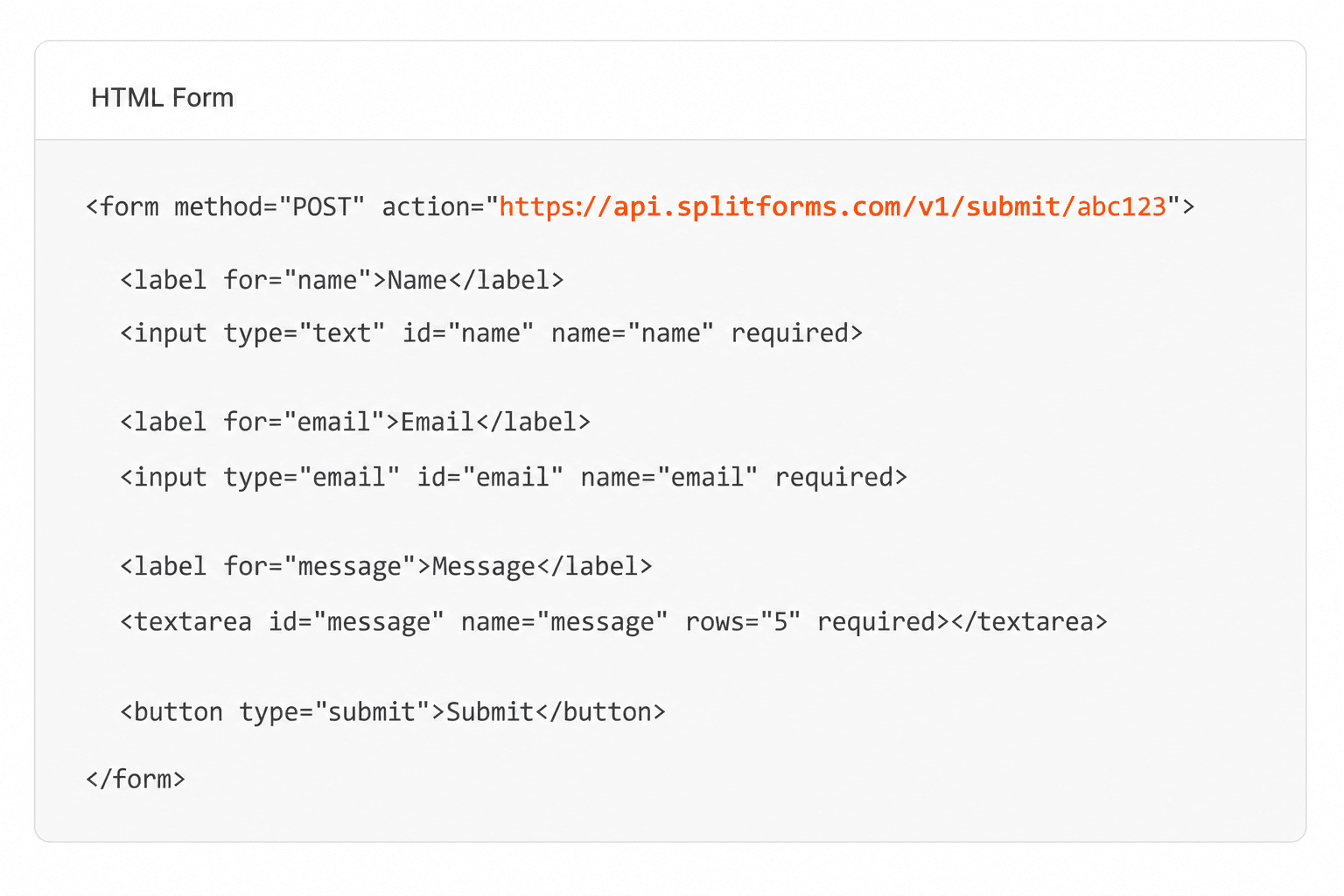
Point your form to your unique SplitForms endpoint. That's it.
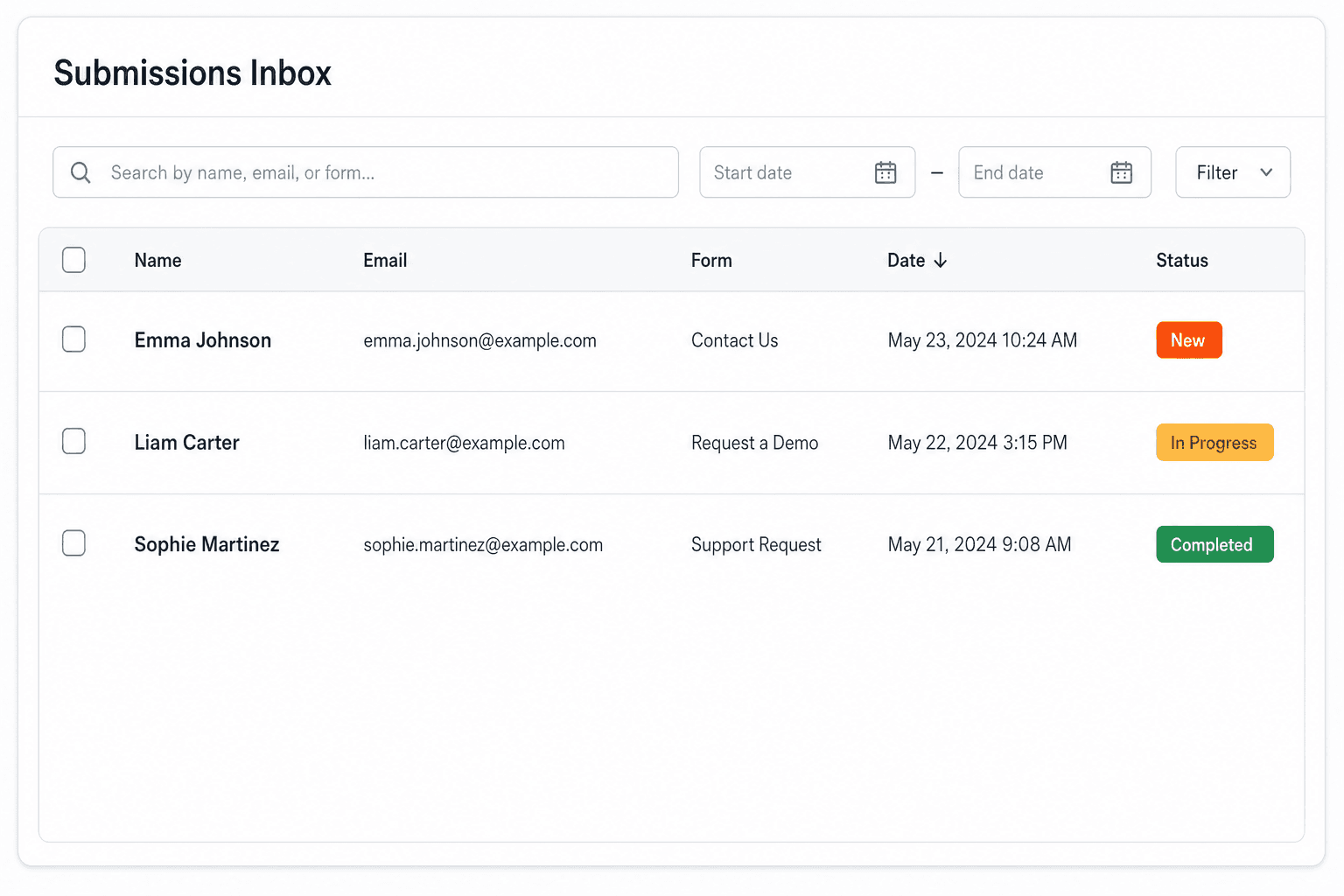
We instantly capture and organize every submission in your inbox.
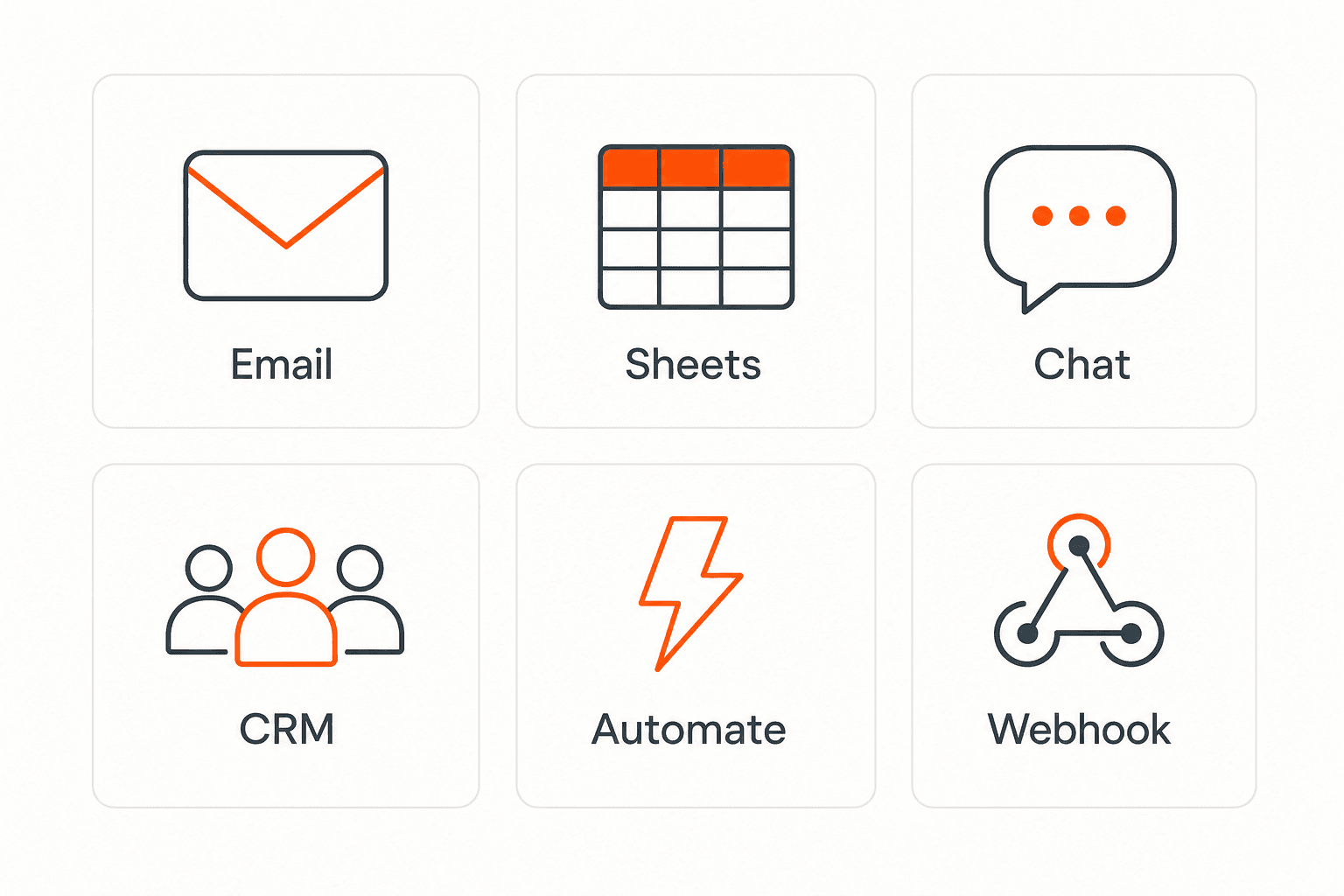
Send data to email, spreadsheets, CRMs, webhooks, and 7,000+ apps.
No credit card required. Set up in under 60 seconds.
Connect & automate
SplitForms works with the destinations you route to and the platforms you build on — from Slack and Sheets to WordPress, Shopify, and Next.js.

Trusted by indie teams and agencies shipping forms worldwide
Testimonials
40 quotes on record — from indie hacks to agency migrations.
“I replaced a Lambda + DynamoDB + SES contact form with six lines of HTML. It took eleven minutes, and the dashboard is better than what I was going to build.”
“We migrated 14 client sites off Formspree in a single weekend. The price is a third of what we paid, the API is more honest, and the spam filter actually works.”
“The webhook payload is signed, idempotent, and well-shaped. It reads like code from a competent team, not a CRUD app held together with duct tape.”
“I stopped reaching for Typeform on small marketing sites. splitforms covers 90% of the use case at none of the bloat.”
“I onboarded our whole agency in an afternoon. The MCP integration meant Cursor literally dropped the form straight into our client repos for us.”
“The free plan gave me 500 submissions before I paid a cent, and Pro is five dollars a month. I've spent more on coffee deciding which backend to use.”
“Spam went from forty junk entries a day to zero, with no reCAPTCHA puzzle ruining the form. The honeypot and time-trap just quietly do their job.”
“Point the form action at one endpoint and you're done. No SDK, no client library, no build step. This is how a form backend should feel.”
“Leads land in Slack the second someone submits, and a copy goes to Google Sheets for the sales team. I wired both up in under ten minutes.”
“I run a static Hugo site on a five-dollar VPS. splitforms gave it a real contact form without me standing up a single server.”
Questions
The form collects scheduling information — contact details, body area, insurance carrier — not treatment records or diagnoses, which is the standard pattern for appointment-request forms. Submissions are encrypted in transit and at rest, and you can delete them on request. Detailed medical history belongs in your EMR intake packet after the appointment is booked, not on the website.
Depends on your state's direct-access rules and the patient's insurance. That's exactly why the form asks referral status as a dropdown — 'I have one' leads get booked immediately; 'I need one' leads get your front desk's guidance on getting it. Neither lead is lost.
Yes — webhook the submission JSON via Zapier into WebPT, Prompt, Clinicient, or any system with an inbound API. The new-patient record arrives with injury area, referral status, and insurance pre-filled, so the front desk starts verification instead of data entry.
Yes — add a 'how do you plan to pay?' dropdown with insurance / cash-pay / workers' comp / auto claim options. Each routes differently (verification vs. price quote vs. adjuster paperwork), and the form sorting them saves the front desk a phone-tag cycle on every lead.
Same business day, ideally within the hour. PT patients are typically in active pain and contact 2-3 clinics at once — first eval offered usually wins. Webhook the form to the front-desk Slack or an SMS so requests don't sit in email.
Simple pricing
Choose a plan that fits your workflow — from a free form endpoint to full automations, exports, and higher submission limits.
Free forever
For side projects and indie devs.
For agencies and growing products.
Pay $59. 3 years sorted.
No credit card required on Free • Cancel anytime


