
Capture vehicle and symptom
Required: year, make, model, mileage, symptom or service requested. Optional: VIN (autofills service history if integrated with CARFAX / Mitchell).
Form template · Auto repair / mechanic quote
Auto repair quotes need year/make/model and a clear symptom — without those, the service writer is guessing. The form is the same intake your phone CSR runs, just self-serve.
This template is one of our free HTML form templates. See more form templates by industry.
Every template is free and fully editable in the drag-drop builder — swap fields, colors, and the button label before you publish.
No server, API route, or SDK — your Auto Repair Contact Form posts straight to one endpoint.
Every submission is emailed to you and saved to a searchable dashboard — spam filtered before it reaches you.
It's plain HTML you own — paste the Auto Repair Contact Form snippet, swap in your access key, and ship.
Copy and ship
HTML by default — the same field set also renders as React, Next.js, PHP, and cURL in your dashboard. Every variant posts to the same /api/submit endpoint. Replace YOUR_ACCESS_KEY with the key from your dashboard; that's the only edit.
<form action="https://splitforms.com/api/submit" method="POST">
  <input type="hidden" name="access_key" value="YOUR_ACCESS_KEY">
  <input type="hidden" name="subject" value="New auto repair request">

  <label for="name">Full name *</label>
  <input id="name" type="text" name="name" placeholder="Daniel Chen" required>
  <label for="email">Email *</label>
  <input id="email" type="email" name="email" placeholder="[email protected]" required>
  <label for="phone">Phone *</label>
  <input id="phone" type="tel" name="phone" placeholder="+1 555 0142" required>
  <label for="vehicle">Year / make / model *</label>
  <input id="vehicle" type="text" name="vehicle" placeholder="2019 Toyota RAV4" required>
  <label for="mileage">Mileage</label>
  <input id="mileage" type="number" name="mileage" placeholder="65000">
  <label for="service">Service needed *</label>
  <select id="service" name="service" required>
    <option value="">Choose…</option>
    <option>Oil change</option>
    <option>Brake service</option>
    <option>Tire / alignment</option>
    <option>Check engine light</option>
    <option>Battery / electrical</option>
    <option>AC service</option>
    <option>Major repair / diagnosis</option>
    <option>Pre-purchase inspection</option>
    <option>Other</option>
  </select>
  <label for="symptoms">What's the car doing? *</label>
  <textarea id="symptoms" name="symptoms" placeholder="Noises, warning lights, when it happens…" required></textarea>
  <label for="drop_off">Preferred drop-off date</label>
  <input id="drop_off" type="date" name="drop_off">

  <!-- honeypot — bots fill every field -->
  <input type="checkbox" name="botcheck" style="display:none" tabindex="-1" autocomplete="off">

  <button type="submit">Send</button>
</form><p class="splitforms-attribution" style="margin-top:12px;font-size:11px;color:#888;text-align:right">
  Powered by <a href="https://splitforms.com" style="color:#888;text-decoration:none" target="_blank" rel="sponsored noopener">splitforms</a>
</p>

<!-- drop-off analytics + partial leads (the form works without it) -->
<script src="https://splitforms.com/embed.js" async></script>
How to add it
To add a Auto Repair Contact Form to your site you need three things: a free splitforms access key, the HTML snippet above, and your key pasted into it. No backend, database, or CAPTCHA library — the form posts to one URL and every submission lands in your inbox and dashboard.
Required: year, make, model, mileage, symptom or service requested. Optional: VIN (autofills service history if integrated with CARFAX / Mitchell).
Form's last field is preferred date/time window. Webhook into your shop management software (Mitchell1, Tekmetric, Shop-Ware) and confirm the slot via SMS.
For oil changes, brakes, batteries — quote the menu price client-side. For diagnostic and transmission — book the diagnostic, quote after.
What's included
The phone-call intake at every shop runs the same script: year, make, model, mileage, symptom. The form just lets the customer fill that in at midnight when they realise the brakes are squealing. Service writers can prep the bay, pull the right parts catalog, and quote within an hour of arrival. The customer who fills out a form before bed beats the customer who calls at 8am — they're at the head of the queue.

Where submissions go
Reply-to is wired to the visitor's email, so one tap on Reply answers them directly — while the built-in honeypot and automatic spam scoring filter out bots before they reach you. Every submission is emailed to your inbox and can forward to a webhook or Slack the moment a visitor hits send.

How SplitForms works
splitforms receives the submission, filters spam, saves it to your dashboard and emails you — then, on paid plans, sends it on to your webhooks and integrations. No backend infrastructure to build.

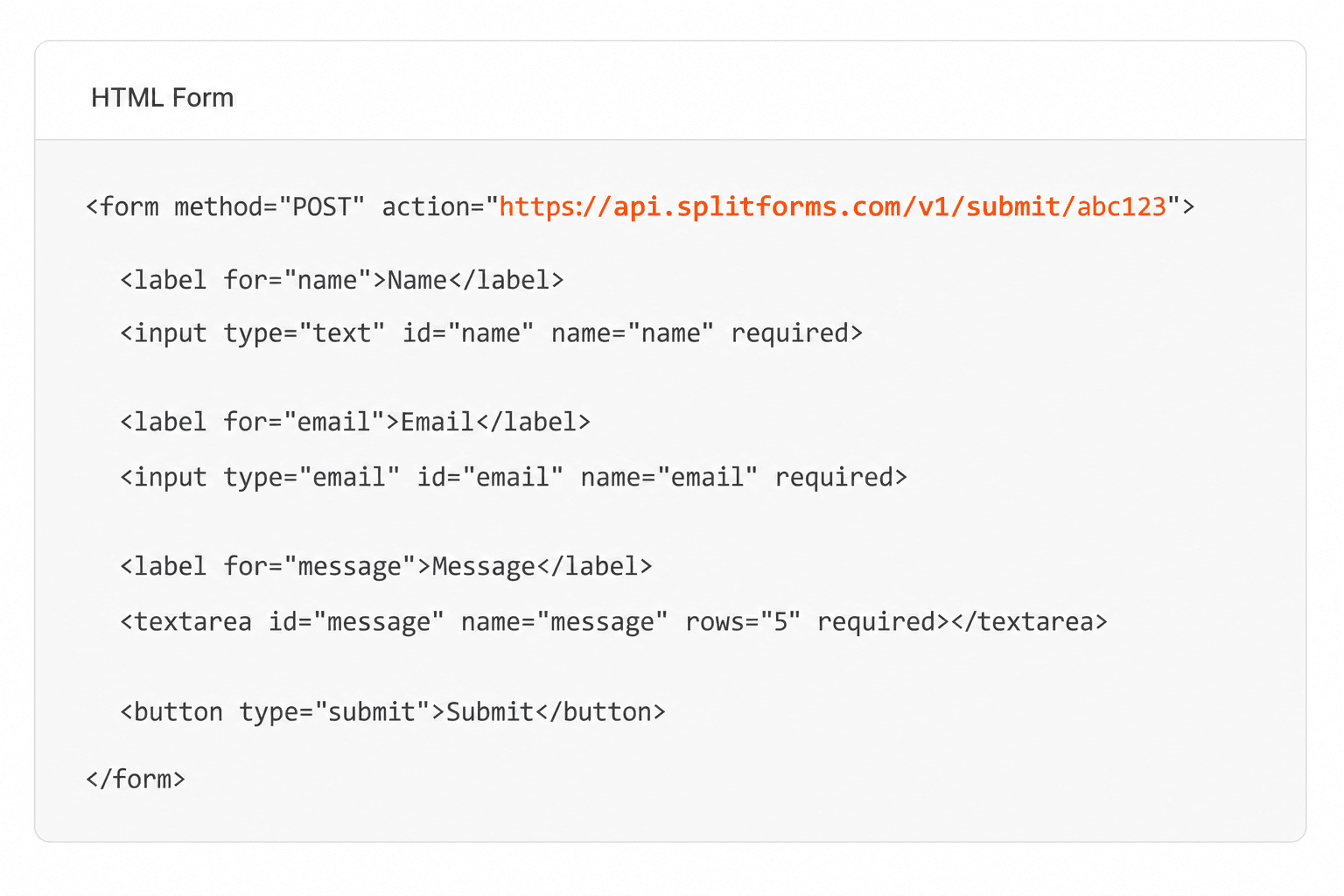
Point your form to your unique SplitForms endpoint. That's it.
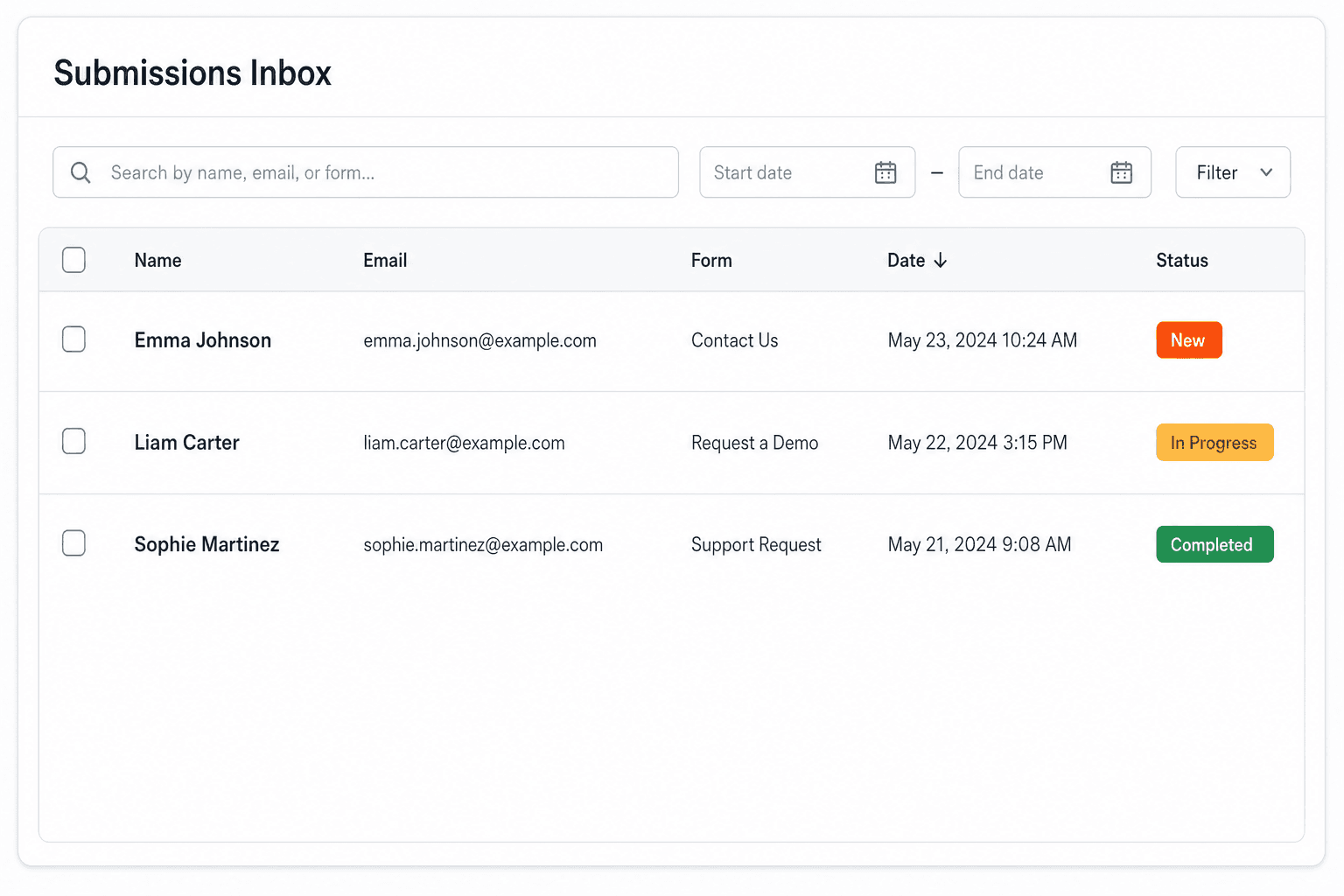
We instantly capture and organize every submission in your inbox.
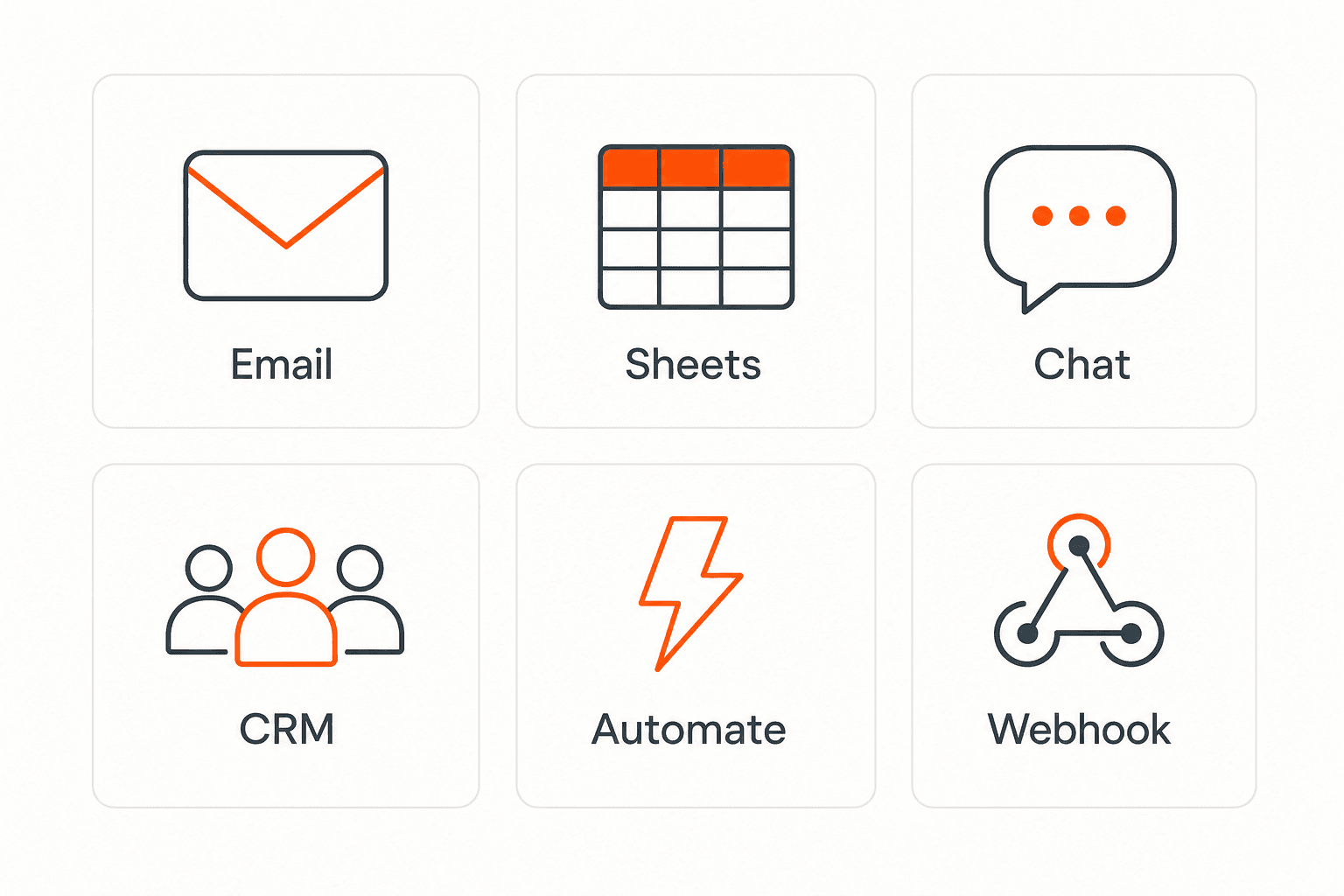
Send data to email, spreadsheets, CRMs, webhooks, and 7,000+ apps.
No credit card required. Set up in under 60 seconds.
Connect & automate
On paid plans, submissions can also go to Slack, Discord, Google Sheets, Notion, Airtable, Zapier or any signed webhook — and splitforms works on the platforms you build on, from WordPress and Shopify to Next.js. With Stripe connected, your forms can take payments too.

 NewTake payments on your formsDeposits, bookings, order forms — submitters check out through Stripe and the money goes straight to your Stripe account. Included on every paid plan.See plans →
Questions
Front pads: yes, menu price. Pads + rotors + calipers: no, you need to inspect first. Most shops quote a 'starting at' price for pads and a free brake inspection. The form schedules the inspection.
Yes — webhook the JSON. All major shop management platforms accept inbound webhooks via Zapier. VIN, vehicle, and symptom land in your system before the customer arrives.
If you have a CARFAX dealer subscription, the VIN field on the form triggers a webhook that pulls history before the customer arrives. Service writer prepped, conversation goes faster.
After-hours, yes — especially for larger jobs (transmission, engine, suspension). Routine stuff (oil, tires) tends to come in by phone or walk-in. Both channels matter; the form catches the after-hours diagnosis tickets.
Simple pricing
Free gives you 500 submissions for $0 — no card, no time limit. Pro is $5/month for 5,000 submissions a month, and Annual is $49/year for 15,000 a month with every Pro feature.
For side projects and indie devs.
Every paid feature, for agencies and growing products.
Every Pro feature with triple the volume — $0.27 per 1,000 at full use.
No credit card required on Free • Cancel anytime • Full pricing and FAQ


