Generate a free splitforms key
Sign in at splitforms.com — your access key is created instantly. No credit card, no setup wizard, no SDK to install.
Newsletter Signup · Astro
Email-only newsletter capture — perfect for footers and landing pages. Free for 500 submissions per month — no backend, no SDK, no plugin.

Copy-paste code
Replace YOUR_ACCESS_KEY with your splitforms key, paste into a Astro page, and ship. No build-time integration required.
<form action="https://splitforms.com/api/submit" method="POST">
  <input type="hidden" name="access_key" value="YOUR_ACCESS_KEY">
  <input type="hidden" name="subject" value="New newsletter subscriber">

  <label for="email">Your email *</label>
  <input id="email" type="email" name="email" placeholder="you@example.com" required>

  <!-- honeypot — bots fill every field -->
  <input type="checkbox" name="botcheck" style="display:none" tabindex="-1" autocomplete="off">

  <button type="submit">Send</button>
</form>
Astro + Newsletter Signup
Astro's static-first architecture means your form HTML ships pre-rendered with zero client JavaScript — perfect for fast page loads, but it also means you can't call a server-side endpoint on static hosts. splitforms is designed for exactly this: the browser POSTs directly to our edge endpoint, so the form works on Netlify, Cloudflare Pages, Vercel, or any static host without an Astro API route. The newsletter signup is pure HTML — no <script> tag, no client component, no island. Astro's view transitions and partial hydration don't interfere with the form submission because it uses a standard browser POST.
Newsletter Signup fields
The posted payload contains your email. Required fields are your email. Rename, remove, or add your own — splitforms accepts any name you POST.

Template playbook
Newsletter conversion benchmarks haven't moved much: ConvertKit / Substack landing pages convert at 1-2% of visitors, popup forms at 2-4%, content-upgrade lead magnets at 8-15%. The form itself is trivially simple (email field, optional name) but where it lives matters — exit-intent popup, scroll-triggered slide-in, footer inline, content-end inline all behave differently. Push the submission to your ESP (Mailchimp / ConvertKit / Substack / Beehiiv / Buttondown) via webhook so the welcome email fires automatically. GDPR / CASL require explicit consent — a checkbox or unbundled-consent text under the form covers it for EU and Canadian visitors.
Setup
Three actions stand between you and your first newsletter signup submission — no backend, no database, no CAPTCHA library.
Sign in at splitforms.com — your access key is created instantly. No credit card, no setup wizard, no SDK to install.
Drop the form snippet into a Astro page, component, or layout. Replace YOUR_ACCESS_KEY with the key from your dashboard. The form action is a hard-coded URL — no env vars or build-time wiring needed.
Dashboard updates live on Free. Free includes owner email delivery; Starter adds signed webhooks, CSV export, Slack/Discord forwarding, and BCC to your team.
How SplitForms works
Connect your form, collect every submission, and send data where it needs to go — without building backend infrastructure.

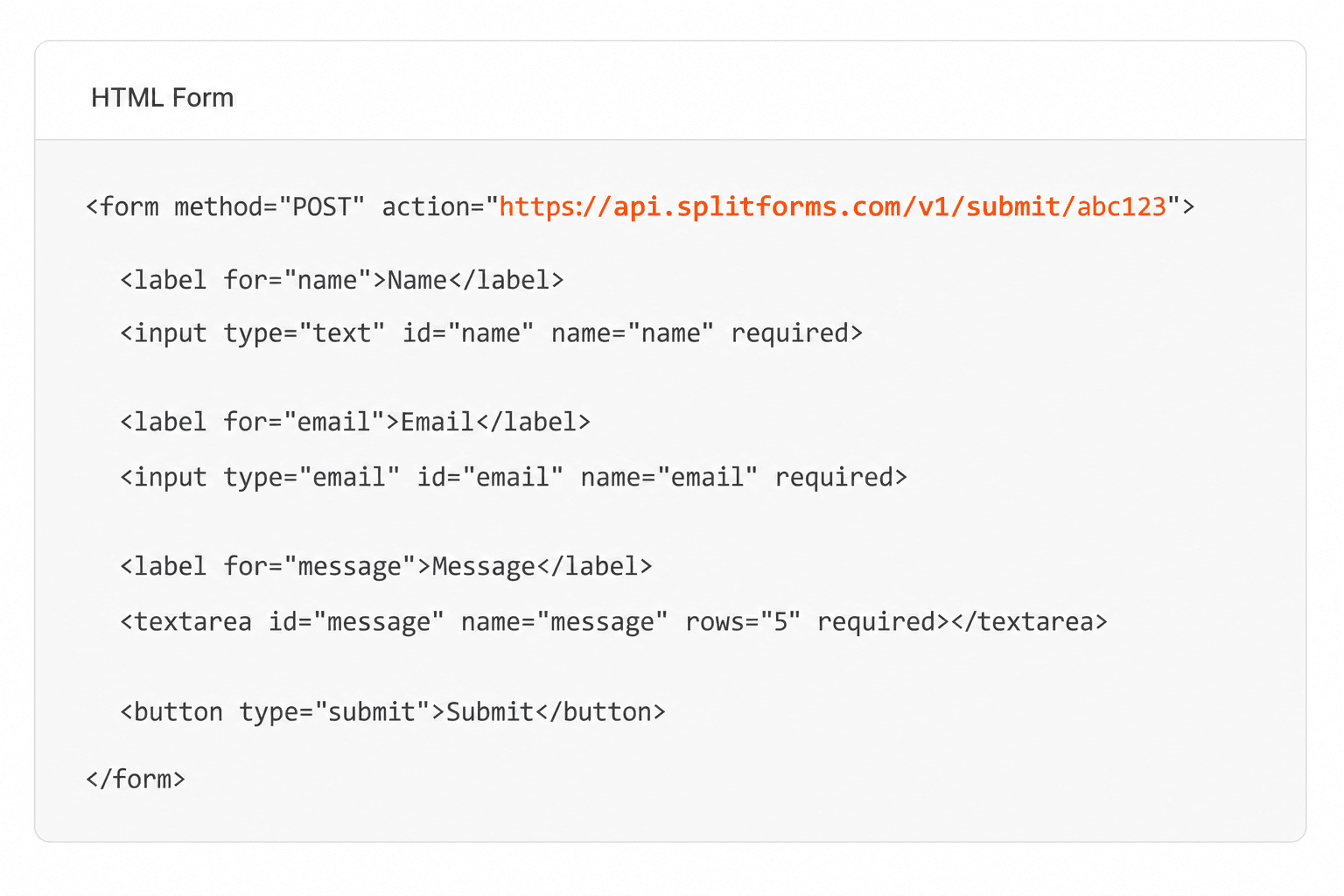
Point your form to your unique SplitForms endpoint. That's it.
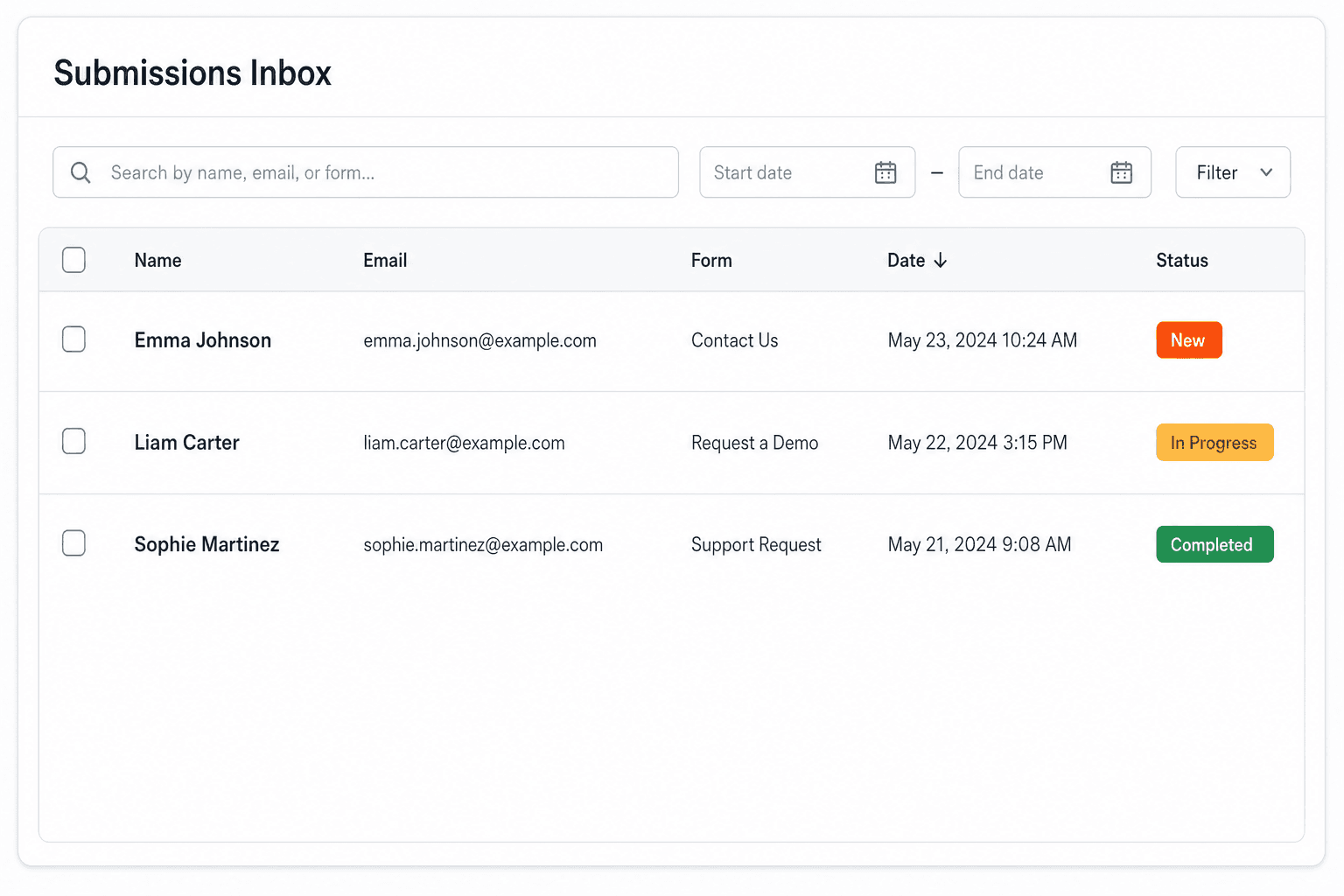
We instantly capture and organize every submission in your inbox.
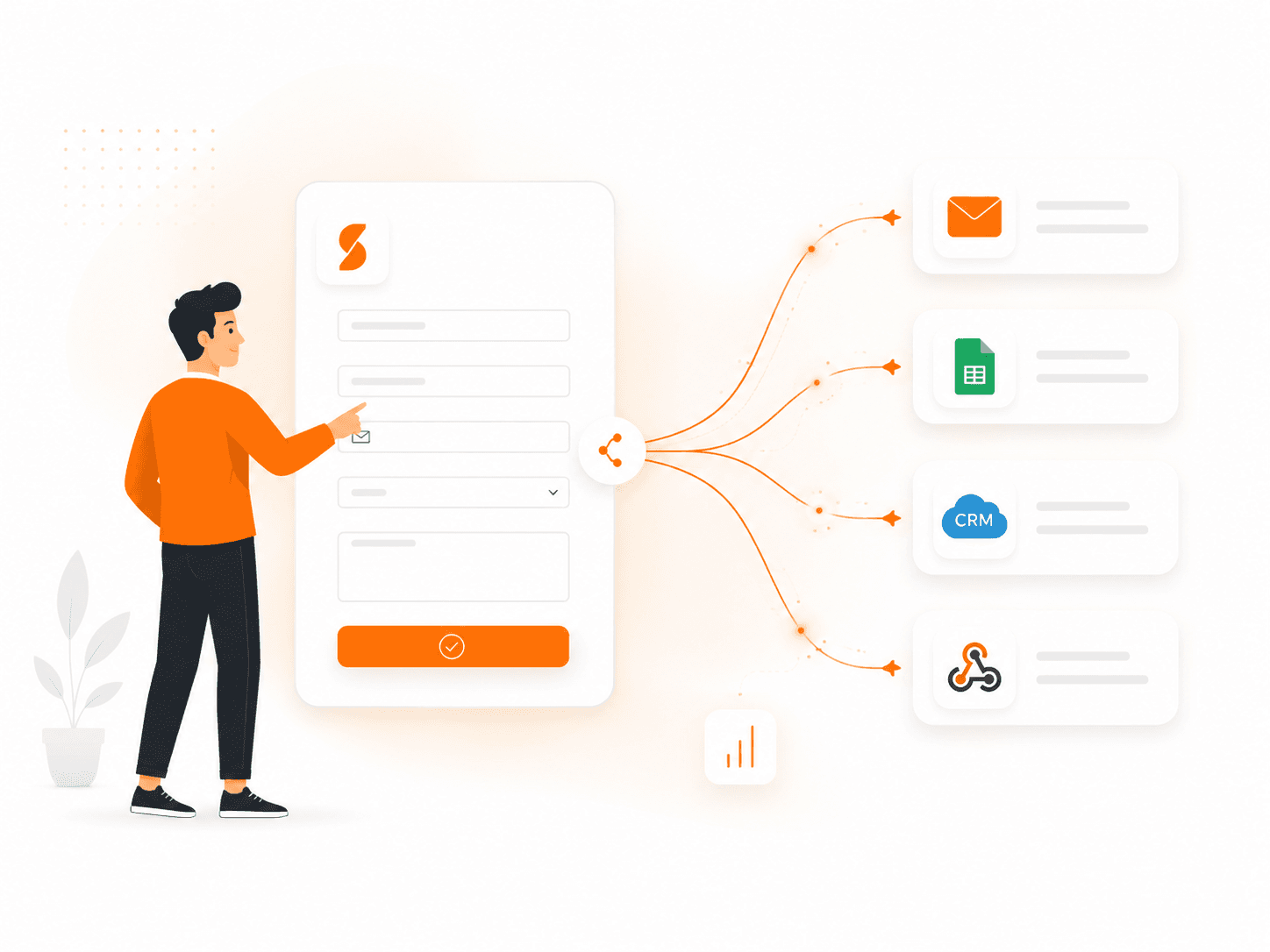
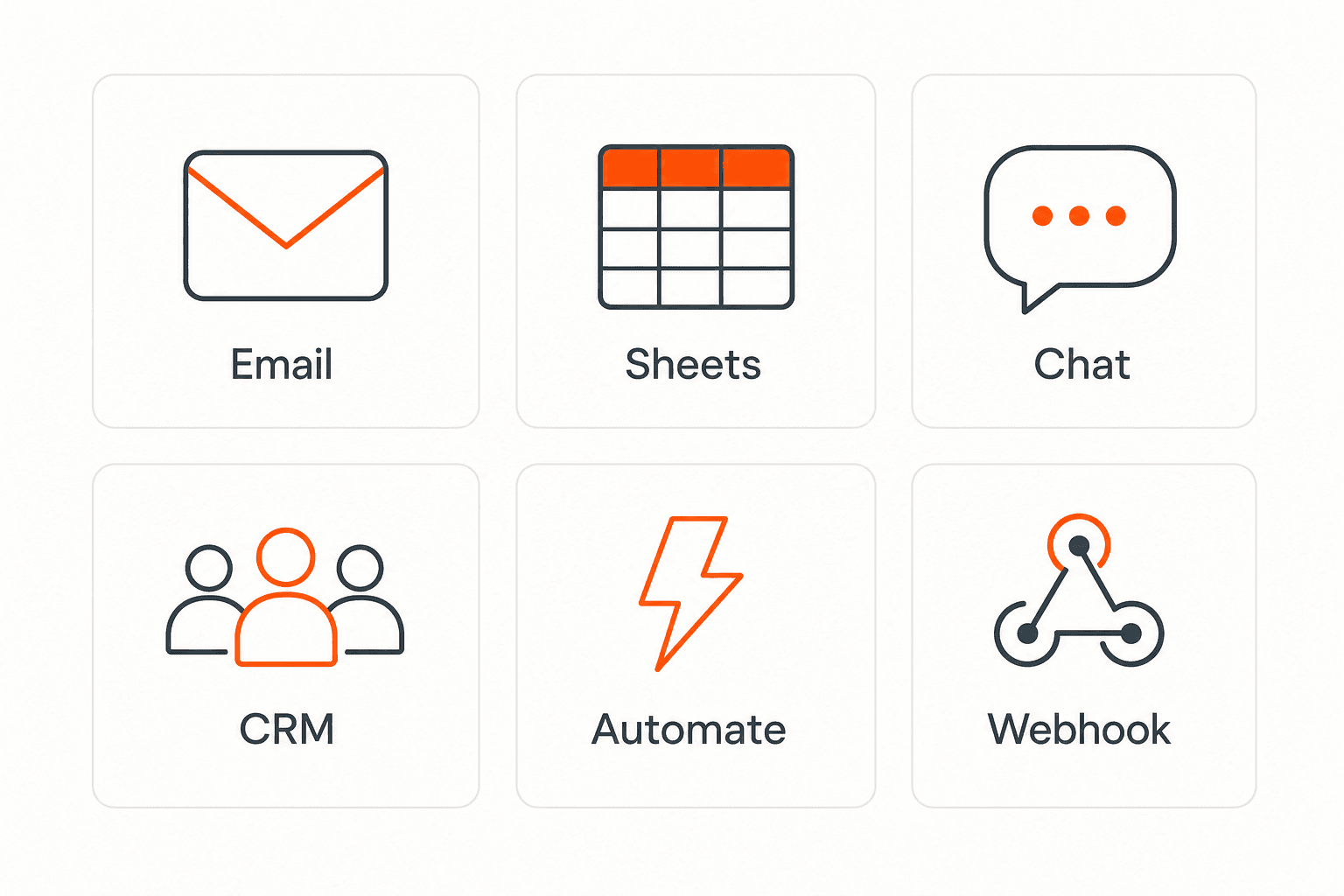
Send data to email, spreadsheets, CRMs, webhooks, and 7,000+ apps.
No credit card required. Set up in under 60 seconds.
Connect & automate
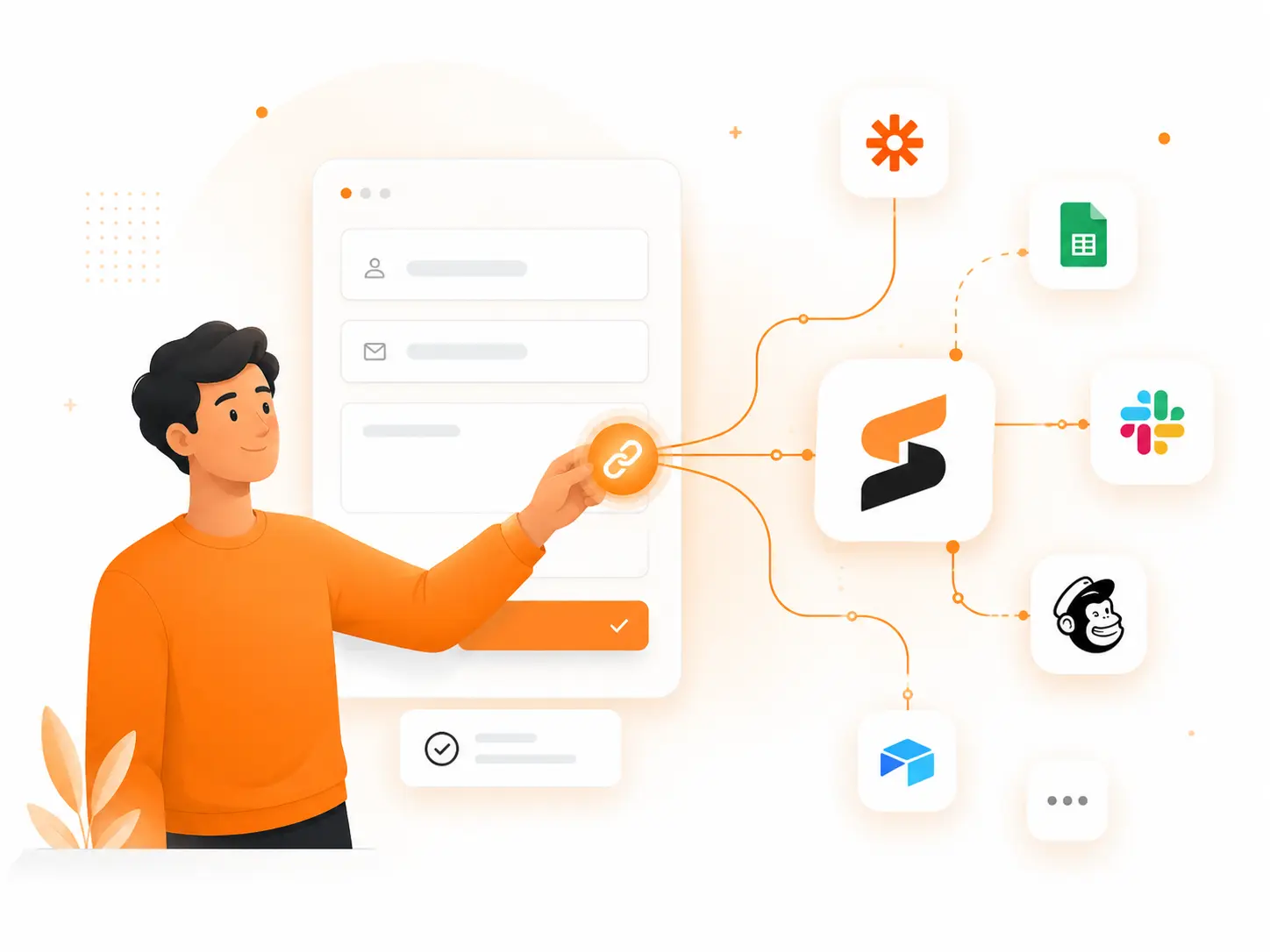
SplitForms works with the destinations you route to and the platforms you build on — from Slack and Sheets to WordPress, Shopify, and Next.js.
Trusted by indie teams and agencies shipping forms worldwide
Testimonials
40 quotes on record — from indie hacks to agency migrations.
“I replaced a Lambda + DynamoDB + SES contact form with six lines of HTML. It took eleven minutes, and the dashboard is better than what I was going to build.”
“We migrated 14 client sites off Formspree in a single weekend. The price is a third of what we paid, the API is more honest, and the spam filter actually works.”
“The webhook payload is signed, idempotent, and well-shaped. It reads like code from a competent team, not a CRUD app held together with duct tape.”
“I stopped reaching for Typeform on small marketing sites. splitforms covers 90% of the use case at none of the bloat.”
“I onboarded our whole agency in an afternoon. The MCP integration meant Cursor literally dropped the form straight into our client repos for us.”
“The free plan gave me 500 submissions before I paid a cent, and Pro is five dollars a month. I've spent more on coffee deciding which backend to use.”
“Spam went from forty junk entries a day to zero, with no reCAPTCHA puzzle ruining the form. The honeypot and time-trap just quietly do their job.”
“Point the form action at one endpoint and you're done. No SDK, no client library, no build step. This is how a form backend should feel.”
“Leads land in Slack the second someone submits, and a copy goes to Google Sheets for the sales team. I wired both up in under ten minutes.”
“I run a static Hugo site on a five-dollar VPS. splitforms gave it a real contact form without me standing up a single server.”
Common questions
Yes. The form is plain HTML with a single POST endpoint, so it runs on any Astro site without server-side code, plugins, or SDKs. Drop the snippet into a Astro page or component and submissions land in your splitforms dashboard.
Free for 500 submissions per month — no credit card, no trial. Pro is $5/mo for 5,000 submissions, and there's a one-time $59 3-year plan (15,000 submissions/mo for 36 months). The same pricing applies regardless of which framework hosts the form.
Yes. The template ships with sensible defaults (your email…) — add, remove, or rename any of them. Splitforms accepts whatever fields you POST.
A hidden honeypot field catches dumb bots, and a tuned classifier scores the rest. You only see real submissions in your dashboard. No CAPTCHA, no friction for human users — and it works the same on Astro as on any other framework.
Yes. Webhooks are available on paid plans, with auto-formatted payloads for Slack, Discord, and WhatsApp (via CallMeBot). Or send raw signed JSON to any URL — Zapier, n8n, your own server. Configure in the splitforms dashboard.
Yes — the form posts directly to splitforms from the browser, so no server is involved. Works on Vercel, Netlify, GitHub Pages, Cloudflare Pages, S3, or any plain Apache host.
If you have any EU or UK visitors, yes — GDPR requires explicit, freely-given consent for marketing emails. Add a separate consent checkbox (not pre-checked) below the email field. Same applies to CASL in Canada and PECR in the UK. US-only audiences fall under CAN-SPAM, which is less strict but still requires honest unsubscribe handling.
Webhook the submission as JSON. ConvertKit has a native webhook receiver per form; Mailchimp accepts via API or Zapier; Substack accepts via Beehiiv/Substack import API or Zapier; Beehiiv has direct webhook support. The newsletter platform fires the welcome sequence automatically on add.
Double opt-in drops list size by 20-30% but improves deliverability and engagement metrics — single-opt-in lists accumulate spam-trap addresses that tank inbox placement. Most serious senders run double opt-in for that reason. Substack and Beehiiv default to it.
Simple pricing
Choose a plan that fits your workflow — from a free form endpoint to full automations, exports, and higher submission limits.
Free forever
For side projects and indie devs.
For agencies and growing products.
Pay $59. 3 years sorted.
No credit card required on Free • Cancel anytime


