splitforms.com
WAITLIST · ASTRO

Waitlist for Astro

Pre-launch capture form with optional referral source. Free for 500 submissions per month — no backend, no SDK, no plugin.

500/mo free·no card·drop-in for Astro
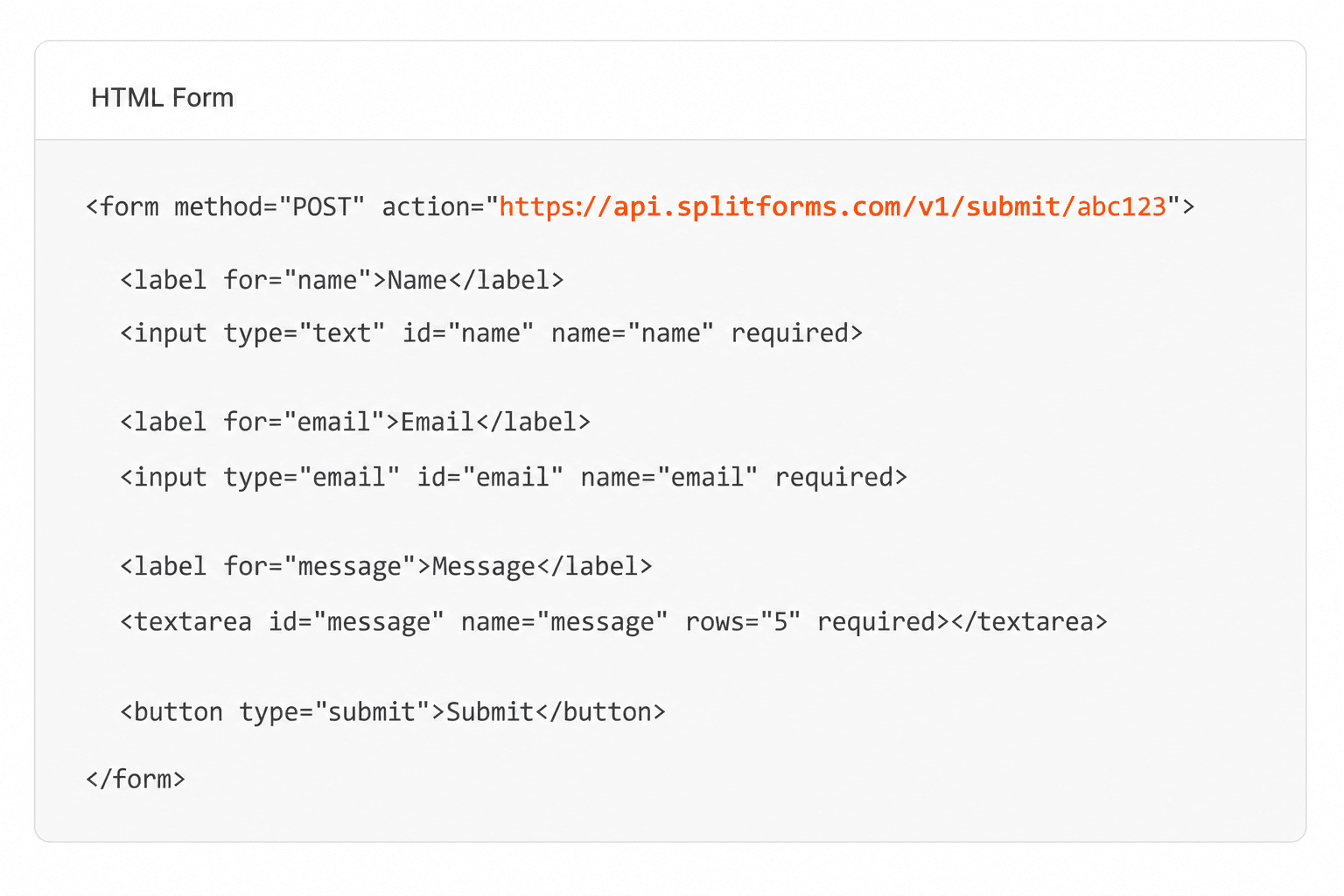
form.htmlhtml23 lines
01<form action="https://splitforms.com/api/submit" method="POST">
02 <input type="hidden" name="access_key" value="YOUR_ACCESS_KEY">
03 <input type="hidden" name="subject" value="New waitlist signup">
04
05 <label for="email">Email *</label>
06 <input id="email" type="email" name="email" placeholder="you@example.com" required>
07 <label for="name">Name</label>
08 <input id="name" type="text" name="name" placeholder="Optional">
09 <label for="referral">How did you hear about us?</label>
10 <select id="referral" name="referral">
11 <option value="">Choose…</option>
12 <option>Twitter</option>
13 <option>Friend</option>
14 <option>Search</option>
15 <option>Newsletter</option>
16 <option>Other</option>
17 </select>
18
19 <!-- honeypot — bots fill every field -->
20 <input type="checkbox" name="botcheck" style="display:none" tabindex="-1" autocomplete="off">
21
22 <button type="submit">Send</button>
23</form>
500
submissions / mo, free
3
fields, ready to ship
5
code outputs
60s
from copy to inbox
§ 00Astro + Waitlistplatform-specific integration guide

Why Astro developers choose splitforms for waitlist

Astro's static-first architecture means your form HTML ships pre-rendered with zero client JavaScript — perfect for fast page loads, but it also means you can't call a server-side endpoint on static hosts. splitforms is designed for exactly this: the browser POSTs directly to our edge endpoint, so the form works on Netlify, Cloudflare Pages, Vercel, or any static host without an Astro API route. The waitlist is pure HTML — no <code>&lt;script&gt;</code> tag, no client component, no island. Astro's view transitions and partial hydration don't interfere with the form submission because it uses a standard browser POST.

§ 00Quick answerHTML · marketing

Yes — this is the shortest safe path for Astro.

Use the HTML snippet on this page, keep the waitlist fields visible in your Astro UI, and let splitforms handle delivery, spam filtering, storage, and webhooks.

best implementation

Paste the HTML version, then replace YOUR_ACCESS_KEY.

The posted payload contains email, name, how did you hear about us?. Required fields are email.

native astro reality

Astro's whole pitch is shipping zero JavaScript by default.

use case fit

Pre-launch waitlists let you capture demand before the product ships. The multi-step form qualifies the use case so launch-day conversions skew toward the highest-intent signups.

§ 01Waitlist × Astrowhy this combination, in 80 words

Built for Astro developers who hate operating a backend.

Splitforms is the form backend for Astro sites. One POST endpoint, no SDK, no plugin — drop the waitlist into a page and ship.

Splitforms is the form backend for Astro sites. One POST endpoint, spam filtering, and a real dashboard — drop-in, no server, no PHP. Free for 500 dashboard submissions per month; Starter adds email, signed webhooks, exports, and retained uploads; Pro is $5/mo for 5,000.

✦ what you get on the free plan
  • 500 form submissions per month
  • 2 forms on Free; unlimited forms on Pro
  • Spam protection (honeypot + classifier)
  • Webhooks: Slack, Discord, WhatsApp, custom
  • CSV export of all submissions
  • Email notifications (CC and BCC on Pro)
§ 02Copy-paste codeHTML · 23 lines

Drop into any Astro project.

Replace YOUR_ACCESS_KEY with your splitforms key, paste into a Astro page, and ship. No build-time integration required.

form.htmlhtml23 lines
01<form action="https://splitforms.com/api/submit" method="POST">
02 <input type="hidden" name="access_key" value="YOUR_ACCESS_KEY">
03 <input type="hidden" name="subject" value="New waitlist signup">
04
05 <label for="email">Email *</label>
06 <input id="email" type="email" name="email" placeholder="you@example.com" required>
07 <label for="name">Name</label>
08 <input id="name" type="text" name="name" placeholder="Optional">
09 <label for="referral">How did you hear about us?</label>
10 <select id="referral" name="referral">
11 <option value="">Choose…</option>
12 <option>Twitter</option>
13 <option>Friend</option>
14 <option>Search</option>
15 <option>Newsletter</option>
16 <option>Other</option>
17 </select>
18
19 <!-- honeypot — bots fill every field -->
20 <input type="checkbox" name="botcheck" style="display:none" tabindex="-1" autocomplete="off">
21
22 <button type="submit">Send</button>
23</form>
§ 03Setup3 steps · 60 seconds · zero config

Generate, embed, receive.

Three actions stand between you and your first waitlist submission. None of them require a backend, a database, or a CAPTCHA library.

STEP 01GENERATE

Generate a free splitforms key

Sign in at splitforms.com — your access key is created instantly. No credit card, no setup wizard, no SDK to install.

Create your form
key=sk_live_••••••••
STEP 02EMBED

Paste the waitlist into your Astro project

Drop the form snippet into a Astro page, component, or layout. Replace YOUR_ACCESS_KEY with the key from your dashboard. The form action is a hard-coded URL — no env vars or build-time wiring needed.

snippethtml
<form action="https://splitforms.com/api/submit" method="POST">
  …
</form>
STEP 03RECEIVE

Receive submissions

Dashboard updates live on Free. Starter adds email delivery, signed webhooks, CSV export, Slack/Discord forwarding, and BCC to your team.

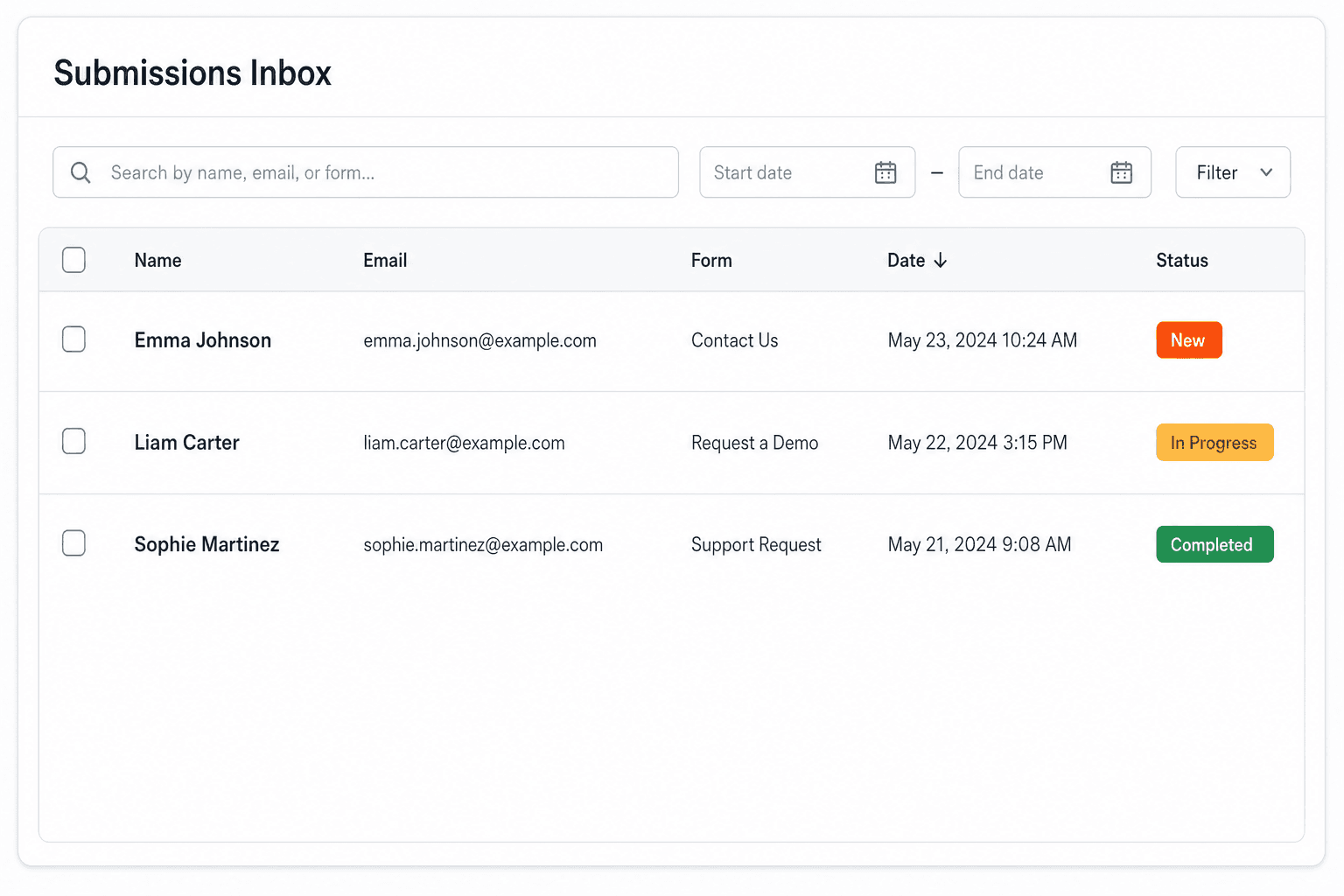
inbox · 1 newjust now
FROM contact@yoursite.com
New waitlist signup
Maya Iyer maya@studio71.co
Loved the demo — quick question about pricing on the 3-year plan. Are usage limits per project or account-wide?
§ 03bWaitlist Signup Form (Pre-Launch Lead Capture)template-specific playbook

The reason this waitlist exists.

Multi-step (Typeform-style) · webhooks into Loops / ConvertKit / Beehiiv.

why it matters

Waitlists are the cheapest growth tool a pre-launch product has — Superhuman, Notion, and Linear all built sizable waitlists before paid launch. The form captures email plus a question or two on use case ('what would you use this for?', 'what tools do you use today?') so the launch sequence segments by intent. Multi-step flow boosts completion vs a single form — the prospect commits in step 1 and answers the qualifying questions in step 2-3 with momentum. Push waitlist signups to a dedicated ESP audience (Loops, ConvertKit, Beehiiv) so launch-day emails segment by use case and target the highest-intent signups first.
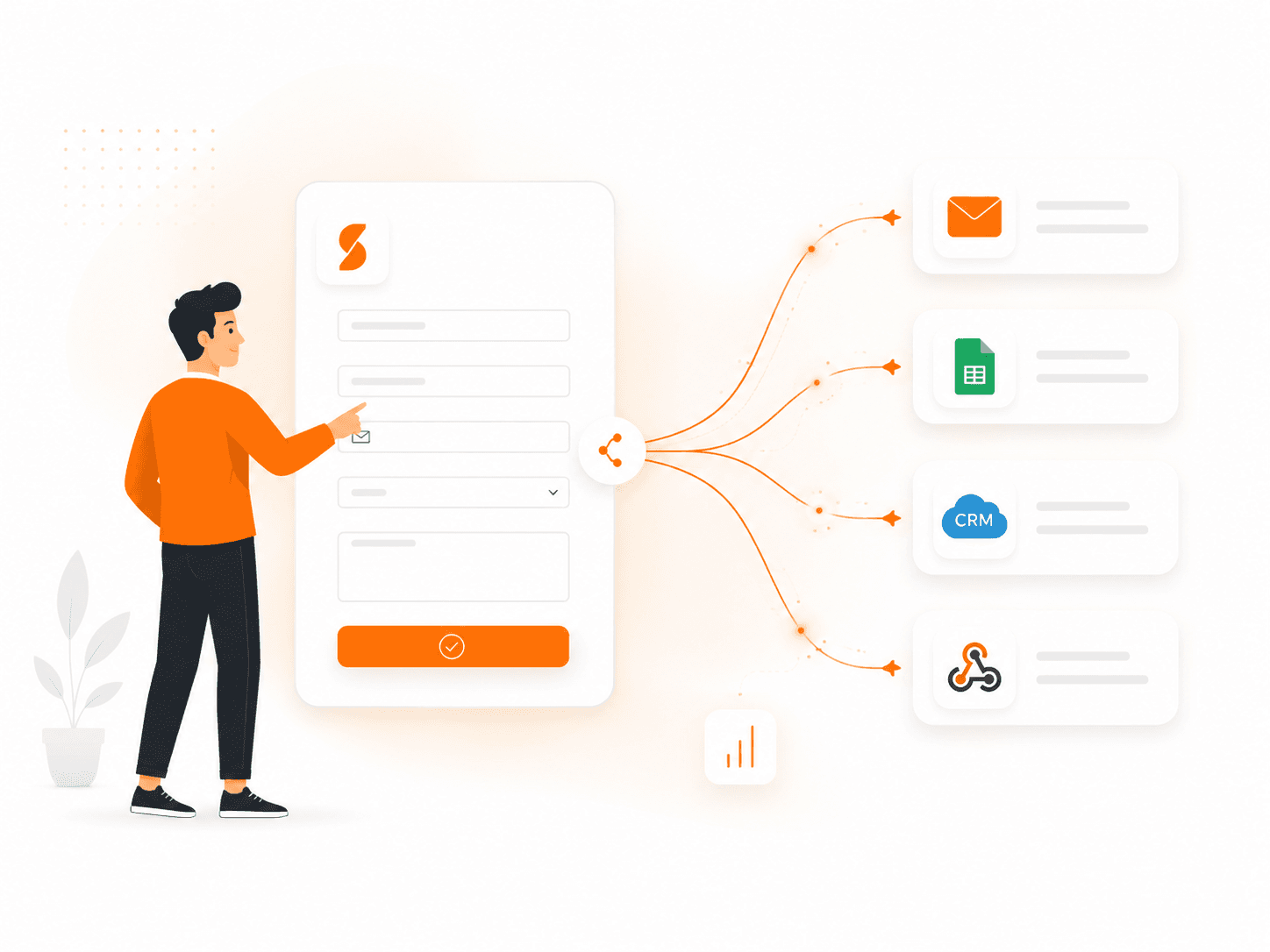
route the submission
01

Step 1: capture email

Single email field — keep step 1 frictionless. Loss-rate from email-only is near-zero; once the email is in, momentum carries through later qualifying questions.

02

Step 2-3: qualify use case

One or two questions on use case ('what problem brings you here?', 'what tools do you use today?'). Optional but most users complete because they're invested by step 2.

03

Push to ESP segment

Webhook to Loops / ConvertKit / Beehiiv / Mailchimp into a 'waitlist' audience. Launch-day emails segment by use case so the highest-intent signups get the first invite waves.

§ 03cAstro production notesnative path · deploy · gotchas

What changes when this waitlist lives in Astro.

These notes come from the Astro platform registry and are rendered on this template page so crawlers see the framework-specific answer without opening a separate guide.

without splitforms

Astro's whole pitch is shipping zero JavaScript by default. A native contact form on Astro means either (a) building a form with no submission target — useless — or (b) standing up an API endpoint via output: 'server' or 'hybrid', which means writing a Node/Bun/Deno handler, picking an email provider, writing your own honeypot logic. Astro 5 added typed Actions, but they're a wrapper around the same underlying fetch — you still deliver the email yourself. The result: every Astro contact-form tutorial ends with 'now configure SendGrid'. Splitforms is the SendGrid-replacement that doesn't require an account, an API key for the email provider, or DNS records for SPF/DKIM.

deploy notes

Astro deploys cleanly to Vercel, Netlify, Cloudflare Pages, GitHub Pages, and any static host with output: 'static'. For Astro Actions (Pattern B), you need output: 'server' or 'hybrid' and a matching adapter (@astrojs/vercel, @astrojs/netlify, @astrojs/cloudflare). On Cloudflare Pages with the Cloudflare adapter, the Action runs in a Worker — keep the splitforms fetch tight (no extra proxying) to stay under the 10ms CPU budget on the free plan. The PUBLIC_ prefix is mandatory for env vars exposed to client-rendered .astro files; vars without it are silently undefined. Lock the key to your *.pages.dev and custom domain.

Astro gotcha

PUBLIC_ prefix is required for client-exposed env vars

Astro mirrors Vite's env-var convention: only variables prefixed with PUBLIC_ are exposed to client-side code (and to .astro files when output: 'static'). If you write import.meta.env.SPLITFORMS_KEY, you'll get undefined at build time. Rename to PUBLIC_SPLITFORMS_KEY.

Astro gotcha

client:load on the form island defeats the point of Astro

If you wrap the form in <MyForm client:load />, you ship a full React/Preact runtime just for one form. Use client:visible (load when scrolled into view) or client:idle (load after main thread is free) instead. For zero-JS forms, skip the island entirely and use a plain HTML form action.

Astro gotcha

Astro Actions need a try/catch or they crash the page

If your action throws, Astro 5's behavior is to render an error page rather than return the error to your form. Wrap the splitforms fetch in try/catch and return { success: false, message } from the action — your form component can then render the message.

Astro gotcha

View Transitions can break form re-submit state

If you've enabled <ViewTransitions /> in your layout, navigating to /contact and back may re-mount the form mid-submission. Add data-astro-reload to the form's submit anchor or guard with if (status === 'loading') return at the top of your handler.

PATTERN A

Pattern A — pure HTML form (zero JS shipped)

The Astro-native approach: a .astro file with frontmatter pulling the key from import.meta.env, then a static <form action> that posts directly. Zero hydration, zero island, zero KB JavaScript. Use the same wiring for the waitlist fields on this page.

pattern-a.txtastro10 lines
01---
02const ACCESS_KEY = import.meta.env.PUBLIC_SPLITFORMS_KEY;
03---
04<form action="https://splitforms.com/api/submit" method="POST">
05 <input type="hidden" name="access_key" value={ACCESS_KEY} />
06 <input type="hidden" name="redirect" value="/thanks" />
07 <input name="email" type="email" required />
08 <textarea name="message" required />
09 <button type="submit">Send</button>
10</form>
PATTERN B

Pattern B — Astro Action for typed server-side proxying

Astro 5 Actions give you Zod-validated, type-safe form handlers. Use one to keep the access key off the client entirely — the form posts to the action, the action proxies to splitforms. Use the same wiring for the waitlist fields on this page.

pattern-b.txtastro17 lines
01// src/actions/index.ts
02import { defineAction } from "astro:actions";
03import { z } from "astro:schema";
04export const server = {
05 contact: defineAction({
06 accept: "form",
07 input: z.object({ email: z.string().email(), message: z.string() }),
08 async handler(input) {
09 const fd = new FormData();
10 Object.entries(input).forEach(([k, v]) => fd.append(k, v));
11 fd.append("access_key", import.meta.env.SPLITFORMS_KEY);
12 const r = await fetch("https://splitforms.com/api/submit", { method: "POST", body: fd });
13 if (!(await r.json()).success) throw new Error("Submission failed");
14 return { ok: true };
15 },
16 }),
17};
§ 04Field-by-field rundown3 fields · names you POST

What every field actually does.

Each field below ships in the waitlist template — rename, remove, or add your own. Splitforms accepts any name you POST.

emailREQUIRED
EMAIL

Email

Reply-to address — splitforms wires this so hitting reply goes back to the sender.

placeholder · you@example.com
name
TEXT

Name

Greeting + dashboard label so submissions don't all read 'anonymous'.

placeholder · Optional
referral
SELECT

How did you hear about us?

Dropdown — keeps responses normalised so you can filter the dashboard.

TwitterFriendSearchNewsletterOther
§ 06Questions9 answered

Waitlist on AstroFAQ.

Direct answers, no marketing fluff. Missing one? Email hello@splitforms.com.

01Does this waitlist work on Astro?
Yes. The form is plain HTML with a single POST endpoint, so it runs on any Astro site without server-side code, plugins, or SDKs. Drop the snippet into a Astro page or component and submissions land in your splitforms dashboard.
02How much does the waitlist cost on Astro?
Free for 500 submissions per month — no credit card, no trial. Pro is $5/mo for 5,000 submissions, and there's a one-time $59 3-year plan (15,000 submissions/mo for 36 months). The same pricing applies regardless of which framework hosts the form.
03Can I customize the fields?
Yes. The template ships with sensible defaults (email, name, how did you hear about us?…) — add, remove, or rename any of them. Splitforms accepts whatever fields you POST.
04How does spam protection work on the waitlist?
A hidden honeypot field catches dumb bots, and a tuned classifier scores the rest. You only see real submissions in your dashboard. No CAPTCHA, no friction for human users — and it works the same on Astro as on any other framework.
05Can I send the waitlist submissions to Slack or Discord?
Yes. Webhooks are available on Starter and above, with auto-formatted payloads for Slack, Discord, and WhatsApp (via CallMeBot). Or send raw signed JSON to any URL — Zapier, n8n, your own server. Configure in the splitforms dashboard.
06Will it work on a static Astro site?
Yes — the form posts directly to splitforms from the browser, so no server is involved. Works on Vercel, Netlify, GitHub Pages, Cloudflare Pages, S3, or any plain Apache host.
07Should I show waitlist position / numbers?
Showing 'you're #347 in line' on the confirmation creates social proof but invites comparison. Showing total waitlist size ('join 2,500 people on the waitlist') without per-person position is the safer middle. Refer-a-friend mechanics that move people up the list (Robinhood-style) drive viral growth but require more eng work.
08How do I trigger launch invites in waves?
Tag waitlist signups by use case in the ESP audience (Loops, ConvertKit). Launch-day, segment by tag and send invite waves over 48-72 hours. Highest-intent / closest-fit goes first; broadest casts go last. Spreads server load and lets you triage onboarding support.
09Can I integrate with Loops / ConvertKit / Beehiiv?
Yes — webhook the JSON. Loops has direct webhook support and is purpose-built for product transactional + waitlist email. ConvertKit and Beehiiv accept via API or Zapier. All three handle the launch-sequence segmentation cleanly.
§ 07Comparisonvs Web3Forms · vs Formspree

splitforms vs everything else.

Same drop-in API. More free submissions, Starter signed webhooks, MCP support no other backend has.

FeatureWeb3FormsFormspreesplitforms
Free monthly submissions25050500
Custom fields beyond contactYesPro tierFree
Webhooks (Slack / Discord)Pro tierPro tierFree, signed
AI / MCP submission inboxNoNoYes
Long-term plan (3-year flat)$59 every 3 years
✻ ✻ ✻

Ship a waitlist on Astro in 60 seconds.

500 submissions per month, free forever. No credit card. Copy the snippet above and paste it into your Astro project.

Get free access key →Read the docs
founders pricing locked in · early access open