
Capture scope with the ask
Required: name, email, phone, budget band, project description. The budget dropdown does silent qualification — a '< $5k' lead gets your packaged offer, a '$50k+' lead gets a call within the hour.
Form template · Quote request
A request-a-quote form qualifies leads before the first call: budget, timeline, and scope arrive with the contact details, so you only spend time on real projects.
This template is one of our free HTML form templates. See more form templates by industry.
Every template is free and fully editable in the drag-drop builder — swap fields, colors, and the button label before you publish.
No server, API route, or SDK — your Quote Request Form posts straight to one endpoint.
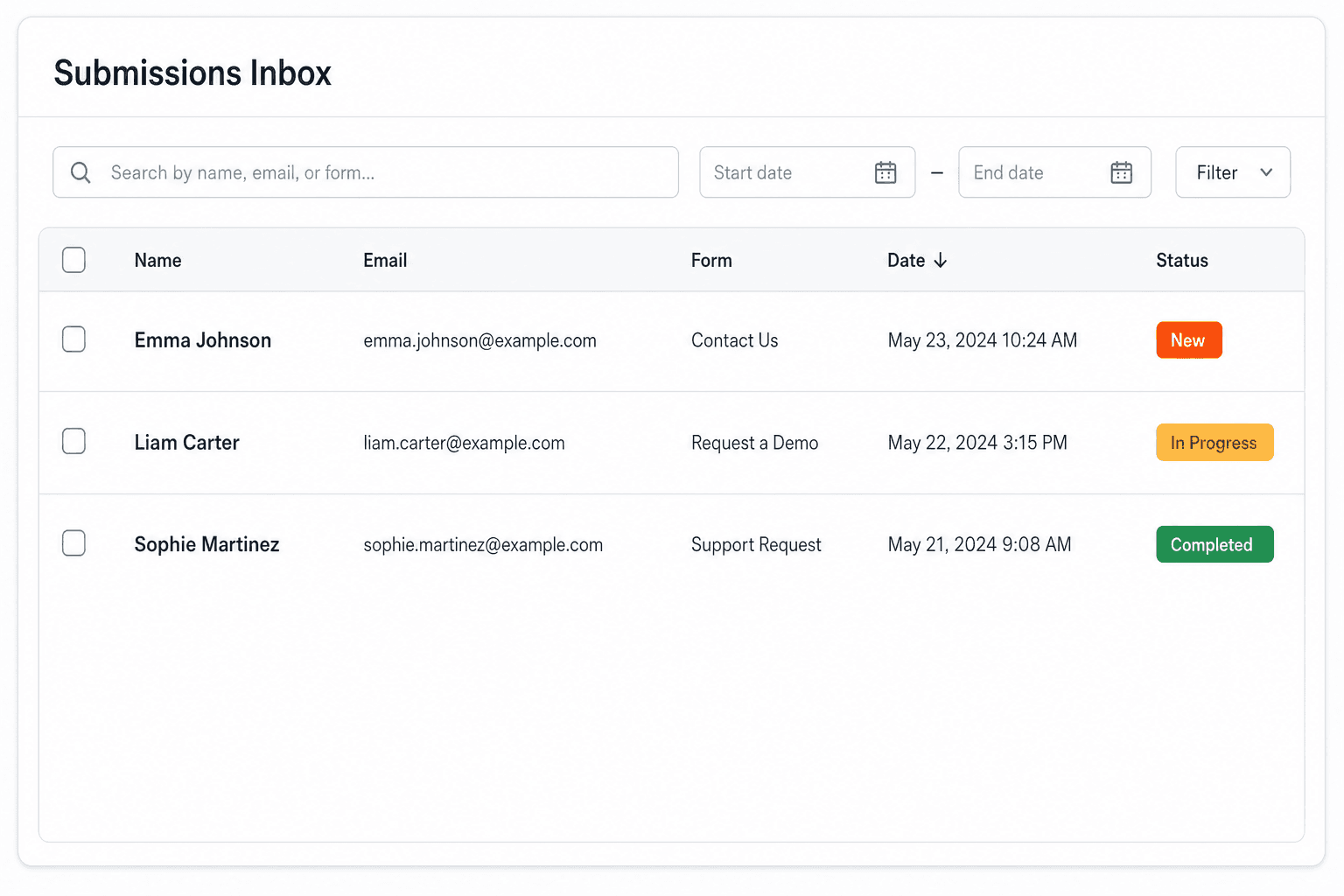
Every submission is emailed to you and saved to a searchable dashboard — spam filtered before it reaches you.
It's plain HTML you own — paste the Quote Request Form snippet, swap in your access key, and ship.
Copy and ship
HTML by default — the same field set also renders as React, Next.js, PHP, and cURL in your dashboard. Every variant posts to the same /api/submit endpoint. Replace YOUR_ACCESS_KEY with the key from your dashboard; that's the only edit.
<form action="https://splitforms.com/api/submit" method="POST">
<input type="hidden" name="access_key" value="YOUR_ACCESS_KEY">
<input type="hidden" name="subject" value="New quote request">
<label for="name">Name *</label>
<input id="name" type="text" name="name" placeholder="Jane Builder" required>
<label for="email">Email *</label>
<input id="email" type="email" name="email" placeholder="[email protected]" required>
<label for="phone">Phone *</label>
<input id="phone" type="tel" name="phone" placeholder="+1 415 555 0142" required>
<label for="company">Company</label>
<input id="company" type="text" name="company" placeholder="Acme Inc">
<label for="budget">Budget *</label>
<select id="budget" name="budget" required>
<option value="">Choose…</option>
<option>< $5k</option>
<option>$5k–$15k</option>
<option>$15k–$50k</option>
<option>$50k+</option>
</select>
<label for="project">Tell us about the project *</label>
<textarea id="project" name="project" placeholder="Goals, timeline, anything we should know." required></textarea>
<!-- honeypot — bots fill every field -->
<input type="checkbox" name="botcheck" style="display:none" tabindex="-1" autocomplete="off">
<button type="submit">Send</button>
</form><p class="splitforms-attribution" style="margin-top:12px;font-size:11px;color:#888;text-align:right">
Powered by <a href="https://splitforms.com" style="color:#888;text-decoration:none" target="_blank" rel="sponsored noopener">splitforms</a>
</p>
<!-- drop-off analytics + partial leads (the form works without it) -->
<script src="https://splitforms.com/embed.js" async></script>How to add it
To add a Quote Request Form to your site you need three things: a free splitforms access key, the HTML snippet above, and your key pasted into it. No backend, database, or CAPTCHA library — the form posts to one URL and every submission lands in your inbox and dashboard.
Required: name, email, phone, budget band, project description. The budget dropdown does silent qualification — a '< $5k' lead gets your packaged offer, a '$50k+' lead gets a call within the hour.
Use notification routing to send big-budget requests to the owner and everything else to the shared inbox. The lead's own answers decide who replies.
Because scope and budget arrive up front, the first reply can include a real range. Speed beats polish: same-hour beats same-day, same-day beats everyone else.
What's included
"Get a quote" is the highest-intent button on any service site — the visitor is asking to be sold to. A bare contact form wastes that intent: you get a name and 'how much?' with none of the context. Adding budget and project fields means the reply you write is a real proposal, not a round of twenty questions. Businesses that quote within an hour win a disproportionate share of jobs; the form is what makes fast, accurate quoting possible. Budget + scope arrive with the lead — your first reply can be the actual quote.

Where submissions go
Reply-to is wired to the visitor's email, so one tap on Reply answers them directly — while the built-in honeypot and automatic spam scoring filter out bots before they reach you. Every submission is emailed to your inbox and can forward to a webhook or Slack the moment a visitor hits send.

How SplitForms works
splitforms receives the submission, filters spam, saves it to your dashboard and emails you — then, on paid plans, sends it on to your webhooks and integrations. No backend infrastructure to build.

Point your form to your unique SplitForms endpoint. That's it.
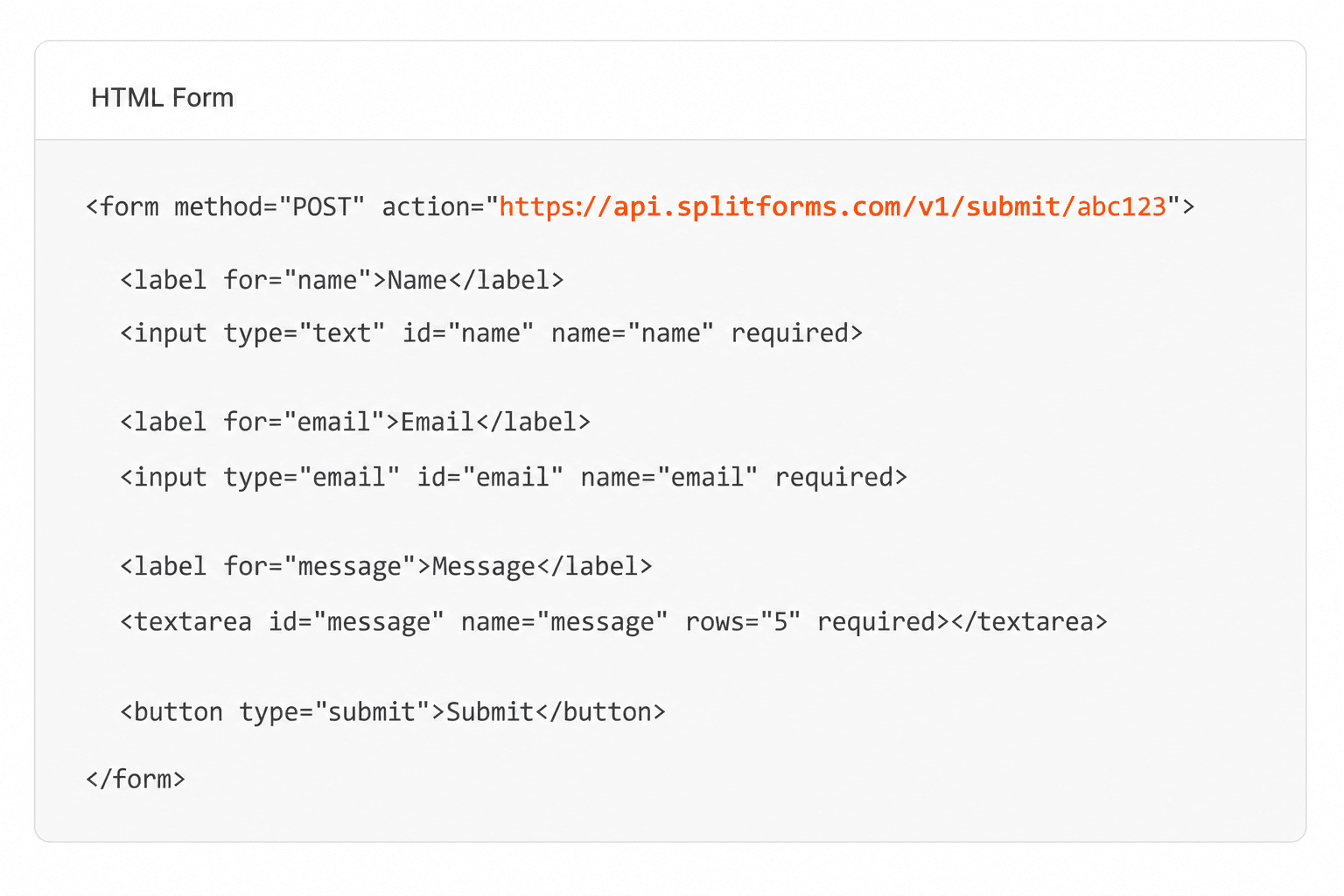
We instantly capture and organize every submission in your inbox.
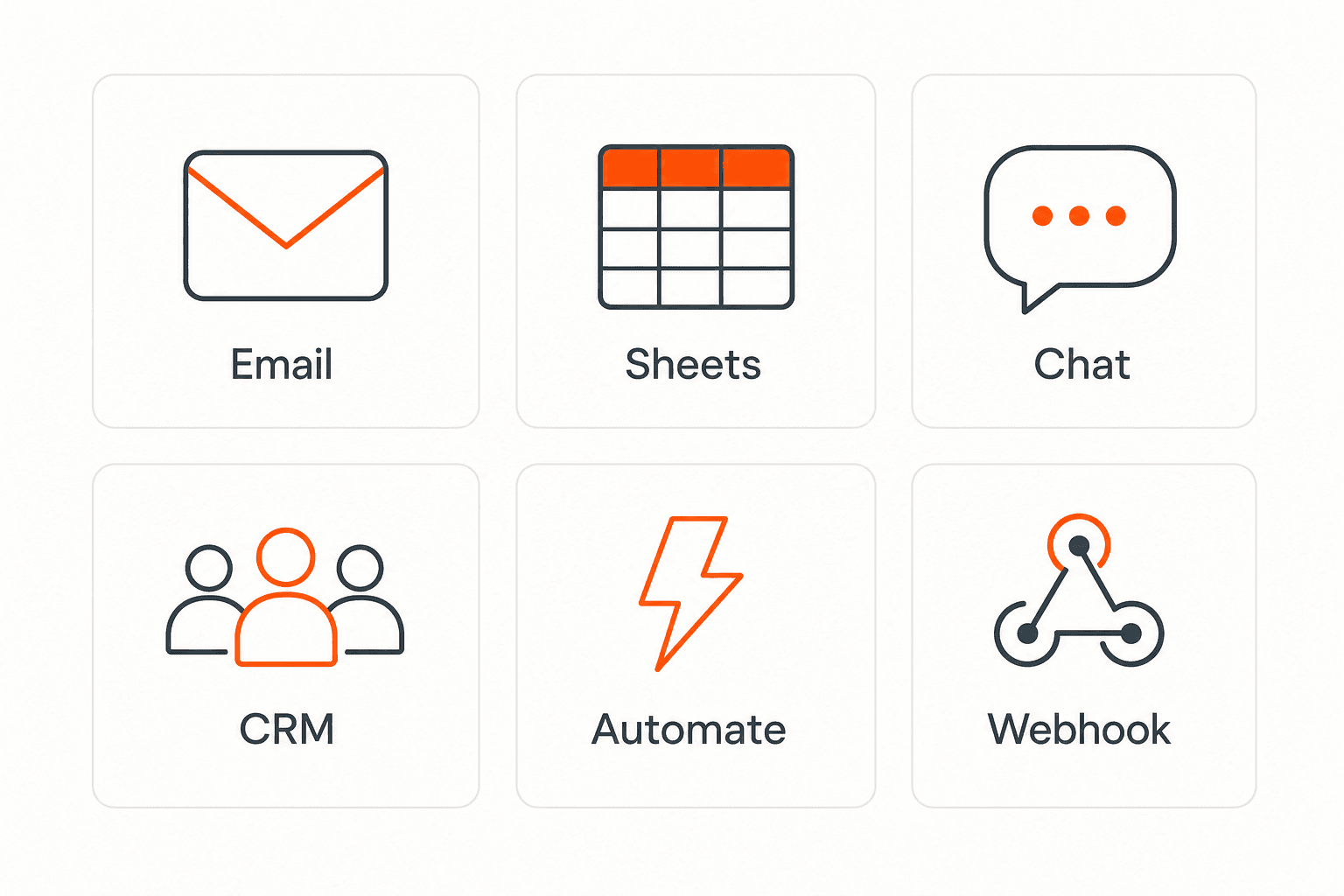
Send data to email, spreadsheets, CRMs, webhooks, and 7,000+ apps.
No credit card required. Set up in under 60 seconds.
Connect & automate
On paid plans, submissions can also go to Slack, Discord, Google Sheets, Notion, Airtable, Zapier or any signed webhook — and splitforms works on the platforms you build on, from WordPress and Shopify to Next.js. With Stripe connected, your forms can take payments too.

 NewTake payments on your formsDeposits, bookings, order forms — submitters check out through Stripe and the money goes straight to your Stripe account. Included on every paid plan.See plans →
Questions
If your pricing is fixed, yes — publish it. Quote forms are for scoped work where the honest answer is 'it depends'. Many businesses do both: packages on the pricing page, a quote form for custom jobs.
It filters, which is the point. Serious buyers have a number in mind and appreciate not wasting a call discovering you're 10x apart. Use ranges, not a blank money field — ranges feel safer to answer.
You can't fully, but requiring a phone number and describing ranges (not itemized rates) in replies keeps fishing expeditions low-value. The rule-based spam filter quarantines the obviously fake ones.
Yes — enable payments on the form and a Stripe or Square checkout runs after submission. Common pattern: free quote first, deposit form after the quote is accepted.
Simple pricing
Free gives you 500 submissions for $0 — no card, no time limit. Pro is $5/month for 5,000 submissions a month, and Annual is $49/year for 15,000 a month with every Pro feature.
For side projects and indie devs.
Every paid feature, for agencies and growing products.
Every Pro feature with triple the volume — $0.27 per 1,000 at full use.
No credit card required on Free • Cancel anytime • Full pricing and FAQ


