
Choose your lead type
Decide whether this is a demo request, waitlist, lead magnet, newsletter, or quote request form — the qualifying fields you ask for should match it.
Free lead capture form
Updated · plan facts checked against /pricing
Point one lead capture form — email plus a qualifying field — at splitforms and every lead lands in your dashboard, inbox, and CRM in seconds. No server required.

Ask for email first, then one qualifying field — company, role, budget, or timeline — once the visitor has already committed.
A hidden botcheck honeypot and a form_loaded_at time-trap flag bots before a notification ever fires — no CAPTCHA needed.
Every lead is stored, emailed, and — on paid plans — forwarded to the CRM or email tool your team already uses.
Copy-paste ready
A lead capture form should not feel like a procurement questionnaire. Capture the email first, add only the fields that change your follow-up, and keep the built-in spam guards. Prefer to POST JSON from your own code? See the lead capture form API.
<form action="https://splitforms.com/api/submit" method="POST">
  <input type="hidden" name="access_key" value="YOUR_ACCESS_KEY" />
  <input type="hidden" name="subject" value="New lead from landing page" />
  <input type="hidden" name="redirect" value="https://yoursite.com/thank-you" />
  <input type="hidden" name="form_loaded_at" value="" />
  <input type="checkbox" name="botcheck" style="display:none" tabindex="-1" />

  <input name="email" type="email" placeholder="Work email" required />
  <input name="company" placeholder="Company" />
  <select name="intent">
    <option>Book a demo</option>
    <option>Join the waitlist</option>
    <option>Download the guide</option>
    <option>Request a quote</option>
  </select>
  <button type="submit">Continue</button>
</form>

<script>
  // time-trap: stamp the load time so instant bot submits get flagged
  document.querySelector('[name="form_loaded_at"]').value = Date.now();
</script>
Setup
The same six steps work whether your lead capture form sits on a plain HTML landing page, a React app, or WordPress.
Decide whether this is a demo request, waitlist, lead magnet, newsletter, or quote request form — the qualifying fields you ask for should match it.
Sign up for splitforms (no credit card) and create a form in the dashboard. Copy its access_key — a public identifier that goes in a hidden field, not a secret.
Ask for email first, then add one or two qualifying fields — company, role, budget, timeline — once the visitor has already committed.
Include a hidden botcheck honeypot that must stay empty and a form_loaded_at time-trap field stamped with the page-load time. Both are checked automatically before a notification fires.
Add a redirect field so visitors land on your thank-you page after submitting, and a subject field to customize the notification email's subject line.
Owner notification email works on every plan. To sync leads automatically, upgrade to Pro ($5/month) and point a signed webhook or a native integration at the CRM or ESP your team already uses.
Where leads go
Every lead is stored, emailed, and — on paid plans — forwarded to the CRM or email tool your team already uses through native integrations or signed webhooks. Pull leads back out any time with the submissions API — you choose the destinations, splitforms handles delivery.
No CAPTCHA
splitforms checks a hidden botcheck honeypot field, a form_loaded_at time-trap that flags instant bot submissions, and server-side content heuristics on every plan — so real leads reach you and bots don't, no CAPTCHA challenge to solve.

Pick the right form
Same hosted backend, tuned fields for each stage of your funnel. Start from a demo request form to qualify SaaS leads, a waitlist form for pre-launch demand, a lead magnet form to gate a PDF, or a newsletter signup form to grow an owned audience.

How SplitForms works
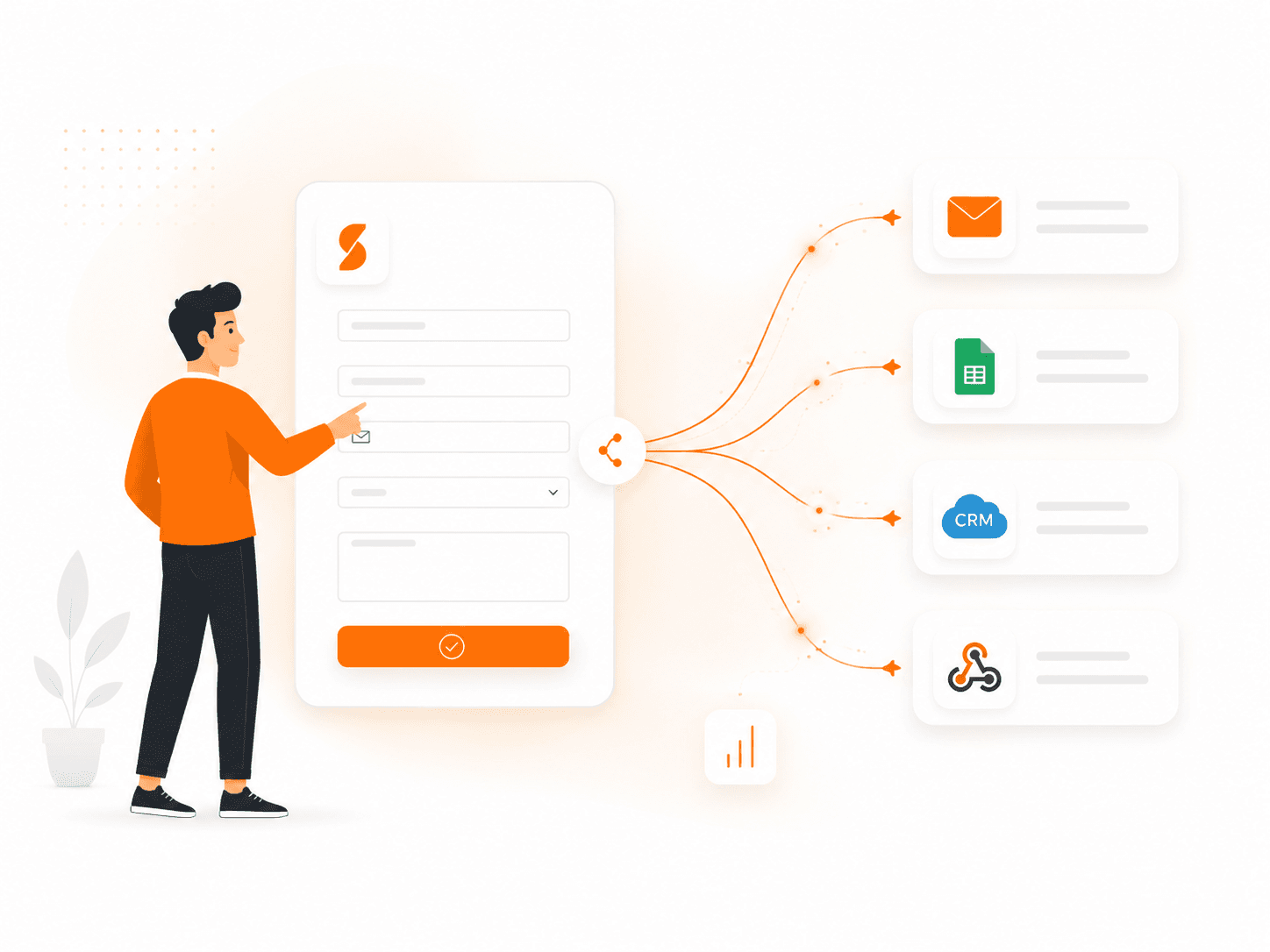
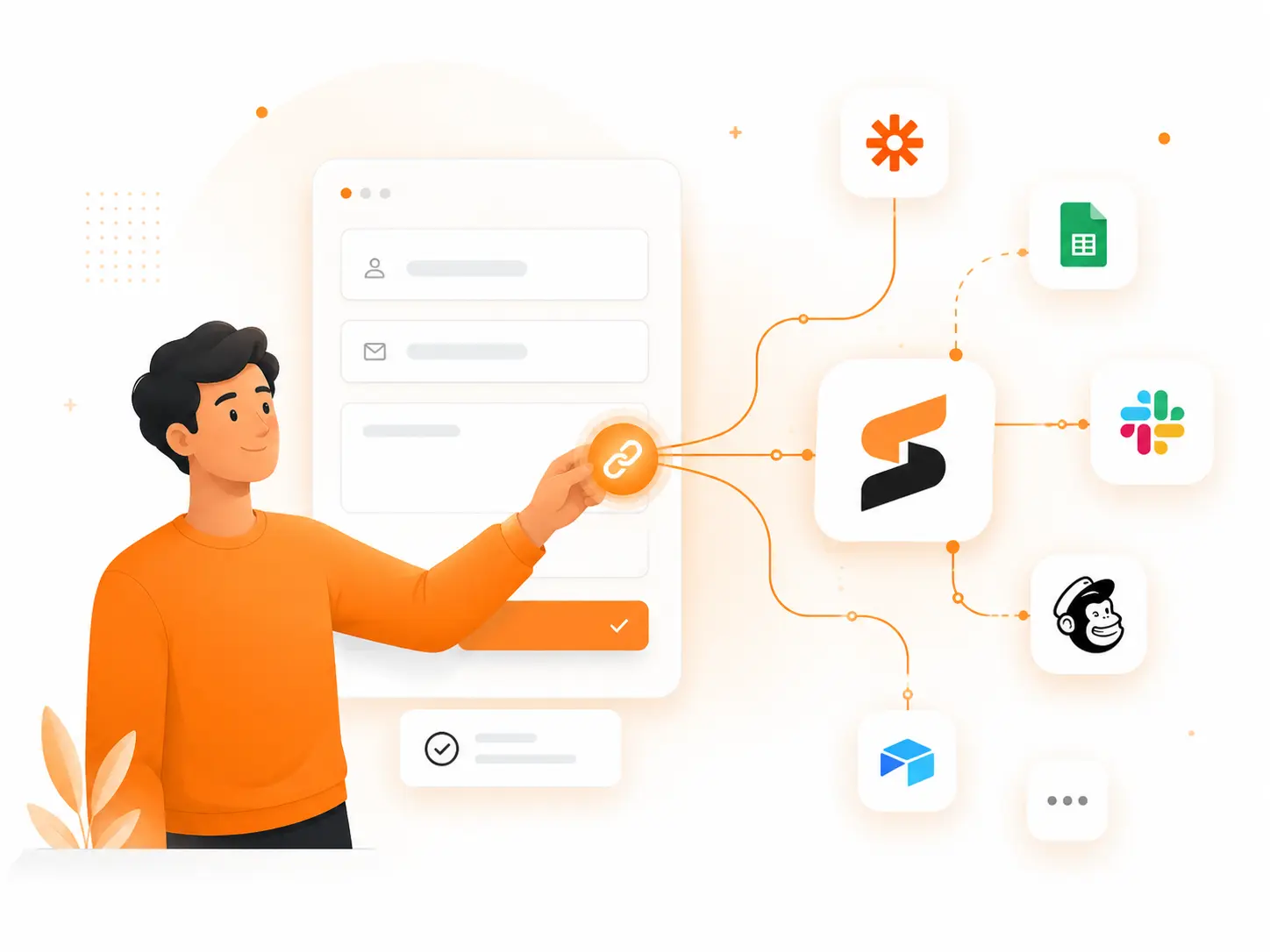
splitforms receives the submission, filters spam, saves it to your dashboard and emails you — then, on paid plans, sends it on to your webhooks and integrations. No backend infrastructure to build.
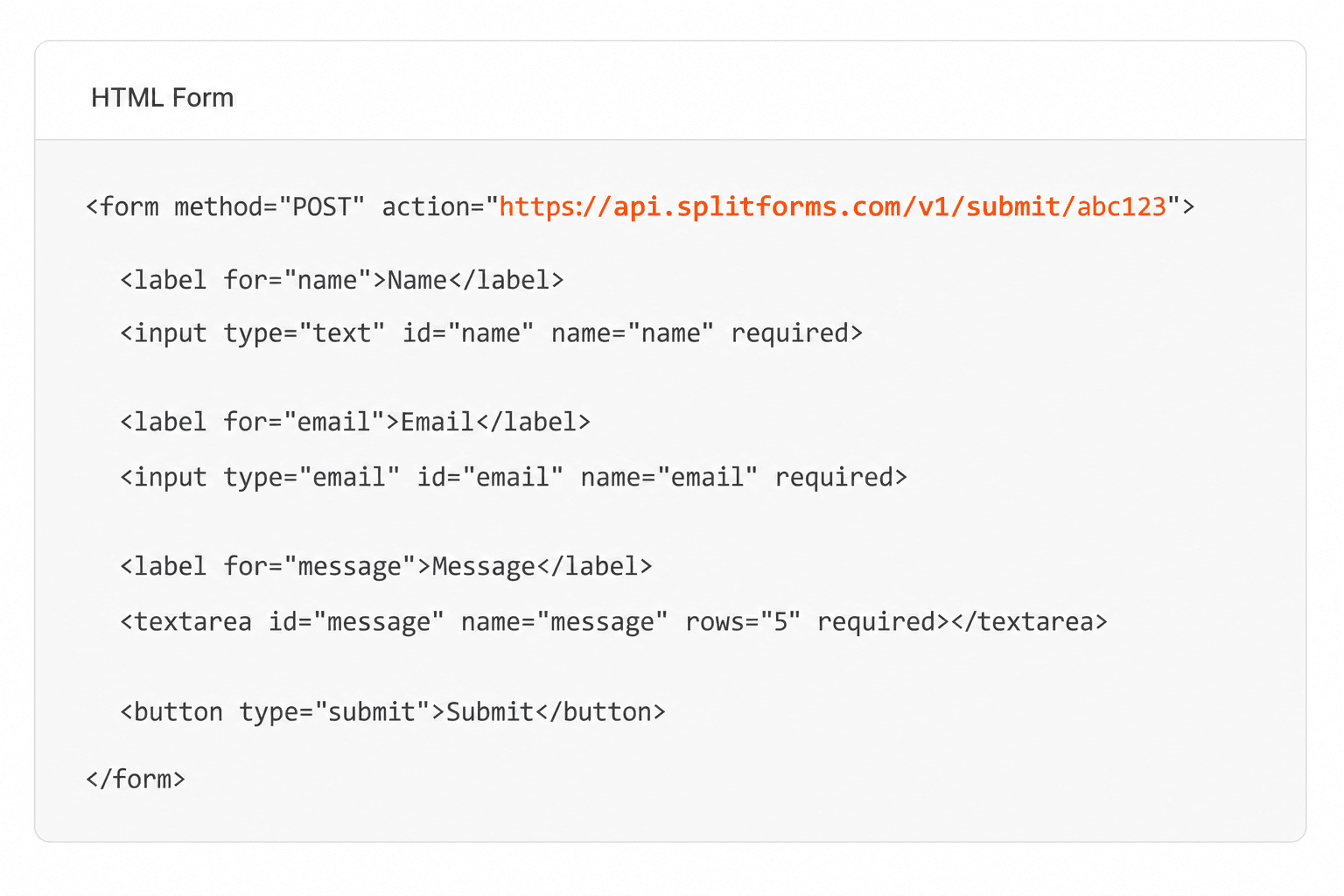
Point your form to your unique SplitForms endpoint. That's it.
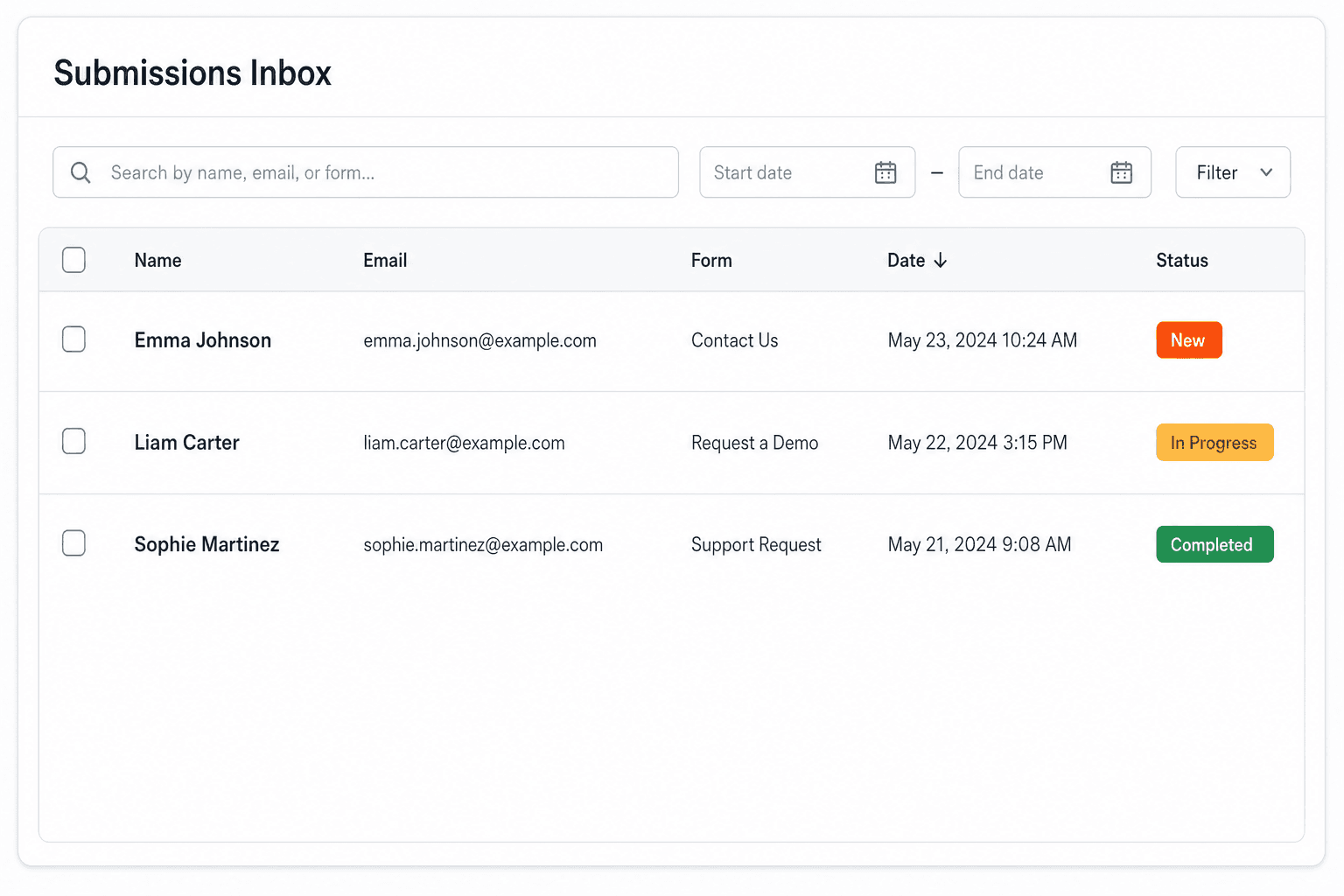
We instantly capture and organize every submission in your inbox.
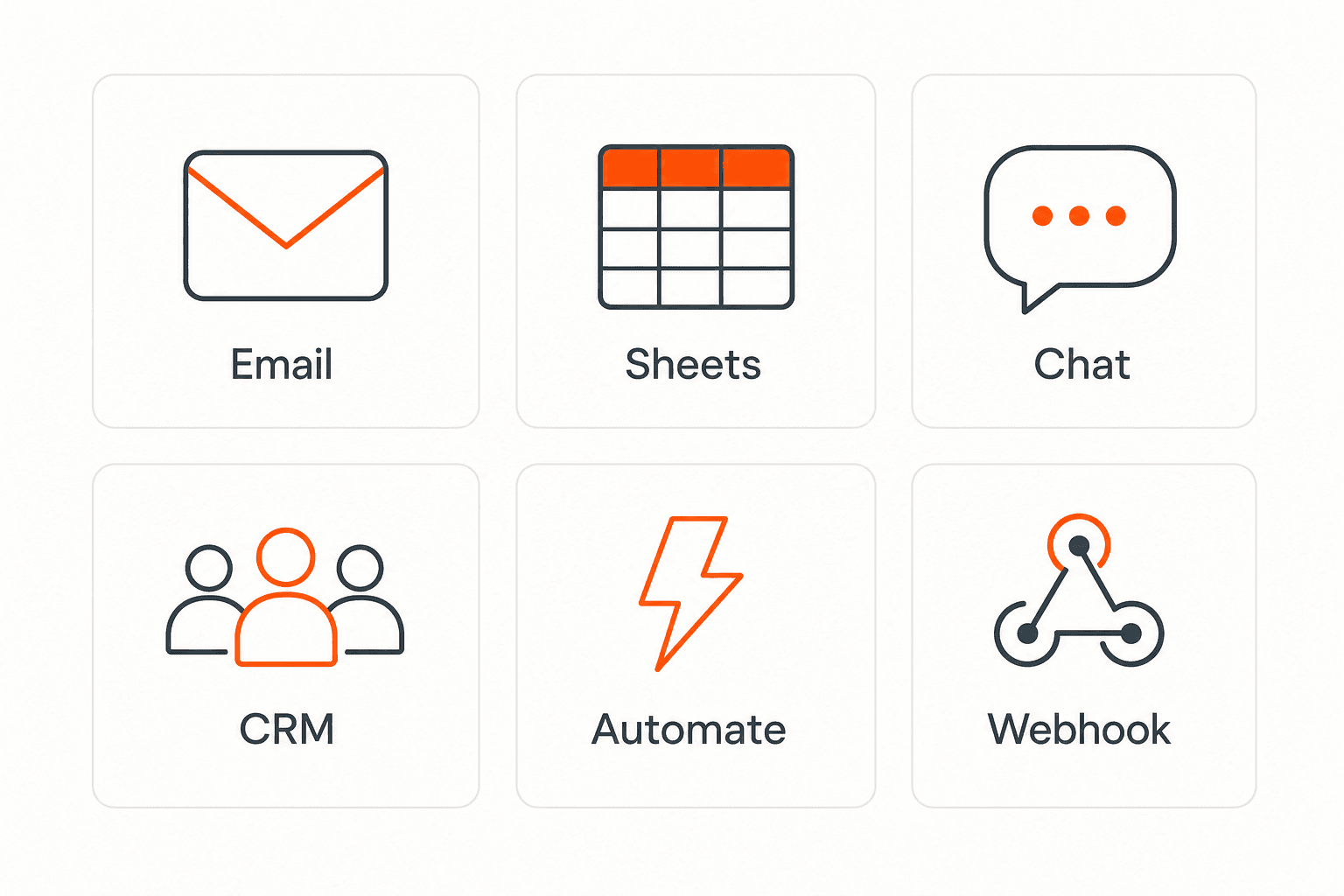
Send data to email, spreadsheets, CRMs, webhooks, and 7,000+ apps.
No credit card required. Set up in under 60 seconds.
Connect & automate
On paid plans, submissions can also go to Slack, Discord, Google Sheets, Notion, Airtable, Zapier or any signed webhook — and splitforms works on the platforms you build on, from WordPress and Shopify to Next.js. With Stripe connected, your forms can take payments too.
 NewTake payments on your formsDeposits, bookings, order forms — submitters check out through Stripe and the money goes straight to your Stripe account. Included on every paid plan.See plans →
FAQ
A lead capture form collects a potential customer's contact details — typically an email address plus one or two qualifying fields like company, role, use case, budget, or timeline — so you can follow up. It's the front end of demo requests, waitlists, gated downloads, newsletters, and quote requests, and splitforms is the no-code backend that stores each submission, filters spam, and notifies you by email.
For most landing pages, keep it to email plus one intent field. Demo request forms can add company, role, team size, and use case. Lead magnet forms should ask for email first, then one qualifying question after the user has committed.
Yes. Use signed webhooks directly, or route through Zapier, Make, or n8n via a webhook (splitforms doesn't have a native Zapier app). Demo requests usually go to a CRM; newsletter and lead magnet forms usually go to an email platform.
Often, yes. Capture email first, then ask one or two qualifying questions. The first step lowers friction, and the second step gives sales or marketing enough context to segment the lead.
Yes. Free includes 500 submissions total, unlimited forms, spam filtering, the dashboard, and owner notification emails — no credit card required. Pro ($5/month, 5,000 leads a month) adds CSV/XML/PDF export, signed webhooks and integrations, an auto-responder, CC/BCC and priority support; Annual is $49/year for 15,000 leads a month.
splitforms checks a hidden botcheck honeypot field (it must stay empty), a form_loaded_at time-trap that flags instant bot submissions, and server-side content heuristics on every plan. You can also lock a form to allowed domains, turn on strict origin mode, or bring your own reCAPTCHA v2 secret for an extra layer.
Yes. Add a redirect field with your thank-you page URL and splitforms sends the visitor there after a successful submission — useful for a calendar-booking link or a conversion-tracking pixel.
Yes. GET https://splitforms.com/api/submissions with an Authorization: Bearer <API token> header returns { submissions, has_more }. Filter with form (id or access_key), and paginate with limit (default 25, max 100), before, and since. The same token also powers the free MCP server for AI agents.
Simple pricing
Free gives you 500 submissions for $0 — no card, no time limit. Pro is $5/month for 5,000 submissions a month, and Annual is $49/year for 15,000 a month with every Pro feature.
For side projects and indie devs.
Every paid feature, for agencies and growing products.
Every Pro feature with triple the volume — $0.27 per 1,000 at full use.
No credit card required on Free • Cancel anytime • Full pricing and FAQ


