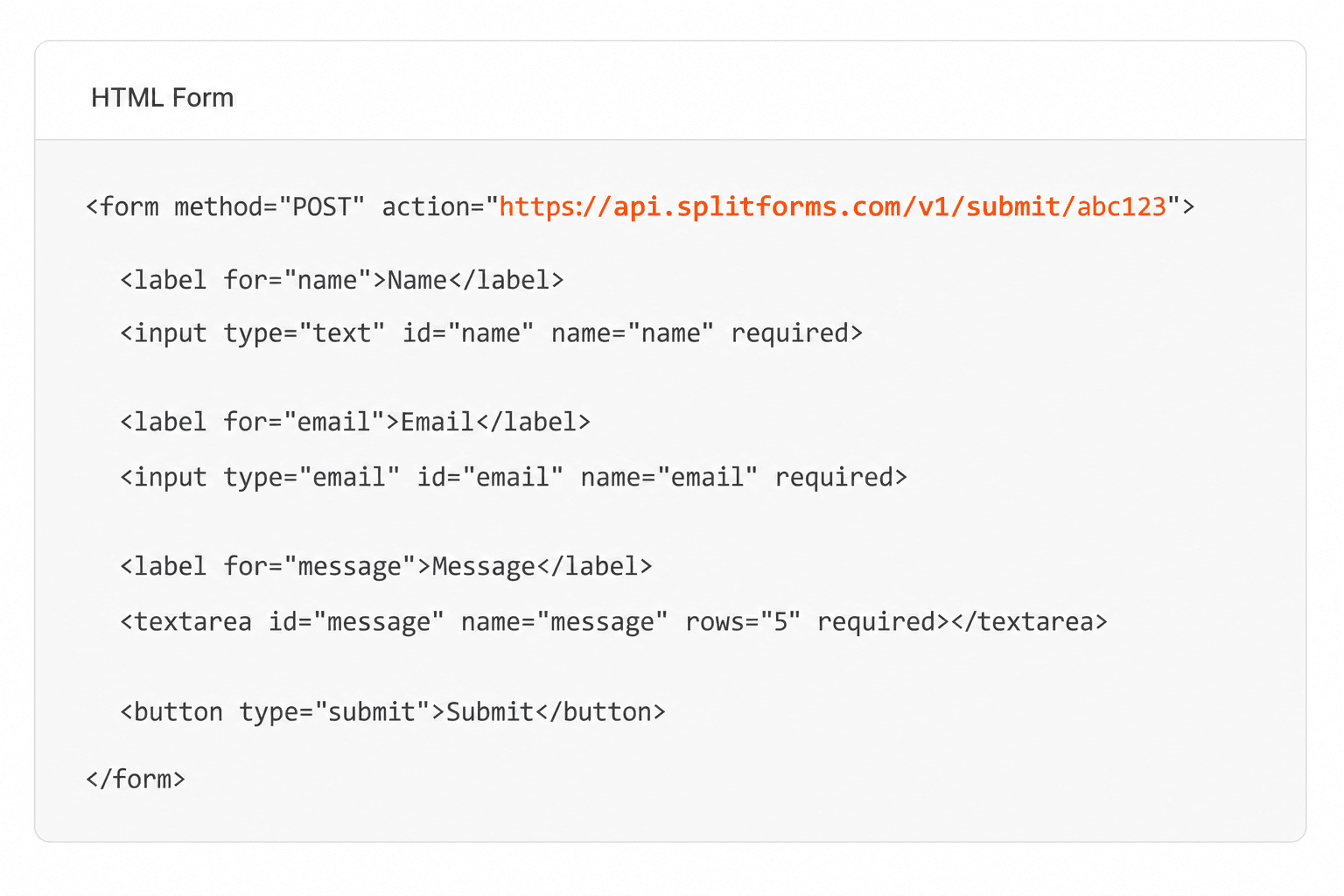
Attributes · <form method>
Which HTML Form Method (GET vs POST) attributes matter?
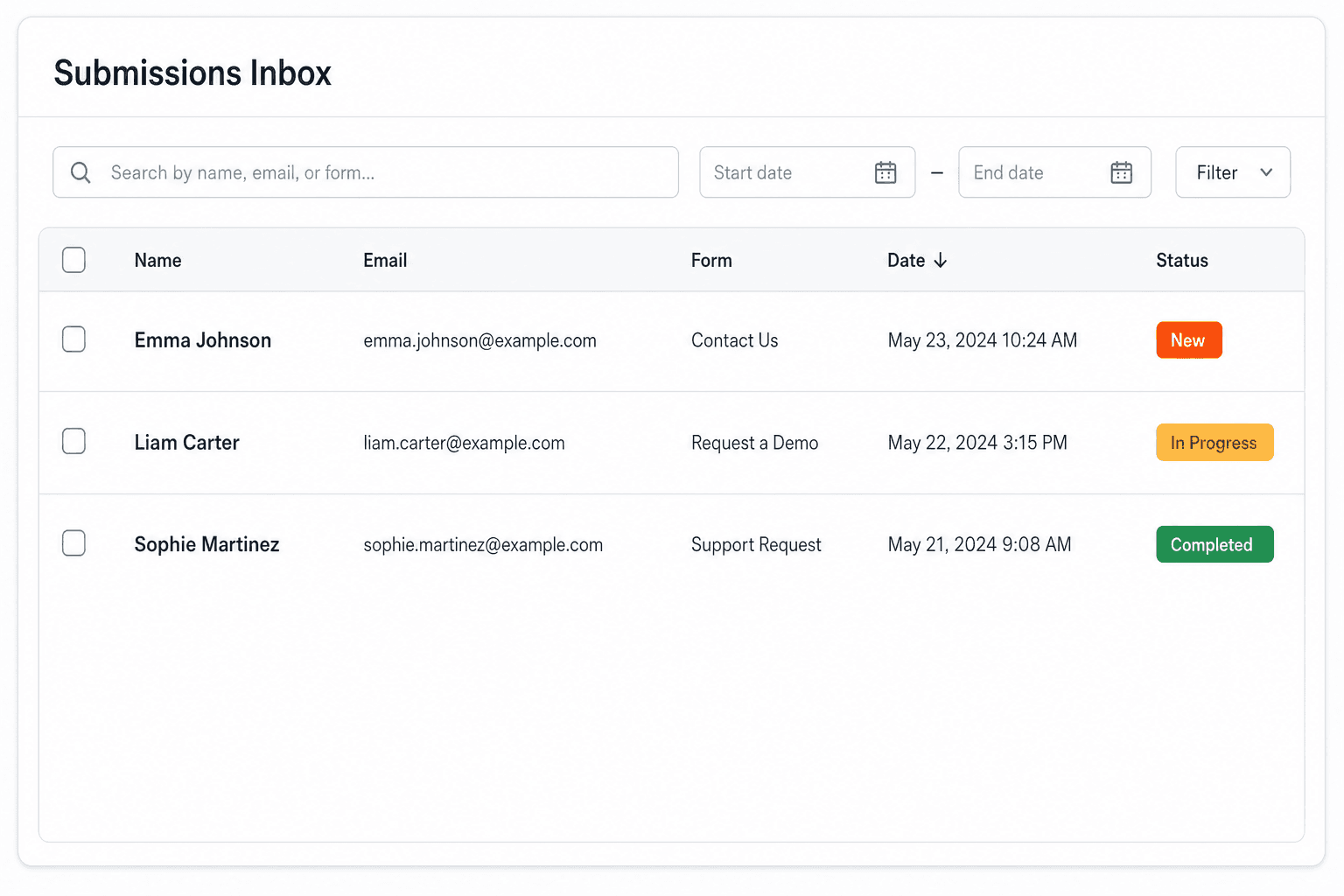
These attributes decide how the <form method> behaves and what actually gets emailed to your inbox when someone submits.
| Attribute | What it does |
|---|---|
get | Default. Appends fields to the action URL as ?name=value&… — visible in the address bar, history, and server logs. Use for searches and read-only filters. |
post | Sends fields in the request body, not the URL. Use for contact, login, payment, and any large or sensitive data. |
dialog | Closes a <dialog> the form is inside without submitting data anywhere. |
formmethod (button) | Overrides the form's method for one button, e.g. a 'Delete' button that POSTs to a different handler. |